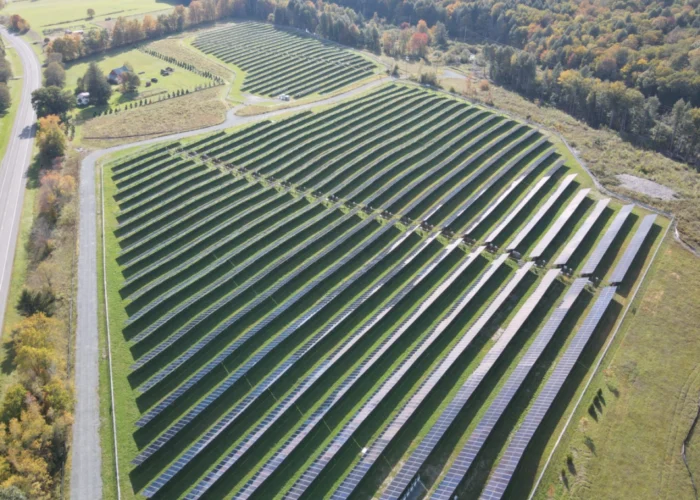
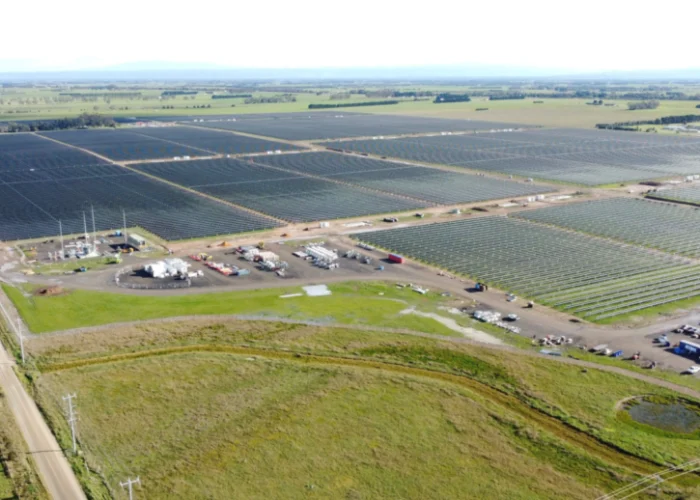
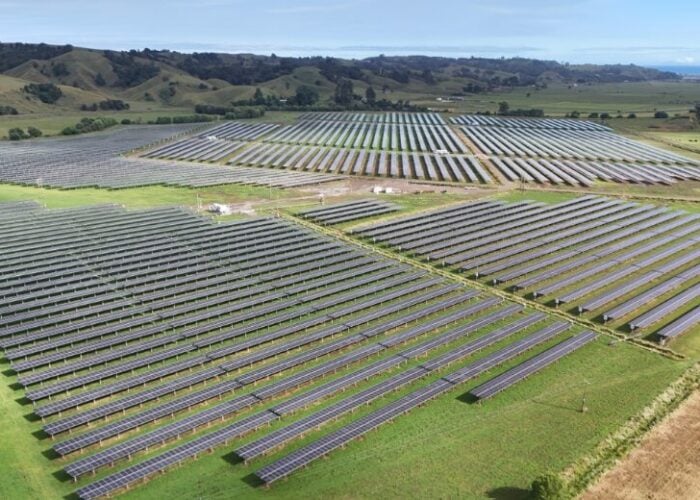
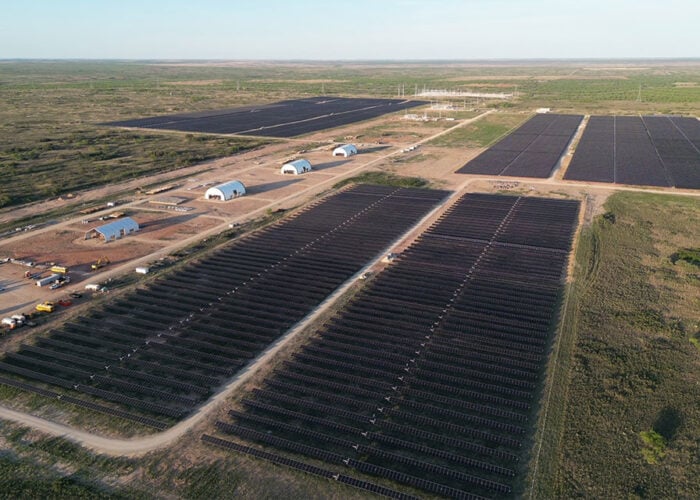
Utility solar systems in the US offer significant cost and environmental benefits over rooftop residential PV systems due to higher electric output and economies of scale, research suggests.
Undertaken by consultancy the Brattle Group, the study claims to be the first to attempt to quantify the relative benefits of utility- and residential-scale solar systems based on real-life utility data. The research was commissioned by US firm First Solar, a leading player in the utility solar market.
Try Premium for just $1
- Full premium access for the first month at only $1
- Converts to an annual rate after 30 days unless cancelled
- Cancel anytime during the trial period
Premium Benefits
- Expert industry analysis and interviews
- Digital access to PV Tech Power journal
- Exclusive event discounts
Or get the full Premium subscription right away
Or continue reading this article for free
Using data drawn from the service area of utility Xcel Energy Colorado, the study models the per-megawatt-hour customer supply costs in 2019 of 300MW of PV in the form of either 60,000 5kW rooftop systems or 300MW of utility-scale power sold under a PPA with Xcel Energy. Five different scenarios are modelled each with different basic parameters such as financing costs, investment tax credit levels and inflation.
The study found that the generation cost of energy from 300MW of utility PV is roughly one-half the cost per kWh of the output from the equivalent residential systems when deployed on the Xcel Energy Colorado system, and utility-scale solar remains more cost effective in all scenarios considered in the study.
The study projected that 2019 utility-scale PV power costs in Xcel Energy Colorado’s service territory would range from US$66/MWh to US$117/MWh across all scenarios, while projected power costs for a typical, customer-owned PV system will range from US$123/MWh to US$193/MWh.
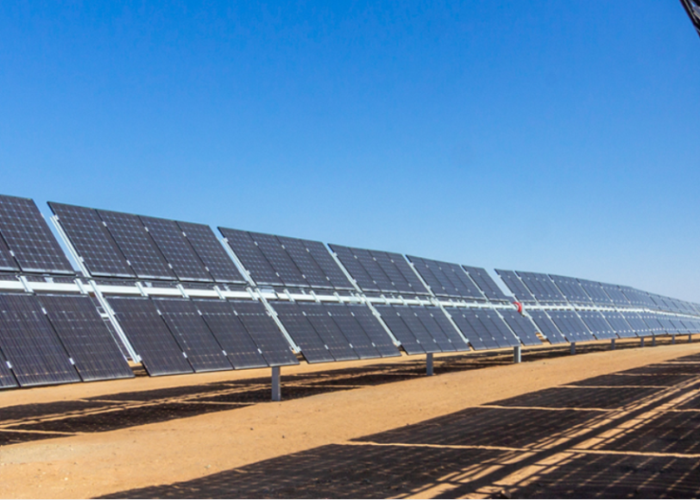
The study attributes the lower costs from utility systems primarily to the economies of scale achievable in large plants and also the higher levels of electrical output that can be achieved through, for example, the optimum orientation of modules and trackers.
It said the higher capacity factors achievable in a utility-scale system allows it to offset more carbon emissions than a residential one.
“Over the last decade, solar energy costs for both rooftop and bulk-power applications have come down dramatically,” said Peter Fox-Penner, Brattle principal and co-author of the study. “But utility-scale solar will remain substantially less expensive per kWh generated than rooftop PV. In addition, utility-scale PV allows everyone access to solar power. From the standpoint of cost, equity, and environmental benefits, large-scale solar is a crucial resource.”
“Thoughtful energy policy requires a thorough understanding of the relative costs of utility- and residential-scale solar PV for achieving policy goals,” added Frank Graves, Brattle principal and leader of the firm’s utilities practice.
“By directly comparing the costs and benefits of PV solar deployed in equal amounts of residential- and utility-scale systems based on utility-supplied data, the Brattle study provides a key contribution to the policy discussion about solar PV and should be essential reading for regulators and other policy makers.”