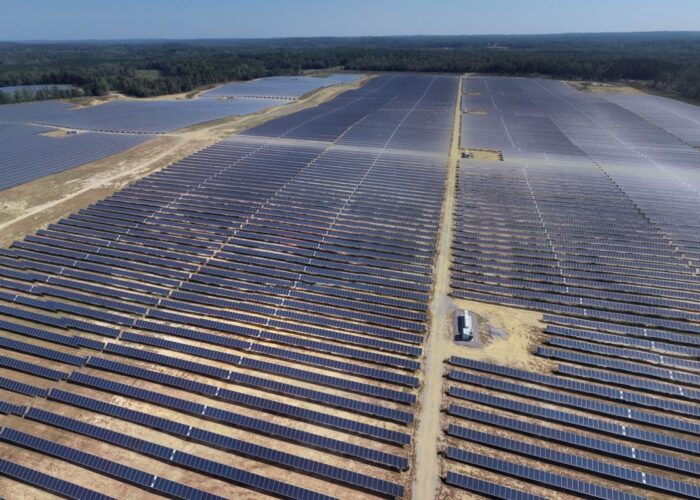
The US’ transition to a carbon pollution-free power sector could see solar provide more than 40% of the country’s electricity by 2035, up from the current 3% level, according to a memo from the Department of Energy (DOE).
The number of jobs across the global solar PV sector could increase almost tenfold in the next 30 years if the world transitions to derive 100% of its energy from renewables by 2050, new research has suggested.
A landmark new climate report from the UN “must sound a death knell” for coal and fossil fuels, according to secretary-general António Guterres, who is calling for a rapid increase in solar capacity and renewable energy investment.
European Union (EU) countries may need to ramp up renewables deployment in the next decade to meet new proposed targets aimed at reducing greenhouse gas emissions across the bloc.
Italy’s transmission system operator Terna will invest €18.1 billion (US$21.4 billion) in the next ten years to strengthen the country’s grid and support the integration of new clean energy projects.
Australia’s electricity markets are undergoing a profound transformation from a centralised system of large fossil fuel plants towards an array of smaller-scale, widely dispersed solar and wind generators, grid-scale batteries and demand response, according to a new report from the Australian Energy Regulator.
Indian conglomerate Reliance Industries will construct an integrated PV module factory and look to enable more than 100GW of solar by 2030 as part of a US$10.1 billion clean energy plan.
Michigan utility Consumers Energy has revealed plans to build nearly 8GW of solar by 2040 as part of efforts to accelerate its transition away from coal.
With South Africa faced with ongoing power cuts, Jules Scully explores the how solar PV can help decarbonise the country’s coal-heavy grid while providing energy security.