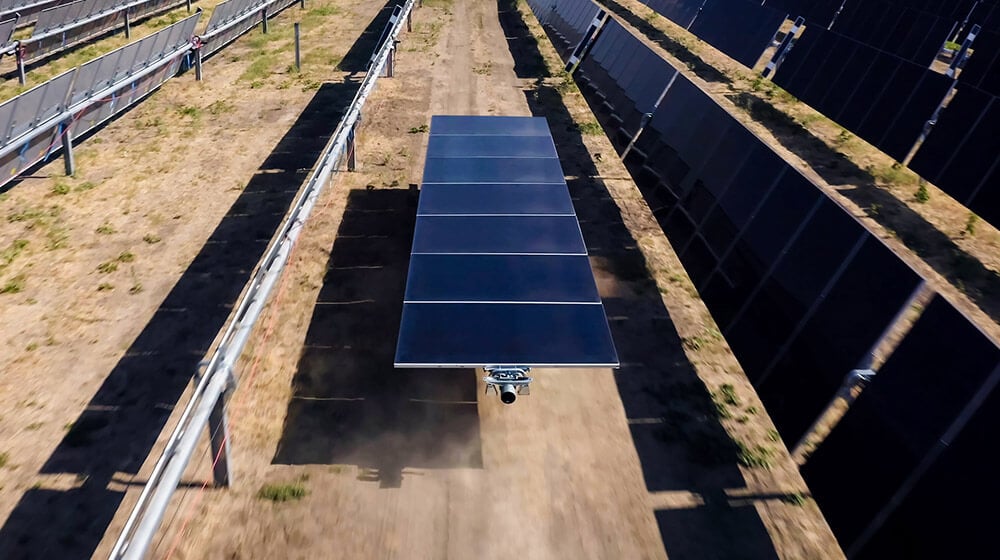
US solar technology firm Terabase Energy has raised US$130 million in finance to support the scale-up of its Terafab solar project assembly line, which uses robotics to improve module installation time and project efficiency.
The latest round of financing comes through the SoftBank Vision Fund, a technology-focused investment fund, and brings the total volume of capital raised for Terabase to US$200 million.
Try Premium for just $1
- Full premium access for the first month at only $1
- Converts to an annual rate after 30 days unless cancelled
- Cancel anytime during the trial period
Premium Benefits
- Expert industry analysis and interviews
- Digital access to PV Tech Power journal
- Exclusive event discounts
Or get the full Premium subscription right away
Or continue reading this article for free
The company noted that the money would be used to help expand the reach of its Terafab programme, and help “reduce costs and construction times for solar power plants,” which have become increasingly important as demand for renewable power has grown.
“The surge in energy demand, particularly from AI data centres, underscores the urgency of scalable, sustainable solutions,” said Kentaro Matsui, managing partner at SoftBank Global Advisers. According to the Electric Power Research Institute, data centres are expected to account for more than double the US’ power demand by 2030 than they do presently.
“Terabase’s innovative approach to digitalising and automating solar power plant deployment positions it as a leader in this transition,” added Matsui.
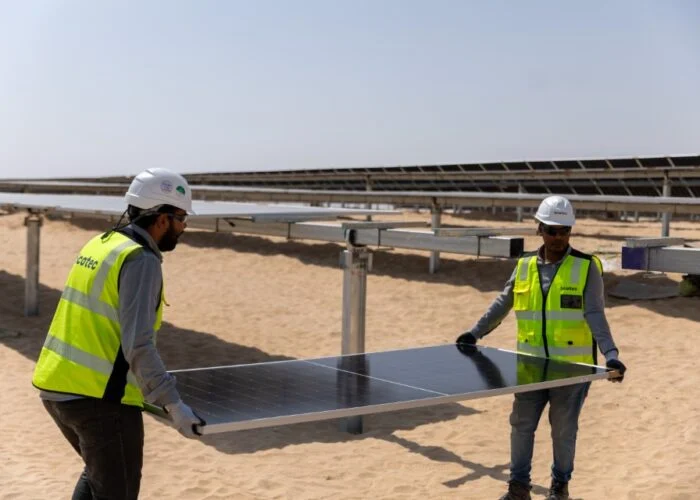
This “innovative approach” includes the Terafab programme, which Terabase has described as a “factory to make factories”. Terafab uses robotics and automation to perform some of the engineering, procurement and construction (EPC) work typically done by humans at solar plants, which Terabase says can improve the operational efficiency of such projects by 25%.
Terabase used its Terafab approach at the White Wing Ranch solar farm in Texas in 2023, and in the following weeks, CEO and founder Matt Campbell told PV Tech Premium that the system can help tackle what he described as an “epidemic” of poor quality in the EPC industry. Terabase has already used its Terafab system to install 40MW of solar capacity at commercial projects in the US, and expects to install “hundreds of megawatts” of new solar capacity by the end of next year.