Tesla low-cost solar strategy paying dividends as installs rebound

October 22, 2020
Facebook
Twitter
LinkedIn
Reddit
Email
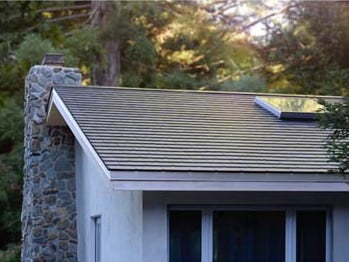
Musk is backing the Solar Roof product (pictured) for a solid 2021 performance. Image: Tesla.

Tesla has said its strategy to deliver the lowest-cost solar rooftop installations in the US is paying off after it witnessed a doubling of installs in Q3 2020.

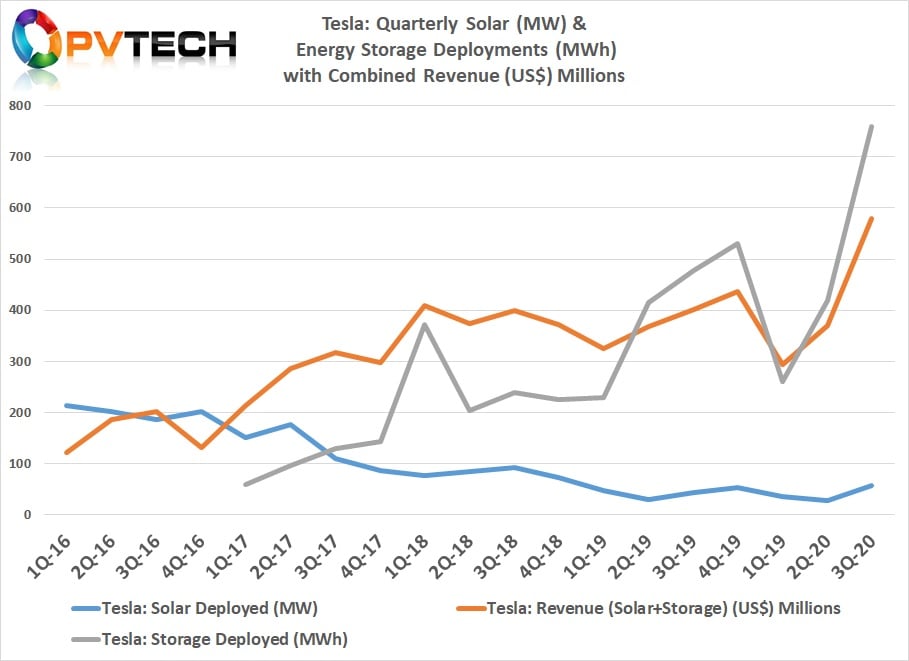
Reporting its Q3 performance late yesterday, Tesla confirmed that it had installed 57MW of solar rooftops in the three months ended 30 September 2020, more than double the 27MW it installed in Q2 2020. Quarterly installs were also up 33% year-on-year.

This article requires Premium SubscriptionBasic (FREE) Subscription

Try Premium for just $1

  • Full premium access for the first month at only $1
  • Converts to an annual rate after 30 days unless cancelled
  • Cancel anytime during the trial period

Premium Benefits

  • Expert industry analysis and interviews
  • Digital access to PV Tech Power journal
  • Exclusive event discounts

Or get the full Premium subscription right away

Or continue reading this article for free
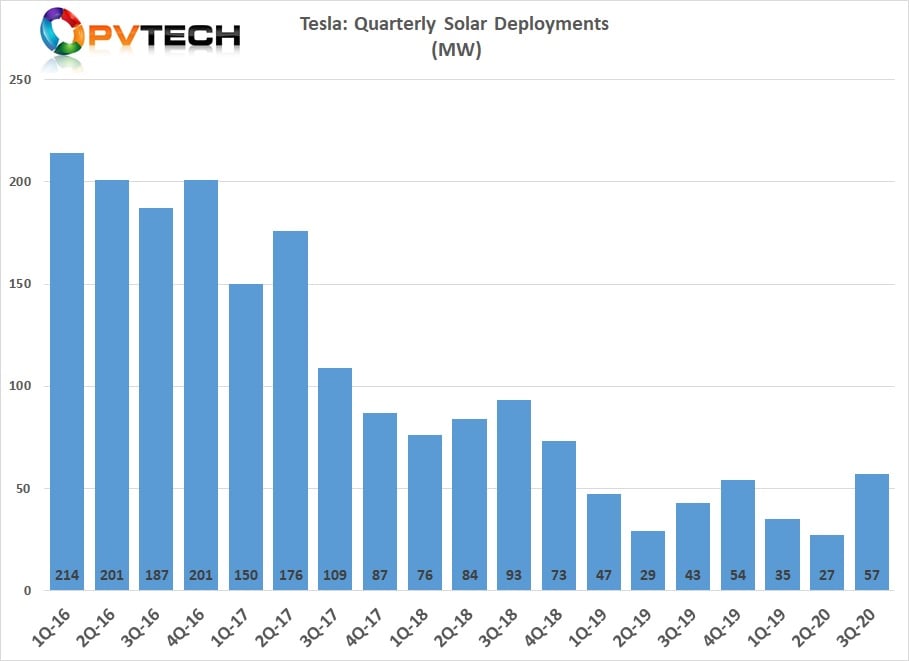
The rebound will come as solace for Tesla after Q2 2020 solar installs dipped to the company’s lowest on record.

Earlier this year Tesla said it would offer the lowest cost solar installation on the US market at US$1.49 per watt. On an earnings call yesterday RJ Johnson, Tesla’s newly appointed energy business lead, said it had managed to do so by leveraging the company’s existing EV ordering infrastructure for its solar business. This has allowed the company to “substantially reduce” its soft costs, keeping its fixed costs relatively flat against an uptick in volume.

Tesla is now looking to roll this out across the rest of the energy business.

While it gave no precise figures for installations – a common trend within its results – the company did note a sequential trebling of installs of its Solar Roof product in Q3 2020, with founder Elon Musk describing it as a “killer product”.

“This will become obvious next year,” Musk said.

The company is now working to accelerate its onboarding of installers who are trained to install the product, described as the biggest hurdle to greater adoption of Solar Roof in the US.

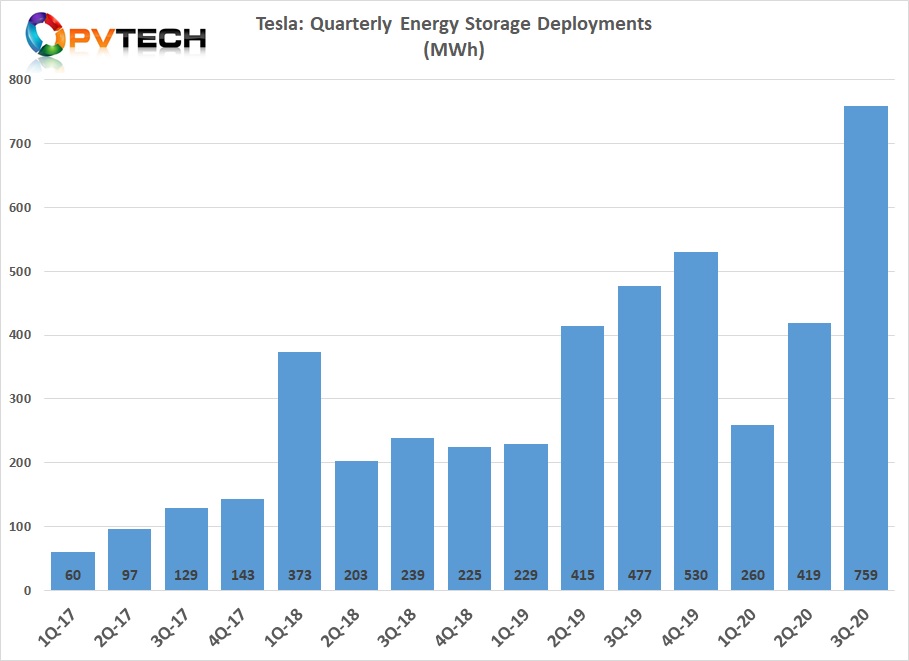
Tesla also noted a significant uptick in energy storage installations, which reached 759MWh in Q3 2020. This was up 81% sequentially and 59% year-on-year, with Tesla indicating it had more demand than supply for energy storage throughout 2021.
Late last month Tesla hosted its Battery Day where it detailed plans to reduce manufacturing costs for energy storage through various means. It expects the changes to be transformational for Tesla’s energy business as a whole, and Musk continues to back the division to be just as big, if not larger than its automotive arm in the future.

Sister publication Energy-Storage.news provided an exhaustive analysis of Tesla’s Battery Day, as well as expert reaction from both a business and technological standpoint.

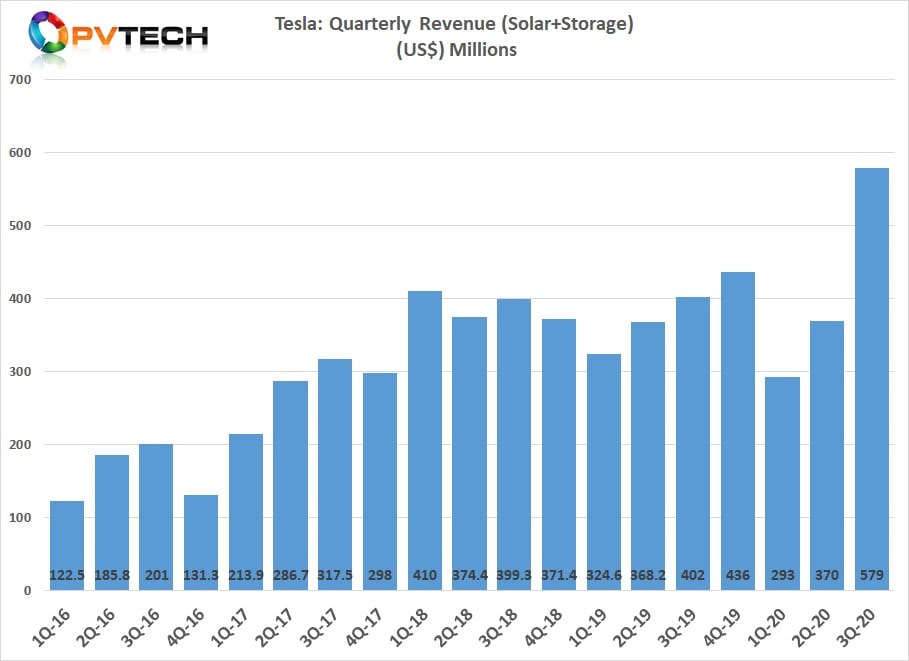
Total energy generation and storage revenue for Q3 2020 stood at US$579 million, up 44% year-on-year.
16 June 2026
Napa, USA
PV Tech has been running PV ModuleTech Conferences since 2017. PV ModuleTech USA, on 16-17 June 2026, will be our fifth PV ModulelTech conference dedicated to the U.S. utility scale solar sector. The event will gather the key stakeholders from solar developers, solar asset owners and investors, PV manufacturing, policy-making and and all interested downstream channels and third-party entities. The goal is simple: to map out the PV module supply channels to the U.S. out to 2028 and beyond.
13 October 2026
San Francisco Bay Area, USA
PV Tech has been running an annual PV CellTech Conference since 2016. PV CellTech USA, on 13-14 October 2026 is our third PV CellTech conference dedicated to the U.S. manufacturing sector. The events in 2023, 2024 and 2025 were a sell out success and 2026 will once again gather the key stakeholders from PV manufacturing, equipment/materials, policy-making and strategy, capital equipment investment and all interested downstream channels and third-party entities. The goal is simple: to map out PV manufacturing in the U.S. out to 2030 and beyond.

Read Next

February 5, 2026
The 26GW Australian Renewable Energy Hub (AREH) in Western Australia has secured AU$21 million (US$14.71 million) in funding from the Australian Renewable Energy Agency (ARENA) to advance large-scale hydrogen production capabilities that will support green iron manufacturing in the Pilbara region.
February 4, 2026
Industry leaders warn that hybridising PV with batteries is now essential to secure revenue, manage volatility, and maintain investor value.
February 4, 2026
Optimising existing grid capacity could be the most viable solution to Europe’s long-standing grid capacity challenges.
February 4, 2026
Avangrid, a subsidiary of Spanish utility Iberdrola, has reached commercial operations at two PV power plants in the US state of Oregon.
February 4, 2026
Spanish renewable energy company Zelestra has finalised a power purchase agreement with Facebook’s parent company Meta for its 176MW Skull Creek Solar Plant in Texas.
February 4, 2026
Microinverter supplier Enphase Energy has filed an 8-K form with the US Securities and Exchange Commission (SEC) stating that it will reduce its workforce globally by nearly 160 jobs.

Upcoming Events

Upcoming Webinars
February 18, 2026
9am PST / 5pm GMT
Solar Media Events
March 24, 2026
Dallas, Texas
Solar Media Events
April 15, 2026
Milan, Italy
Solar Media Events
June 16, 2026
Napa, USA
Solar Media Events
October 13, 2026
San Francisco Bay Area, USA