There will be a flurry of activity in the next six months as solar project developers look to lock in the expiring Inflation Reduction Act (IRA) tax credits under “safe harbour” regulations, according to Gideon Gradman, a managing director at the Energy and Infrastructure Advisory practice at accounting firm Baker Tilly.
4 July 2026 is the cut-off for solar projects to start construction to lock in the credits before they expire; a 31 December 2025 lock-in means they can also avoid the potentially onerous Foreign Entity of Concern (FEOC) restrictions due to kick in next year.
Try Premium for just $1
- Full premium access for the first month at only $1
- Converts to an annual rate after 30 days unless cancelled
- Cancel anytime during the trial period
Premium Benefits
- Expert industry analysis and interviews
- Digital access to PV Tech Power journal
- Exclusive event discounts
Or get the full Premium subscription right away
Or continue reading this article for free
Gradman and Beckett Woodworth, a manager with Baker Tilly’s Federal Credits and Incentives practice, speak to PV Tech Premium about the current state of play for safe harbouring solar projects, and what impacts it might have on the industry.
‘It’s a subjective test’
The One, Big, Beautiful Bill Act (OBBBA) and president Trump’s executive order three days later, urging the Treasury to turn the screws on solar project construction rules, sowed anxiety in the US solar industry as they waited to see how steep the cliff edge for IRA credits would be. The Treasury guidance that followed changed the way the US determines the “start of construction” for a project looking to gain tax credits.
“Historically, there’s been two ways to establish the beginning of construction,” Gradman says. “You can either use what’s called the Physical Work Test, or the 5% safe harbour test.”
The 5% test required that “5% or more of ITC-eligible costs” had been spent, “and that allows you to trigger the date of construction using financial means, maybe before you start physical construction,” Gradman explains. Now, for solar and wind projects larger than 1.5MW, the 5% safe harbour test no longer applies, meaning all projects must demonstrate “physical work of a significant nature” by 4 July 2026 in order to register the start of construction.
“That has been driving a lot of decisions and activity within the developer community … everyone is very focused on starting a project before 4 July,” Gradman says. If a project gains safe harbour before that date, it has four years to complete construction. If it misses that date, the timeline is slashed to the end of 2027. Companies that want to avoid FEOC restrictions on the use of Chinese-made, funded or affiliated products need to be over the line by 31 December.
“The IRS describes [physical work] as a facts and circumstances test,” Woodworth says. “It focuses on the nature of work performed, not the cost or the amount that’s spent.” He says that there are some examples in Treasury notices about what counts as physical work, “but they’re pretty vague.”
“The physical work test is a subjective test,” Gradman adds. “It’s subject to audit, to tech, to scrutiny.”
Developers can do on-site or off-site work to qualify. The latter has to be performed under a binding contract, Woodworth explains, and requires paying attention to which products are available and will be produced directly as a result of a developer’s order.
“It can’t be equipment that is normally held in inventory,” Gradman says, which often rules out solar modules and requires more creative thinking.
And as time passes and the deadline looms, “there are fewer and fewer equipment makers who are comfortable with committing to meeting the fabrication [by the deadline],” according to Gradman. That pressure increases by an order of magnitude for developers looking to avoid FEOC, with fewer products available and less time to find them.
On-site work can’t be land-related, because land is not eligible for the ITC, so grading land, fencing and building access roads don’t count.
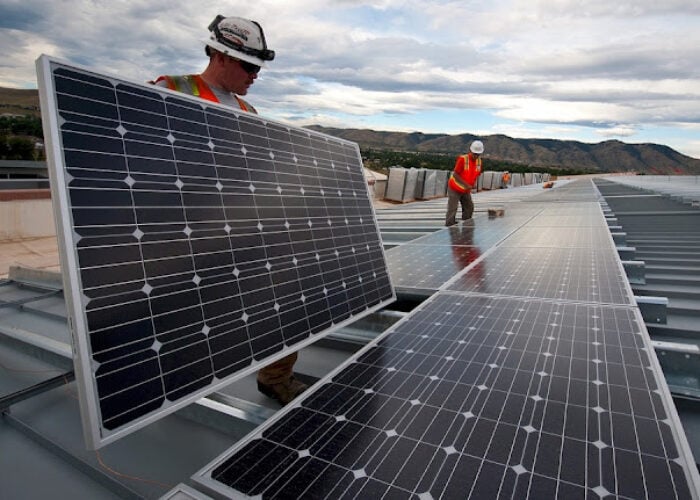
“The [Treasury] notice just included the installation of racks to affix PV panels, connectors or solar cells to a site—that’s it. But there are many other ways to satisfy the test,” Woodworth says.
“More is better,” adds Gradman. “So, to the extent that you do more physical work, spend more money on your physical work, do more activity; that is considered a stronger case.”
He describes a list of questions and criteria he would put to a developer, pushing at the significance of the on- or off-site work for the project as a whole and comparing it with the money expended, given the chance that the tax credit could be unforthcoming.
“It’s understandably nebulous and undefined,” he says, “And on the one hand, I think that’s of benefit to developers because it allows you to have many different activities that can be considered eligible. On the other, it’s not as objective as a 5% safe harbour.”
‘It’s lit a fire in the short term’
The more restrictive safe harbour and start of construction rules have “lit a fire” under developers, Gradman says.
“Lit a fire in the sense that it has had a significant positive impact in the short term. Projects that weren’t sure if they were going to move forward are going forward because they want to capture these incentives. Project developers who may have been financially weak are either raising money to finish their last set of projects, or they are being purchased by other developers who are better funded.”
All of the projects beginning construction between now and 4 July 2026 will have “four-plus years” to complete, he points out, “So we’re looking at construction activity and new project deployments through 2030 just by simple math.”
He says it could result in a higher total deployment of new solar over the next four years than might otherwise have occurred, as even projects which miss the 4 July deadline can try to complete by the end of 2027, which might favour more rooftop or smaller-scale solar projects.
The IRA tax credits can make or break projects, hence the rush to secure safe harbour. “These tax credits can provide 6-50% of your money back in capital expenditure; if a developer is expecting 50% back, then [losing the credit] makes a lot of these projects unviable,” Woodworth explains.
After 2030, though, things may change dramatically. “I don’t want to say a cliff,” Gradman continues, “but you’ll see a significant decline after the continuity safe harbour period ends, because the lack of pipeline will catch up with the construction schedule.”
Non-taxpayers ‘don’t have the risk apetite’
But the changes are likely to make things harder for smaller, “non-taxable entities”, Woodworth explains. By “non-taxable entities” he means schools, town halls, churches, non-profits and other public entities that might stand to benefit from a solar installation to reduce their energy bills or provide more self-sufficient power.
“The IRA allowed churches, schools, towns and cities to take advantage of tax credits through direct payment—like a rebate,” he explains, “But now, with these rules becoming more strenuous, these entities don’t have the risk appetite to start construction on a new solar facility because they just won’t get the credit.”
Direct payment was introduced alongside credit transferability to spread the benefits of federal credits more widely, giving payments equivalent to tax credits to public entities, with some options to increase payments for low-income areas or meeting apprenticeship and employment criteria.
“This is really unfortunate, because those non-taxable entities really need the energy and cost savings from [solar installations]. I think it may be disproportionately affecting them, actually,” Woodworth says.
Some projects by towns, cities or churches are likely to be below 1.5MW, which will mean they can use the 5% safe harbour mechanism rather than the physical work test, which is a lower bar to reach. But meeting FEOC guidelines will be even harder for a smaller public development than a private one; “I don’t think nonprofits and non-taxable entities will be willing to spend that extra cash on compliance costs like private developers are,” he explains.
Moreover, non-taxpayers are required to meet thresholds for domestic content in order to gain tax credits, even if they are small enough to use the 5% spend qualification.
Meeting domestic content targets is difficult in the solar industry. “It’s not impossible,” Gradman says, “but it’s difficult to meet, and after 2026 if you do not meet the domestic content requirements as a non-tax payer, you do not get a credit.”
Domestic content requirements under the IRA were designed to give an incentive to buy US-made products; companies can get an extra 10% tax break if they meet the cost-based threshold for using US products and components. But as a requirement for entities like non-profits, churches and local authorities, it becomes another barrier to access, as US-made products are often more expensive and, particularly in the solar industry, are in very high demand.
The changes to safe harbour rules ultimately push tax benefits for solar away from smaller, public entities and towards big private developers. This might help the industry keep moving, but it will have detrimental effects on access to solar and renewable energy in the US. But for developers, the race is on until 4 July.