As renewable energy capacity expands, a new challenge is emerging across electricity systems: generating clean power is only part of the equation; increasingly, the question is how to coordinate distributed energy resources as weather, electricity prices and grid conditions change.
Try Premium for just $1
- Full premium access for the first month at only $1
- Converts to an annual rate after 30 days unless cancelled
- Cancel anytime during the trial period
Premium Benefits
- Expert industry analysis and interviews
- Digital access to PV Tech Power journal
- Exclusive event discounts
Or get the full Premium subscription right away
Or continue reading this article for free
Solar generation is inherently variable, while demand rarely follows the same pattern. Battery storage can help bridge that mismatch, but its value depends on when and how it is dispatched.
From climate intelligence to energy decisions
The issue gained attention at COP31 in Antalya, Türkiye, where an official Blue Zone side event explored how climate early warnings could lead to practical preventive action.
At the event, Tuya Smart presented its AI Energy ecosystem, with Conow, its digital energy ecosystem brand, providing a practical example of how AI can connect weather forecasts, grid signals and distributed energy assets to enable proactive responses to extreme weather and electricity price fluctuations.
The challenge reflects a wider gap in energy digitalisation. Weather forecasts influence solar generation and electricity demand, while dynamic tariffs reflect changing market conditions. Yet these signals often remain disconnected from the systems managing energy assets.
Through its AI Energy capabilities, Tuya Smart is bringing forecasting, optimisation and intelligent dispatch into energy management, enabling weather, price, device and consumption data to inform coordinated energy decisions.
Making distributed assets more responsive
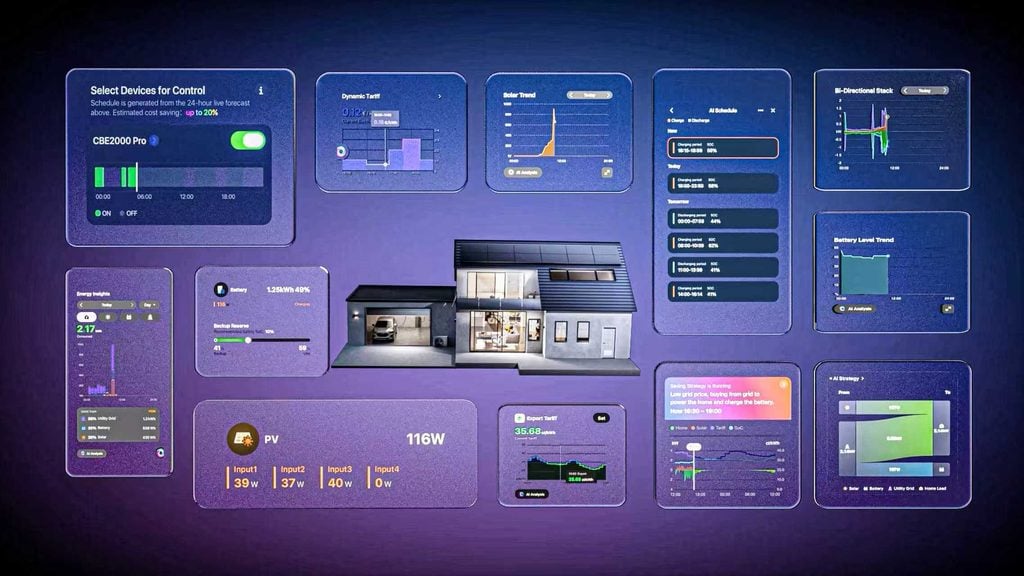
Conow puts these capabilities into practice through Conow AIX, its AI-native energy management platform. Leveraging Tuya Smart’s AI+IoT infrastructure, the platform integrates forecasting, optimisation and intelligent dispatch across solar, battery storage, EV charging and heating systems.
Rather than relying on fixed operating schedules, the system adjusts battery charging and discharging strategies according to weather conditions, dynamic tariffs and consumption patterns, helping to optimise energy costs and flexibility.
Climate resilience adds another dimension. Conow’s Storm Guard capability monitors local severe weather alerts and adjusts battery charging strategies ahead of potential outages, allowing households to prepare rather than react.
The economic potential is also significant. Conow AIX connects with more than 1,000 dynamic tariff service providers and supports over 3,000 smart-device categories. According to Tuya Smart, energy cost savings can reach up to 76.3% under specified operating conditions.
From climate intelligence to energy decisions
Residential storage offers an important starting point for AI Energy, connecting individual energy assets to wider system flexibility.
In Europe, Conow’s expanding residential storage portfolio provides a practical foundation for AI-driven energy management, with its technology also recognised by EUPD Research’s Top Innovation Germany 2026 award.
However, the potential extends beyond households. Commercial buildings, industrial facilities and other distributed energy applications face similar challenges in coordinating on-site generation, storage and flexible demand.
Tuya Smart’s AI Energy ecosystem and Conow are advancing the coordinated management of distributed energy resources, connecting previously fragmented storage assets and flexible loads. By enabling these assets to adjust their operation in response to both user demand and grid signals, the approach supports demand response and virtual power plant (VPP) integration.
In Europe, Conow AIX already supports grid demand response and VPP dispatch. According to Tuya Smart, participating energy assets could generate additional flexibility revenue averaging €3–5 per day for every 10kW of participating capacity under applicable market conditions.
This points to a broader shift in energy management: from reducing individual electricity bills towards coordinating distributed resources as part of a more flexible electricity system.
The next phase of energy digitalisation
As electricity systems become increasingly decentralised, the challenge is shifting from forecasting energy conditions to coordinating how distributed assets respond. The approach demonstrated through Tuya Smart’s AI Energy ecosystem and Conow reflects this transition, where the value of AI lies not only in predicting change, but in turning those predictions into timely, coordinated energy action.