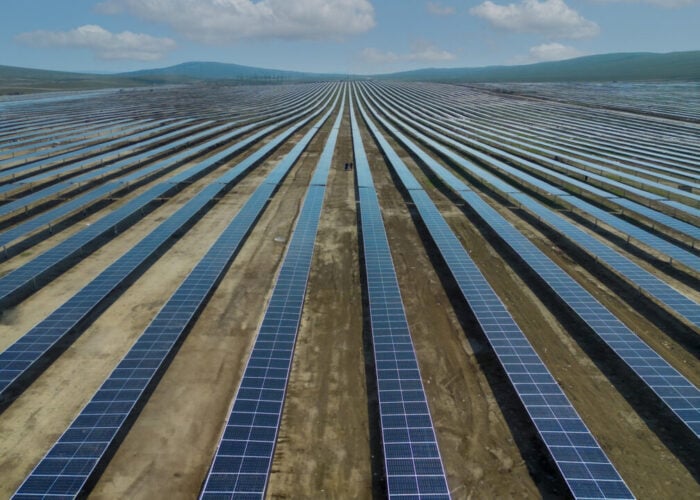
The UK has experienced its annual surge of activity for developers to complete and connect solar farm projects in time to receive financial support under a scheme that has now partially expired.
The renewable obligation (RO) scheme, the main support mechanism for renewable energy in Great Britain, was in place for large-scale solar until yesterday. The RO issued renewable obligation certificates (ROCs) to green energy generators who then sold off the certificates to licensed electricity suppliers. Renewable energy generation was therefore rewarded at a supported rate as specified in the ROC.
Try Premium for just $1
- Full premium access for the first month at only $1
- Converts to an annual rate after 30 days unless cancelled
- Cancel anytime during the trial period
Premium Benefits
- Expert industry analysis and interviews
- Digital access to PV Tech Power journal
- Exclusive event discounts
Or get the full Premium subscription right away
Or continue reading this article for free
As of the new financial year, PV projects smaller than 5MW will continue to operate under the RO, while anything larger than that goes into the contracts for difference (CfDs) scheme. CfDs will see all renewable energy projects competing for a central pot of funding. It has already proved somewhat controversial due to a small number of wind projects taking the majority of the initial allocation in the scheme’s first round which concluded recently.
PV Tech’s sister site, Solar Power Portal, which focuses on UK solar, has rounded up news of some of the projects and developers that have successfully managed to negotiate the final run-in period. One company, Grupotec Renewables, had connected 186MW in less than four months, while international developer Conergy said it had built and connected 12 UK projects in the first quarter of the calendar year alone.
Final figures on how much capacity was installed in the run-up to the deadline have to become clear, but it is likely to be well over 1GW, and analysts have predicted the UK to be in the top five PV markets in 2015 largely on the basis of projects built in time to qualify for the RO support.
The head of an independent connection provider, Dragon Infrastructure Solutions, described the final run-in period as developers scrambled to finish their projects as “lunacy”. Speaking to Solar Power Portal last week, Phipps said that “significant risks” were being taken by contractors in order to have projects finished to deadline. He also said the rapid connection to high voltage lines was “storing up grid problems”.
The situation was even worse last year when poor weather threatened the completion of projects and even the safety of workers, according to sources including Jonathan Selwyn, chief executive of UK developer Lark Energy. Selwyn talked of “swamp-like conditions,” especially in the UK’s south western region, where much of the country’s large-scale solar development has been sited. This year at least the weather remained relatively mild.