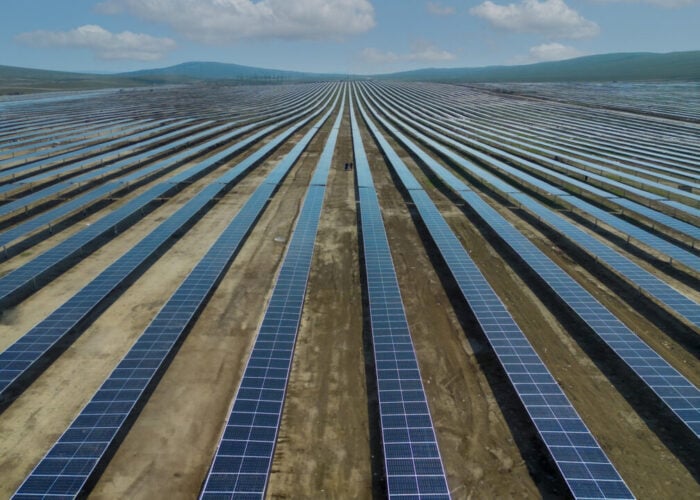
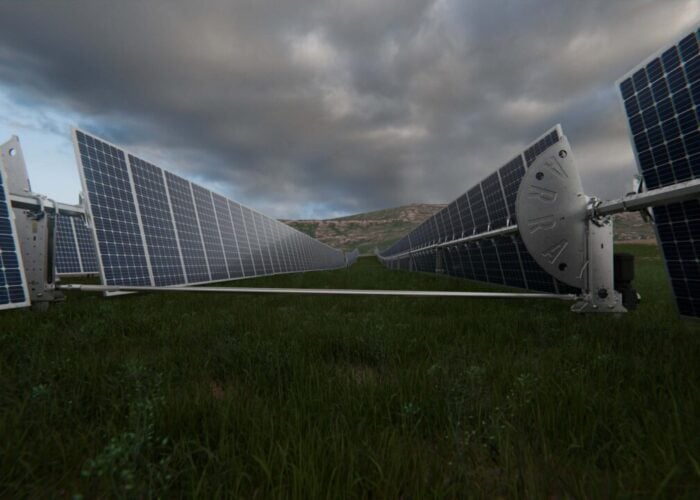
Subsidy-free solar in the UK could thrive by the end of the decade, according to a report published by Berlin-based think tank Thema1 and supported by a coalition of European companies.
The report, 'In Sight: Unsubsidised UK Solar', predicts that all three sectors of the UK solar market (ground-mount, commercial and domestic) will be able to compete without subsidy with traditional forms of energy within the next 10 years.
Try Premium for just $1
- Full premium access for the first month at only $1
- Converts to an annual rate after 30 days unless cancelled
- Cancel anytime during the trial period
Premium Benefits
- Expert industry analysis and interviews
- Digital access to PV Tech Power journal
- Exclusive event discounts
Or get the full Premium subscription right away
Or continue reading this article for free
The think tank believes that the UK solar market will continue to benefit from falling solar hardware costs as well as a maturing supply chain which will see system costs converge with Germany.
“We are firmly convinced that solar will become the bedrock of the global power system going forward,” explained report author Gerard Reid, a partner at corporate finance company Alexa Capital. However, the report makes clear that, in order for UK solar to realise its ambition of requiring no subsidy, policy support must be strong and consistent.
As a result, the study makes a number of policy suggestions to help UK solar thrive. Chiefly, the report expresses major concern over the government’s plan to make large-scale solar compete with onshore wind for auction-based contracts for difference support which it predicts will “damage the market”.
Reid added: “The road going forward is unchartered and difficult. Our message to the UK government is to reduce support for solar but do so gradually.”
The report also notes that the increasing penetration of solar may threaten traditional electric utilities operating in the UK. Looking at residential solar, the report notes that subsidy-free PV will rely on battery storage in order to maximise the amount electricity used onsite. Utilities that fail to embrace decentralised power and adapt to it could find themselves struggling, warns the report.
“As battery costs continue to fall, households will be able to deploy solar panels without government support,” said co-author Gerard Wynn, of GWG Energy, a consultancy focused on energy and climate policy. “Utilities and policymakers have consistently under-estimated the rate and impact of solar market growth, and this could be another surprise.”
The study predicts that the predicted adoption of solar PV in the UK could see more companies follow in E.ON’s footsteps, which recently split into two separate entities; the larger dealing with renewables, the other for fossil fuels and nuclear.
Wynn and Reid conclude: “The trend of continuing capacity increases coupled with cost reductions has caught out policymakers and analysts. Ignoring these trends would be like ignoring the displacement of fixed telephone lines by mobile phones. The reality is that the cost of solar power is on a downward trajectory…Our message to the UK government is to reduce support for solar, but to do so gradually.”
An in-depth report charting the UK's path to subsidy-free solar by 2020 can be found in the new issue of Solar Business Focus UK, due out next week. To order a copy click here.