The US International Trade Commission (ITC) has begun an investigation into tunnel oxide passivated contact (TOPCon) solar products in the US, following a complaint by US thin-film module manufacturer First Solar.
The ITC will investigate “certain TOPCon solar cells, modules, panels, components thereof” entering the US as a result of a complaint from First Solar over its intellectual property (IP) rights.
Try Premium for just $1
- Full premium access for the first month at only $1
- Converts to an annual rate after 30 days unless cancelled
- Cancel anytime during the trial period
Premium Benefits
- Expert industry analysis and interviews
- Digital access to PV Tech Power journal
- Exclusive event discounts
Or get the full Premium subscription right away
Or continue reading this article for free
The investigation will determine whether TOPCon products imported, sold for importation or sold after importation to the US violate Section 337 of the 1930 Tariff Act and infringe on First Solar’s TOPCon IP. It specifically relates to US Patent No. 9,130,074, which is one of the patents First Solar acquired when it bought startup solar firm TetraSun in 2013.
The ITC named 47 respondents to the investigation from 11 countries, including major Chinese solar manufacturers JinkoSolar, JA Solar, Trina Solar and Canadian Solar, and significant US silicon-based players like Qcells and T1 Energy. It also encompasses firms in Germany, India, Southeast Asia and Canada.
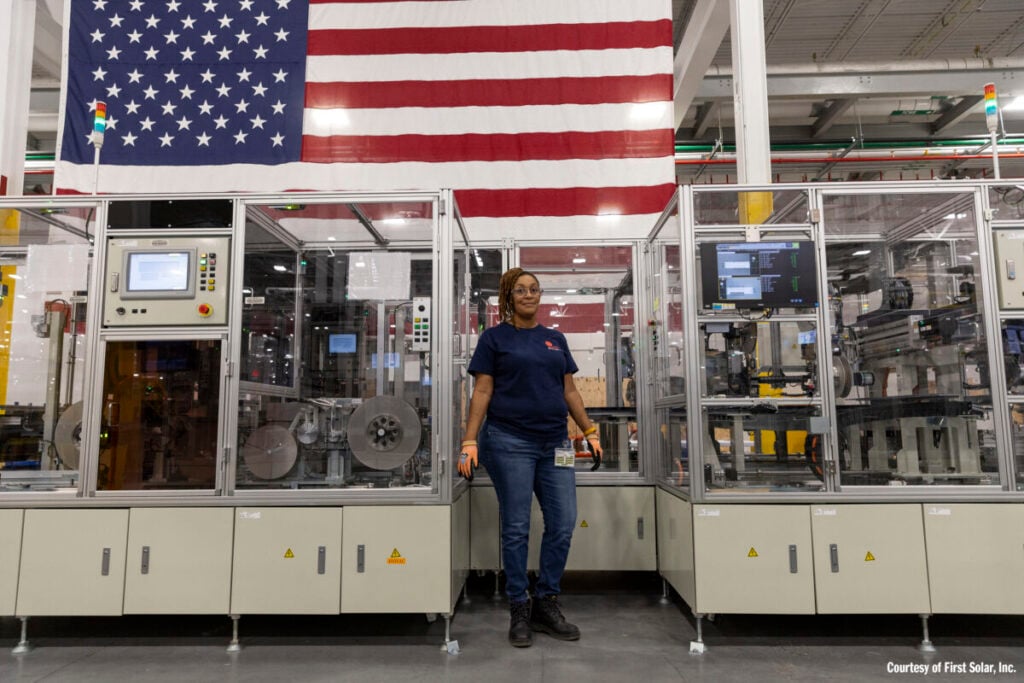
First Solar is the leading producer of cadmium telluride (CdTe) thin-film modules, a competitor technology to silicon-based solar products. The company is the largest module manufacturer in the US.
This development could be a major hurdle for US TOPCon production. Through the case, First Solar is seeking the ITC to issue general exclusion and cease and desist orders over the use of the relevant TOPCon technology.
As opposed to other tariff cases, like antidumping and countervailing duties (AD/CVD), this investigation is looking at a specific patent and piece of technology, rather than the origin of components. This could have broader implications for TOPCon solar production and imports to the US and could reach beyond the specific respondents to cover any infringement of the specific patent.
US manufacturers have already been struggling to produce TOPCon products due to the broad swathe of IP conflicts over the technology. First Solar has already been involved here, having faced down three challenges to the validity of its TOPCon patents early this year. The company has licensed its TOPCon patents to Talon PV, a cell manufacturing startup in Texas, but has been active in protecting its portfolio against other perceived infringements.
Last year, we spoke with the CEO of US-based solar cell producer ES Foundry, Alex Zhu, who said that he believed no company could safely produce TOPCon in the US without incurring litigation challenges.
The ITC has said that respondents in this investigation must submit responses within 20 days of notice being issued. It warns that failure to do so could result in cease and desist or general exclusion orders being issued.
This case could put significant pressure on the development of TOPCon technology as the dominant choice in the global solar industry, particularly in the politically sensitive and, in recent years, volatile US market.