PV module prices are set to fall considerably in the next five years, though US market prices will remain higher than the rest of the world as its import policies and ongoing competition with China add a market premium, according to the latest “PV Price Forecasting Report” from Colorado-based Clean Energy Associates (CEA).
The report shows that falling polysilicon prices will see a steep drop in module prices from China over 2023, with Southeast Asian modules following suit in 2024.
Try Premium for just $1
- Full premium access for the first month at only $1
- Converts to an annual rate after 30 days unless cancelled
- Cancel anytime during the trial period
Premium Benefits
- Expert industry analysis and interviews
- Digital access to PV Tech Power journal
- Exclusive event discounts
Or get the full Premium subscription right away
Or continue reading this article for free
From Q4 2022 to Q4 2023 CEA forecasts that Chinese module prices will drop ~15% as polysilicon prices ripple down the supply chain. CEA said that polysilicon accounts for around 16% of module prices; PV Tech Premium has been keeping track of silicon prices in our PV Price Watch series, which reported another 2.6% drop last week.
2024 will see Chinese module prices begin to normalise as margins decrease across the whole supply chain.
Southeast Asian module prices will drop around ~5% in 2023, with a steeper descent through 2024 and 2025 of a further ~10%.
The disruptions to importers to the US as a result of the Uyghur Forced Labor Prevention Act (UFLPA) will ease off through 2023, but lead times on module shipments and bookings will extend into 2025 and keep demand and prices higher in Southeast Asia. Last year, the UFLPA led to 2GW of modules being detained by customs at the US border.
The 10% drop in 2024/25 will be largely due to a bulk of capacity coming online in Southeast Asia, CEA said. In addition, the reaction to the anti-dumping and countervailing duty (AD/CVD) tariff investigation’s preliminary findings has been more positive than expected and will not see suppliers hike prices as much as may have been expected to mitigate potential disruptions.
For US developers in the market for Southeast Asian modules, CEA recommended that Q1/Q2 of 2025 is the optimal booking window in terms of supply and price.
Overall the US will see the highest module market price globally despite the general price drop-offs as supply shortages because of the UFLPA have led to a premium on imports, leaving suppliers able to maintain their margins.
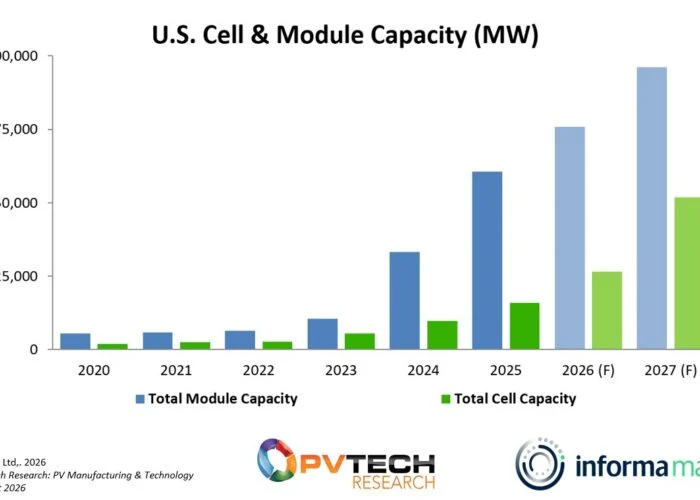
Since the passage of the Inflation Reduction Act, the US has been starting to build out its domestic PV manufacturing base to secure its own supply chain, though Wood Mackenzie predicted that meeting the country’s demand with domestic supply over the coming years would be a challenge. PV Tech analysed the route to full domestic control of PV manufacturing in February.
In terms of technologies, Tunnel Oxide Passivated Contact (TOPCon) is set to remain the more expensive technology compared with Passivated Emitter Rear Contact (PERC) modules through 2023 and 2024, limited by the fact that facilities being established, or shifting towards, TOPCon production will take time to gain ground.
Beyond 2024, the gap between TOPCon and PERC prices will shrink as the industry moves towards mass adoption of TOPCon modules. CEA predict that a gap will persist, however, as rising TOPCon adoption will lead to PERC being offered at discount rates as it phases out of general use.