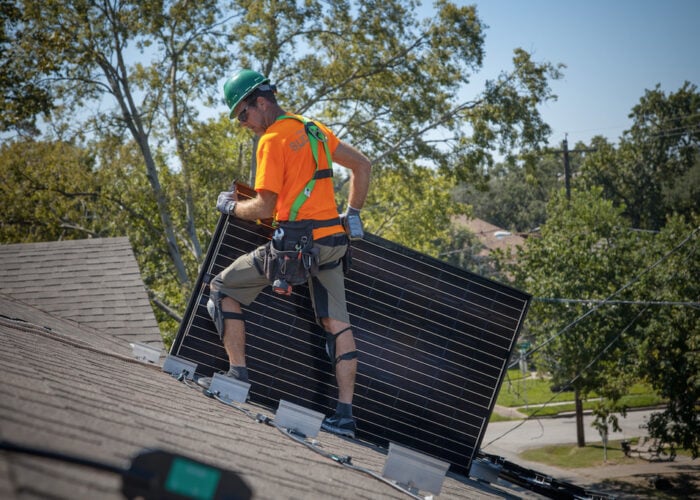
Strongly contested campaigns by some US-based utilities to change net-energy metering (NEM) policies for mainly residential PV owners are not expected to have a meaningful negative impact on the US PV market, according to the latest findings from market research firm IHS.
“States including Arizona, Colorado and California are re-evaluating their NEM policies,” said Wade Shafer, senior analyst covering North American PV at IHS. “This has spurred some concern about the development of distributed solar in the US, since NEM incentives are critical to supporting the customer-sited PV market. After examining proposed changes and recent utility commission rulings, IHS has determined that net metered PV project economics will not be significantly impacted in 2014.”
Unlock unlimited access for 12 whole months of distinctive global analysis
Photovoltaics International is now included.
- Regular insight and analysis of the industry’s biggest developments
- In-depth interviews with the industry’s leading figures
- Unlimited digital access to the PV Tech Power journal catalogue
- Unlimited digital access to the Photovoltaics International journal catalogue
- Access to more than 1,000 technical papers
- Discounts on Solar Media’s portfolio of events, in-person and virtual
However, based on recent policy changes and debates in major residential markets of California, Arizona and Colorado utilities are likely to increasingly focus on ‘avoided-cost methodology’ to determine NEM benefits for non-NEM ratepayers that would ultimately reduce NEM financial benefits to PV customers.
“The proceedings in Arizona, Colorado, and California all indicate that avoided utility costs are emerging as the way to determine NEM PV’s value. However, with no single methodology for determining avoided costs, the debate over NEM benefits to the greater power system is likely to continue. Given that Arizona is currently positioned for NEM reform in 2015 and that California must create a new NEM tariff by 2016, the arguments are likely to continue through 2014 and 2015,” added Shafer.
Yet, expected increases in electricity prices while PV system installation costs continue to decline are expected to dampen the impact of policy changes that are likely to be hotly debated across the country over the next few years.
According to IHS, 85% of distributed PV is located in states with full retail-rate NEM, while an estimated 70% is located in states that are reviewing their NEM policies.
Without a national energy policy the outcome in the US is expected to lead to a fragmented NEM policy, IHS said.