Utah governor signs bill to phase out US$2,000 tax credit for rooftop solar

Facebook
Twitter
LinkedIn
Reddit
Email
Governor Gary Herbert signed into law the measure created by Rep. Jeremy Peterson, who believes solar should

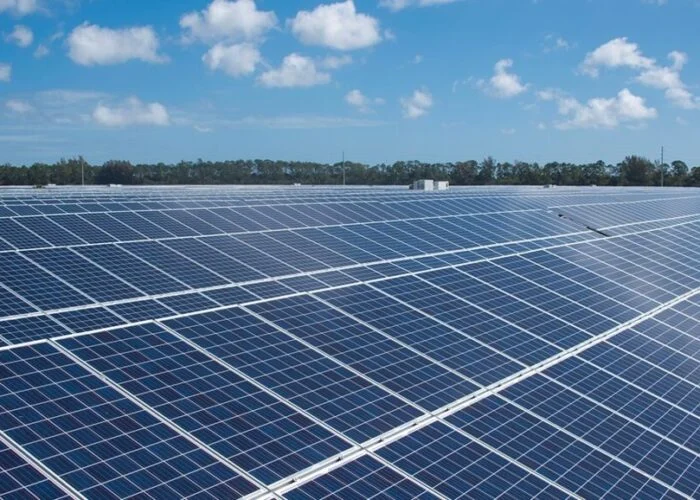
Yesterday, Utah governor Gary Herbert signed a bill into law that phases out the tax credit incentive for installing residential solar.

HB23 stipulates that the Utah solar incentive programme and its surcharge tariff will end by gradually reducing the US$2,000 tax credit that is received by consumers when they install rooftop solar panels.

This article requires Premium SubscriptionBasic (FREE) Subscription

Try Premium for just $1

  • Full premium access for the first month at only $1
  • Converts to an annual rate after 30 days unless cancelled
  • Cancel anytime during the trial period

Premium Benefits

  • Expert industry analysis and interviews
  • Digital access to PV Tech Power journal
  • Exclusive event discounts

Or get the full Premium subscription right away

Or continue reading this article for free

Instead, the credit is limited to US$1,600 in 2018 and will be gradually decreased every year until it is just US$400 by 2021. Any systems installed after that year will not be eligible for any tax credits.

This measure was originated by representative Jeremy Peterson who said that Utah’s solar industry should “run on its own strength” without incentive.

This is not the first legislative attack on Utah’s solar industry. Last year in November, utility Rocky Mountain Power proposed new rates for solar users that would have upped bills by US$19 a month, with an addition US$15 service charge and 3.81 cents/kWh fee. It also proposed a US$60 net metering application fee and a monthly demand charge that would have devastating effects on the state’s residential solar market.


13 October 2026
San Francisco Bay Area, USA
PV Tech has been running an annual PV CellTech Conference since 2016. PV CellTech USA, on 13-14 October 2026 is our fourth PV CellTech conference dedicated to solar manufacturing in the USA. From polysilicon, wafers, ingots, cells and modules, to critical component suppliers including glass and frames, the event connects every stage of the value chain under one roof. PV CellTech USA also brings together investors, innovators, manufacturers and industry stakeholders to collaborate and strengthen domestic solar manufacturing across the United States.

Read Next

July 16, 2026
US utilities NextEra Energy and Dominion Energy have formally submitted applications to state and federal governments to merge their companies, creating the largest regulated power utility in the world.
Premium
July 16, 2026
Jim Wood, SEG Solar's CEO, explains the company's US manufacturing roadmap and why it chose heterojunction technology for its new facilities.
July 16, 2026
In the second of a two-part post, Moustafa Ramadan, head of PV Tech Research, explores the increasingly complex risks associated with solar cell procurement in the US.
July 15, 2026
PureSky Energy, ClearGen Holdings and Aligned Climate Capital have advanced distributed solar projects in the US this week.
July 15, 2026
The chief executive of fledgling US module and cell producer T1 Energy has highlighted his company’s efforts to forge local component manufacturing partnerships and tap homegrown engineering talent.
Premium
July 15, 2026
US module and soon-to-be cell manufacturer T1 Energy is looking beyond wafers and cells to catalyse domestic production of ancillary components such as glass, frames and even pallets—while tapping semiconductor industry talent to staff its expanding operations.

Upcoming Events

Solar Media Events
October 13, 2026
San Francisco Bay Area, USA
Solar Media Events
November 3, 2026
Málaga, Spain
Solar Media Events
November 24, 2026
Warsaw, Poland
Solar Media Events
April 20, 2027
Istanbul, Türkiye