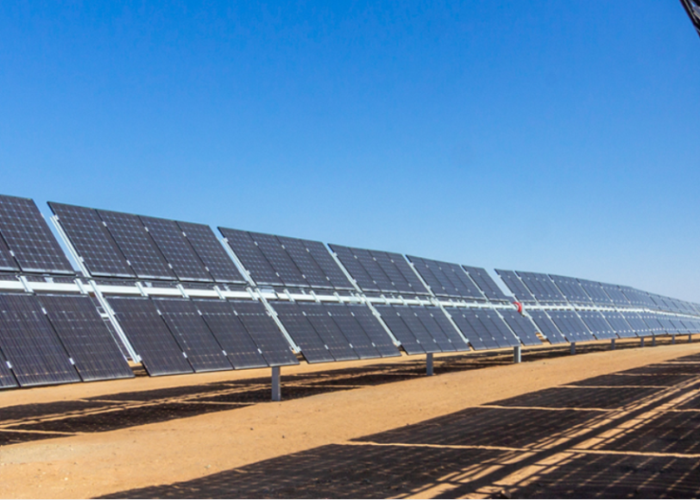
Japan’s electric utility companies that had stopped considering applications for utility-scale solar look set to resume doing so, although projects will be subjected to stricter new rules.
New rules on output from solar farms come into effect this week, marking an attempt to resolve a situation that had meant five out of Japan’s 10 electric utility companies stopped accepting applications for new projects.
Try Premium for just $1
- Full premium access for the first month at only $1
- Converts to an annual rate after 30 days unless cancelled
- Cancel anytime during the trial period
Premium Benefits
- Expert industry analysis and interviews
- Digital access to PV Tech Power journal
- Exclusive event discounts
Or get the full Premium subscription right away
Or continue reading this article for free
The suspension of applications began with Kyushu Electric Company in September, the regional utility for the southern region of Kyushu, made up of small islands and by all accounts showing signs of local grid infrastructure reaching a point where adding more solar was becoming more and more difficult.
Four other regional utility companies, although less affected than Kyushu, followed suit, leading to the establishment by the government’s Ministry of Economy, Trade and Industry (METI) of a “working group on grid connection”, which calculated how much capacity remained at the five. The group calculated that although 17.3GW worth of projects approved to date would go over the available capacity limits cited by the utilities, some 51GW of capacity still remained across the five affected regions.
Those five utilities, which are also responsible for the grid in their respective service areas were cleared to resume considering applications for projects as of yesterday, according to news reports and statements on the utilities' own websites confirming the resumption. It remains up to the utilities themselves to make decisions on whether or not to grant grid connection to individual projects. They are expected to deal with the backlog in order of receipt.
Japan’s government launched an end-of-year review of the country’s feed-in tariff (FiT) in order to quell fears over the grid connection issue and what analysts described as a “bubble” forming in the industry over unbuilt projects and the cost of renewable energy – as well as, some would argue, for political reasons.
One analyst, Dr Hiroshi Matsukawa at RTS PV in Tokyo told PV Tech that over 20GW of projects were approved for the FiT in March 2014 alone, an indication that suppressive measures were necessary. Matsukawa said, however, that the new rule changes are nonetheless strict. One positive aspect, according to Matsukawa and various other sources including developer Conergy, is that the rule changes do not apply retrospectively on plants granted FiT approval before the suspension of applications became widespread across the five utilities in question in October.
Meanwhile, it is thought that spare capacity still remains for additions of generation to the grid at Japan’s five other main electric companies where the situation is far less acute, including Kansai Electric and Tokyo Electric on the main Japanese island of Honshu. Yet land remains at a premium in Japan, meaning developers are turning to new solutions like floating PV plants on reservoirs or reclaiming space at landfill sites or even defunct golf courses.
The utilities will also be able to exercise wider controls on output from solar farms under the new rules. Electric companies can now stop accepting power generated from solar farms into the grid for up to 30 days a year without compensating owners and operators of PV plants when supply exceeds demand.
However, the government has delayed applying output suppression rules to smaller scale solar power systems, defined as below 10kW generation capacity and mainly residential. These will now be applied for projects which receive FiT approval from the end of March onwards.
This week, deputy director Keiji Hidaka at the Agency for New and Renewable Energy (ANRE) at METI informed PV Tech that Japan intends to set targets for renewable energy generation as a proportion of the national energy mix at some point in the coming year. The news is expected to be welcomed in the industry and by advocacy groups.
A spokesman for Softbank, the Japanese telecommunications giant which has diversified into renewable energy development, recently told PV Tech that in his company’s opinion, the lack of defined targets for renewables was a cause of many of the recent woes solar has suffered. According to the spokesman, Kenichi Yuasa, who said he had consulted Hiroaki Fujii, the vice president of Softbank’s renewable energy division, SB Energy for his thoughts, even the grid connection issue was tied to the lack of targets and a clear focus.
“We think that recent problems with grid connection do not come from the FIT's effect,” Yuasa said.
“Those problems are pointed from the start of FIT scheme because of the lack of [inclusion of] a political target ratio about the best energy mix for Japan, including renewable energy, at the start of the FIT policy.”
In other news from Japan, Mitsubishi Electric Company today announced the completion of the Onahama solar project in Fukushima prefecture, a 6.2MW facility. The plant was constructed using 261w modules with a conversion efficiency of 15.8% under long-term warranty.