Greece

Country/Tariff Roof-Top Ground-Based BIPV Term
Greece
February 2012

>100kW = 0.292

<100kW = 0.328

<10kW = 0.495

August 2012

>100kW = 0.272

<100kW = 0.305

<10kW = 0.470

20/25 years
February 2013

>100kW = 0.252

<100kW = 0.284

<10kW = 0.447

20/25 years
August 2013

>100kW = 0.235

<100kW = 0.264

<10kW = 0.424

20/25 years
February 2014

>100kW = 0.218

<100kW = 0.246

<10kW = 0.403

20/25 years
August 2014

>100kW = 0.203

<100kW = 0.229

<10kW = 0.383

20/25 years

Update: February 2012

Following consultations with stake holders and environmental organisations, the Greek Ministry of Environment has published new FiTs for PV installations, effective February 1. The tariff for PV systems up to 100kW and for systems installed on non-interconnected islands has been reduced by 12.5% compared to the previous rate introduced in 2009. The new tariff will be further reduced by 7% every six months until August 2014.

January 2012

Law firm Metaxas and Associates has been assigned by a Greek PV equipment construction company to draft a letter to examine the compatibility of potential measures for the support of national photovoltaic industry with EU State Aid Law, to counter the reduction of the current FiT.

History

Back in 2007 a Ministerial decision was made to set up a PV development program in conjunction with FiTs, this plan foresees that in the period between 2007 and 2010 a total of 540MWp will be installed in the interconnected system of the Mainland, 200MWp in the islands and 50MWp for off-grid applications.

The new FiT rate will give support for a period of 20 years, and is expected to be revised after this time. Data recorded in 2007 shows that PV systems in Greece account for more than 1.3MW of the energy sources in this country. Since then, the amount has gone up considerably as the amount of installations increases with popularity of this energy source.

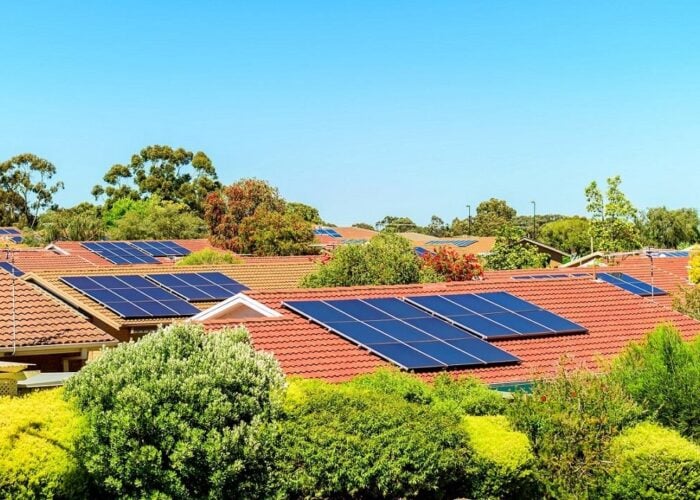
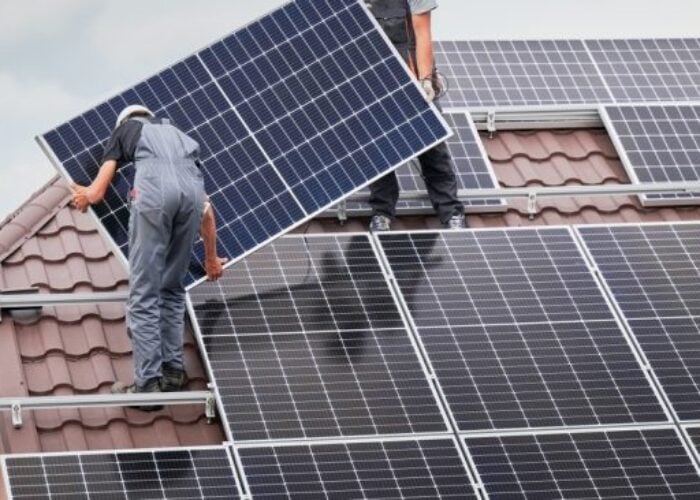
The Greek Minister of Development announced on 4th of June 2009 that he had signed the Joint Ministerial Decision for free PV installation projects of up to 10KWp, for use on the roofs of houses and business buildings.

This will mean easier and faster procedures for building΄s owners who can then take the license to install PV panels on their roofs. This program will be valid until December of 2019.

The owners of the buildings, after covering their needs in energy consumption, will sell the rest of the energy capacity, which they produce, to DEI SA (Public Power Corporation) at a higher price (FiT 0.55€/KWh guaranteed for 25 years and adjusted every year for inflation 25% of last year's Consumer Price Index) than they pay to DEI for each kW.

This new Joint Ministerial Decision (KYA) will strongly promote the PV projects in the Greek market and the sales of PV panels, inverters and other equipment and will also help the international business in Greece.

Plans for the future of renewable energy sources in Greece include increasing the share of RES in the country to 18% by the year 2020. The goal for PV is set at an expansion of 700MWp by the same year.

Other statistics for PV systems by 2020 include, an installed capacity of 200MW, 0.20TWh of energy generated and a 0.28% share of this energy source by 2010.

Post a Comment

Post

Newsletter

Preview Latest Subscribe
We won't share your details - promise!

Publications

  • Photovoltaics International 16th Edition

    Photovoltaics International 16th Edition

    This sixteenth edition of Photovoltaics International marks four years of production of the quarterly journal. As always, our focus is on efficiency and quality improvement and cost reduction in manufacturing. As 2012 rolls along, companies are falling by the wayside due to supply and demand issues, ASP declines and drastic governmental subsidy cuts. A clear picture of 2012 is offered through papers from the likes of TÜV Rheinland, Fraunhofer ISE, SEMI PV Group and EPIA, amongst others.

  • Photovoltaics International Lite, Volume 05 - 2011

    Photovoltaics International Lite, Volume 05 - 2011

    This digital interactive Lite sees Tom Cheyney follow Agua Caliente’s progress on becoming one of first truly utility-scale PV power farms, where 40–50MW (AC) will be commissioned by the end of the year. We also feature one of the world’s largest silicon thin-film PV power plants, Avenal; a report on warnings of the collapse of module prices from Solarbuzz and PI-Berlin presents tips on PV module testing. A print version of this edition will be distributed at Solar Power International 2011 in Dallas, Texas.

  • Manufacturing The Solar Future: The 2012 Production Annual

    Manufacturing The Solar Future: The 2012 Production Annual

    Manufacturing the Solar Future 2012, the second in the Photovoltaics International PV Production Annual series, delivers the next installment of in-depth technical manufacturing information on PV production processes.

Partners

Acknowledgements

Solar Media