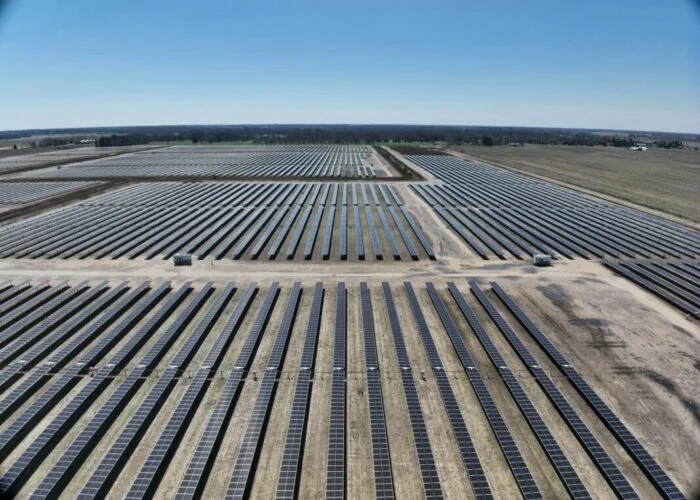
Rising electricity demand across the United States is creating a new phase of solar deployment, with data centres, industry and electrification all contributing to rapidly increasing load growth.
Against this backdrop, the US is expected to install a record 43.4GW of utility-scale PV in 2026, intensifying scrutiny on module availability, quality and reliability across the supply chain.
Try Premium for just $1
- Full premium access for the first month at only $1
- Converts to an annual rate after 30 days unless cancelled
- Cancel anytime during the trial period
Premium Benefits
- Expert industry analysis and interviews
- Digital access to PV Tech Power journal
- Exclusive event discounts
Or get the full Premium subscription right away
Or continue reading this article for free
“It’s all about solar PV and storage. For us, it’s that vision of how you go into a rapidly scalable, low-cost, reliable energy source that’s proven, like solar and storage,” says Daniel Barcelo, CEO at US solar manufacturer T1 Energy.
Solar PV alone is forecast to account for more than half of all new US power generation capacity to come online in 2026, which begs the question of: Where will all this installed capacity come from; are there enough compliant PV modules?
The upcoming PV ModuleTech USA Conference in Napa, California, on 16-17 June 2026, will address this important question. Speakers will represent all areas of the value chain, including manufacturers, developers, policy experts and research institutions.
The first session will focus on the domestic availability of PV modules featuring industry-leading manufacturers. Among the speakers is Martin Pochtaruk, president at Heliene, whose company forged a strategic partnership with Suniva and Corning in 2025 to establish a fully integrated solar module manufacturing ecosystem from polysilicon production through to final module assembly.
Imperial Star Solar and T1 Energy will also contribute their perspectives on domestic manufacturing capabilities, while PV Tech’s head of Market Research, Moustafa Ramadan, will share a comprehensive analysis of the current US manufacturing landscape and emerging trends.
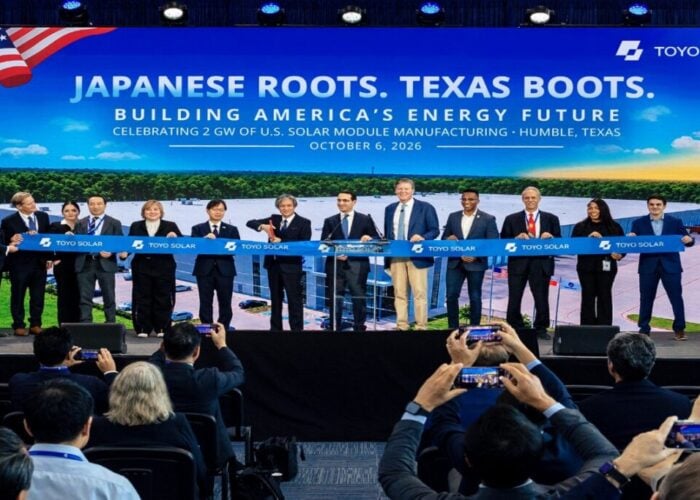
The domestic manufacturing sector continues its growth trajectory through 2026. Most recently SEG Solar – which will be represented at the conference – announced its third module assembly plant in Texas set to begin operations in May 2027.
However, not all upcoming projects will use domestically manufactured modules and trade policies such as anti-dumping/countervailing duties (AD/CVD), tariffs and FEOC regulations for projects claiming tax credits continue to be important topics which will be addressed at PV ModuleTech USA with insights from module buyers and legal experts to shed light on the current impact of these policies on procurement.
Quality and reliability of the PV modules, which have been a recurring topic covered on PV Tech over the past year, continue to be a critical topic for PV module buyers and investors looking for secure investments over the lifetimes of projects. The afternoon sessions on Day 1 will delve into this topic, with Kiwa PVEL sharing insights from their latest PV reliability scorecard, National Laboratory of the Rockies (NLR) sharing insights into glass breakages and a panel discussion of industry experts discussing the important topic of “Balancing Cost, Quality, and Reliability in PV Modules”. In a recent discussion with PV Tech Premium (subscription required) ahead of the event, Tristan Erion-Lorico, VP of sales and marketing at Kiwa PVEL, highlighted one of the positive outcomes from this year’s Module Reliability Scorecard:
“Current modules over the last few years that are higher power also produce more energy. It’s not just that they’re higher power, they generate more electrons throughout the day. So that’s fantastic.”
Recycling, PV optimisation and co-location
Day 2 of the event will kick off with a session dedicated to PV module suppliers, bringing together some of the leading companies and new entrants to the US market to share insights into their different approaches to supply chains, product availability and market strategies.
Other topics covered will include sustainability, including recycling, which the industry has been putting growing attention on in the past few years. In a recent interview with PV Tech Premium, Sonia Dunlop, CEO of the Global Solar Council, highlighted the importance for companies to think about module recycling at the installation phase instead of the decommissioning phase. This includes the financial aspects of decommissioning solar panels. “It protects the consumer from inflated higher costs when the panel reaches the end of its life,” explained Dunlop.
Maximising PV performance when selecting key components of a PV system is also an important topic, whether this is for resilience from hail and extreme weather or from the processes involved in building projects. “The major trend with what Nextpower is doing is trying to be a complete solution, technology and platform provider,” said Jenya Meydbray, VP and general manager, advanced steel frames at Nextpower, who will be a speaker during that session.
This leads into PV system optimisation, for which we recently spoke with Frank Oudheusden, founder of consulting firm Azimuth Advisory Services and engineering company Resilient SolarWorks, about it and he highlighted the need to establish a “deeper investment in establishing a true risk profile as early as possible in the project” when developing a PV project this highlights the need for collaboration between key stakeholders and identifying opportunities for improvements.
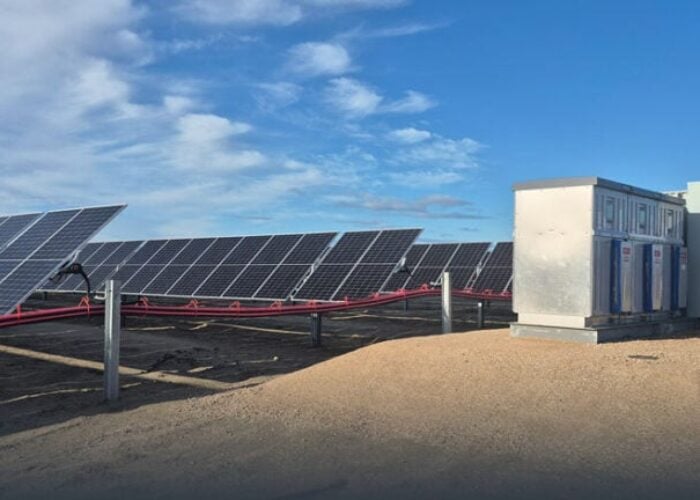
It is now nearly impossible to talk about solar PV without mentioning energy storage. Co-locating solar with BESS has become an imperative in many parts of the world, including in the US and for this reason and for the first time at PV ModuleTech USA, we will be bringing together experts to share insights into battery storage and co-location and what it means for procurement.
“From a construction standpoint, I don’t want to oversimplify the work that goes into it, but it’s really easy to build the battery storage if you already have the solar farm there. It doesn’t take up nearly the same amount of land,” said Todd Heffner, partner at Smith Gambrell Russell, who will be looking at the warranty aspects of the technology.
The QA/QC and due diligence process for PV module procurement has evolved over the past few years and the final session of the conference will look at some of the lessons learned that can be applied to BESS projects, whether this is in the supply chain visibility or in the testing requirement for products. Experts from STS, Kiwa PI Berlin and Intertek’s Clean Energy Associates will discuss some of these lessons learned and also some of the future considerations as the BESS sector matures.
As the US solar industry braces itself for a record year of projects to be built in 2026 and 2027, there is no better time than now to explore how companies can navigate module procurement and module quality as they start construction of their PV projects in the coming months. Meanwhile, the forecasted power demand growth in the coming years, led by data centres, and broader electrification trends across transportation, manufacturing, and buildings—has positioned solar PV and energy storage at the forefront of technology choices to deploy the needed capacity. Join us at PV ModuleTech USA next week in Napa, California. PV Tech readers can save 20% with code PVT20.