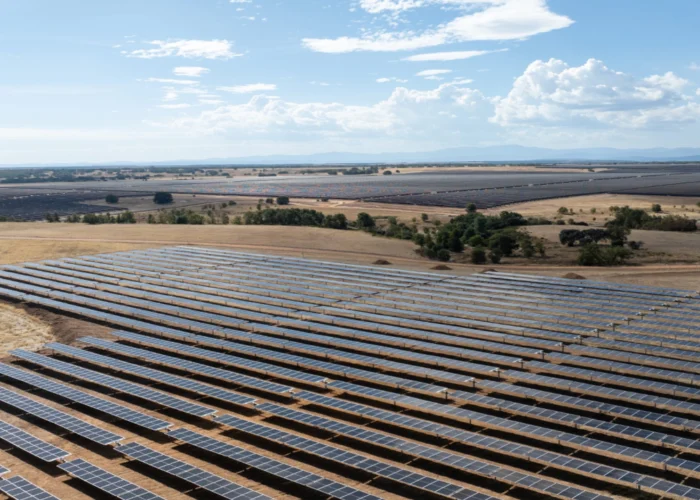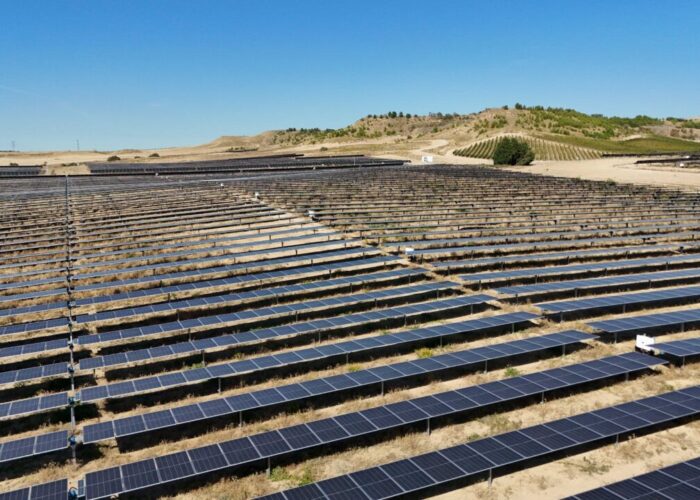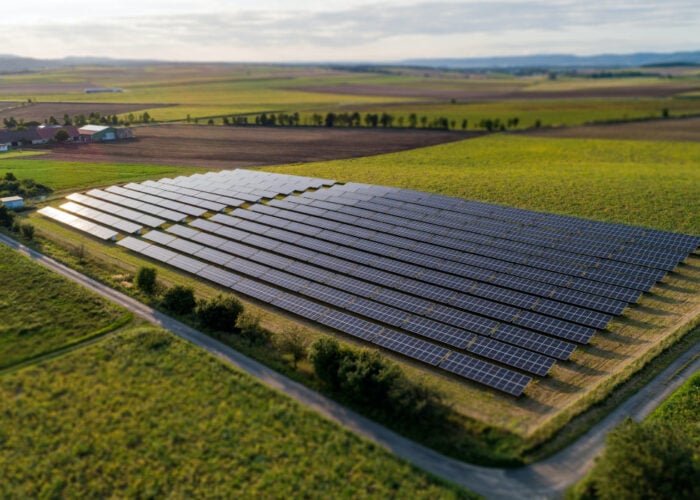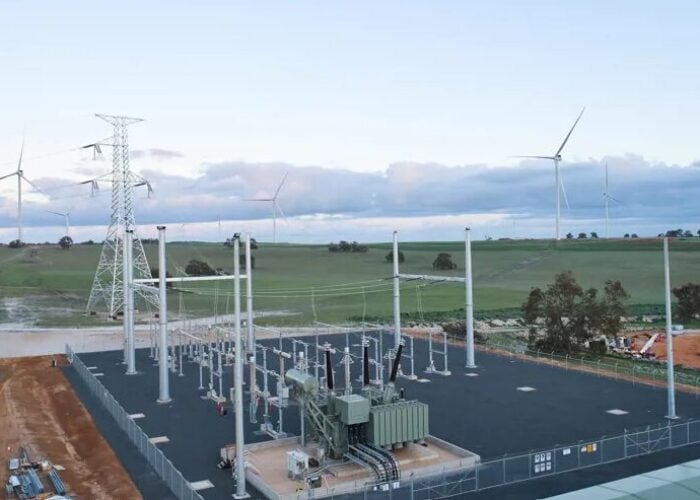
Global grids have failed to keep pace with renewable energy technologies and have become the “bottleneck of the energy transition”, according to a new policy report from the Global Solar Council (GSC).
The growth of solar PV and energy storage technologies, which have become the “absolute driving force, the cornerstone” of the global energy transition, is being hampered by “our 100-year-old grids and power markets”, the GSC report said.
Try Premium for just $1
- Full premium access for the first month at only $1
- Converts to an annual rate after 30 days unless cancelled
- Cancel anytime during the trial period
Premium Benefits
- Expert industry analysis and interviews
- Digital access to PV Tech Power journal
- Exclusive event discounts
Or get the full Premium subscription right away
Or continue reading this article for free
The document, produced in partnership with German inverter manufacturer SMA Solar, outlines policy recommendations and case studies for future developments, focusing on integrated solar and energy storage systems as the solution to curtailment, energy flexibility, reliability and so-called “duck curves”.
As “inverter-based resources” (electrical power generation like solar, storage and wind) take up a greater portion of global power generation, the grid needs to become less centralised and more digitised, “evolving from top-down to bottom-up flows,” the report said.
However, while the technology is now able to achieve this shift (for which the report cites the growth of energy storage and solar-plus-storage capacity globally), the GSC argues that regulation “lags” behind. Moreover, it claims that off-grid, rooftop and utility-scale solar and energy storage “can be the primary solution” to challenges like energy price hikes, load shedding (or blackouts) and the influence of “huge fossil fuel subsidies keeping power prices unnaturally low”.
This week alone, PV Tech has reported on multiple pieces of research which look at the challenges of integrating renewable energy into current grid systems. Analysis from think tank IEEFA South Asia and market analysts JMK Research found that the expansion of India’s transmission grid was too slow for its renewables targets, leaving around 50GW of new capacity stranded without a transmission connection.
We also spoke with climate think tank Ember about how the adoption of solar-plus-storage across Europe can provide “quick wins” for the continent’s “vulnerable” and centralised grid (premium subscription required).
An ‘interim’ grid
The report was timed to coincide with the announcement that the GSC will begin to represent the energy storage industry, as well as the global solar industry. It claims it is “the first global industry association to unite solar plus battery storage”. GSC CEO, Sonia Dunlop, said: “Solar and storage have evolved from complementary technologies to an integrated solution transforming how the world thinks about reliable, locally produced power.”

The GSC report said battery systems, particularly those with grid-forming inverters, growing electrification and flexibility mechanisms are “the enablers of a new, more competitive energy system.”
It said grid-forming technology, where battery systems can provide ancillary services to grid operators, “has become a key component for the reliability and stability of a modern grid”, and that the electrification of sectors like transport, heating and industry “is the macro-trend that will allow a power system to dial up and down in response to system needs.”
But these technologies are yet to make headway in large-scale grid planning and implementation, it said. “The current state of grid development can therefore be described as an interim phase—a work in progress in which technological innovation frequently outpaces regulatory reality.”
The policy recommendations in the report – which can be read in full here – include calls for macro, global-scale collaboration on “regional super-grids” and cross-border interconnections to “Unlock electricity export opportunities to improve system stability—especially in regions like ASEAN, West Africa, Southern Africa, India-Gulf, Europe-MENA and Central America.”
It also called for market reforms, greater national targets for energy storage integration, long-term grid development plans and the removal of barriers to hybrid plant development.