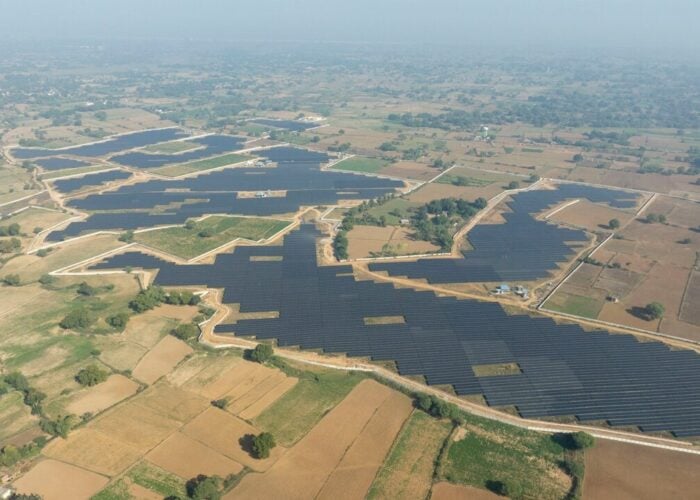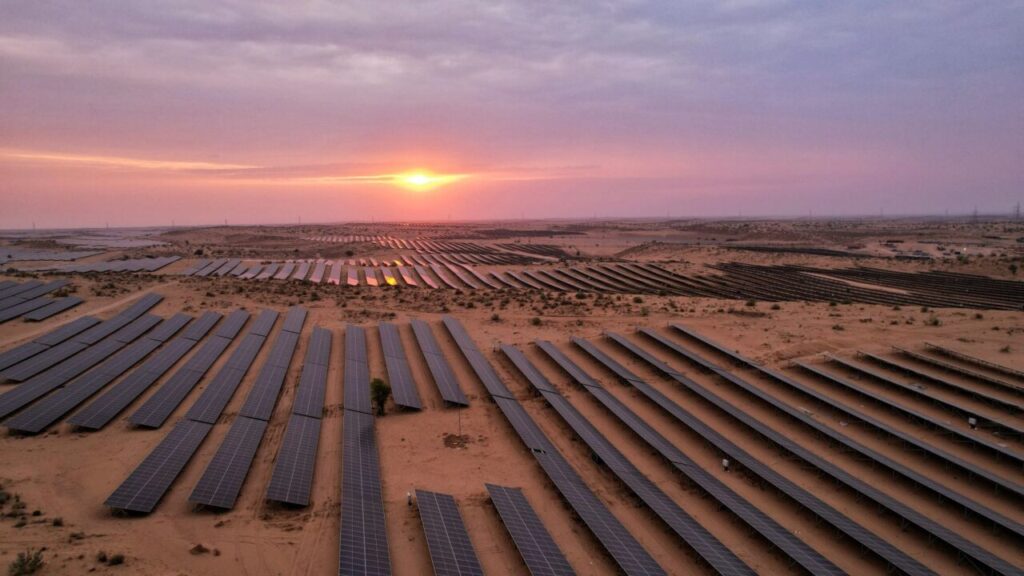
The build-out of India’s power transmission network is lagging behind the country’s rapid growth in renewable energy, leading to project delays and cost increases.
That is the conclusion of a report out today from think-tank IEEFA South Asia and market analysts JMK Research, which reveals that over 50GW of renewable energy capacity was stranded across India as of June this year due to transmission constraints.
Try Premium for just $1
- Full premium access for the first month at only $1
- Converts to an annual rate after 30 days unless cancelled
- Cancel anytime during the trial period
Premium Benefits
- Expert industry analysis and interviews
- Digital access to PV Tech Power journal
- Exclusive event discounts
Or get the full Premium subscription right away
Or continue reading this article for free
The report said these constraints are limiting the pace at which new capacity can be brought online and undermining India’s ability to reach its clean energy targets.
According to the report, the most recent network expansion figures reveal a 42% gap between planned and commissioned transmission lines, with Inter-State Transmission System (ISTS) additions at their lowest in a decade. Annual transmission line additions have fallen short of planned levels since 2019, with only 2021 surpassing expectations, the report noted.
“In several high-demand corridors, speculative hoarding of transmission capacity by entities without genuine project intent has driven up connectivity prices and delayed access for viable projects,” said the report’s contributing author, Vibhuti Garg, IEEFA’s South Asia director.
“Right-of-way issues, extended land acquisition timelines, restrictions on equipment procurement, and multi-agency approvals also contribute to delays,” added Prabhakar Sharma, co-author of the report and a senior consultant at JMK Research.
The report highlighted the mismatch between variable generation and grid consumption as part of the problem. While solar generation aligns with the afternoon peak consumption pattern, it tapers off in the evening when demand is high, creating a gap that limits the integration of renewables and leads to the underutilisation of transmission corridors. Energy storage is vital to bridge this gap, the report said.
It singled out the state of Rajasthan, where 8GW of renewable energy capacity remains stranded, with nearly half of that curtailed during peak solar hours. Delayed completion of the Associated Transmission System, the dedicated transmission infrastructure linked to new generation projects, along with capacity hoarding and ecological directives, has compounded evacuation challenges, inflated project costs and reduced operational efficiency.
IEEFA and JMK said a unified generation-transmission planning framework that aligns timelines and locations for new generation and transmission capacity was a key part of the solution. This would involve a coordinated approach, combining regulatory reform, operational efficiency measures and capital mobilisation. The integration of energy storage systems should also be prioritised in renewable-rich regions to enhance capacity utilisation and reduce curtailment, the report added.
Specific measures identified in the report include a single-window clearance system to streamline land, right of way and connectivity approvals, and performance-based incentives and disincentives tied to asset utilisation metrics to encourage timely commissioning and sustained operations.
“Without targeted reforms, misalignment between generation commissioning and evacuation infrastructure is likely to continue driving congestion, curtailment, and systemic inefficiencies, ultimately slowing progress towards achieving India’s decarbonisation objectives,” the report concluded.