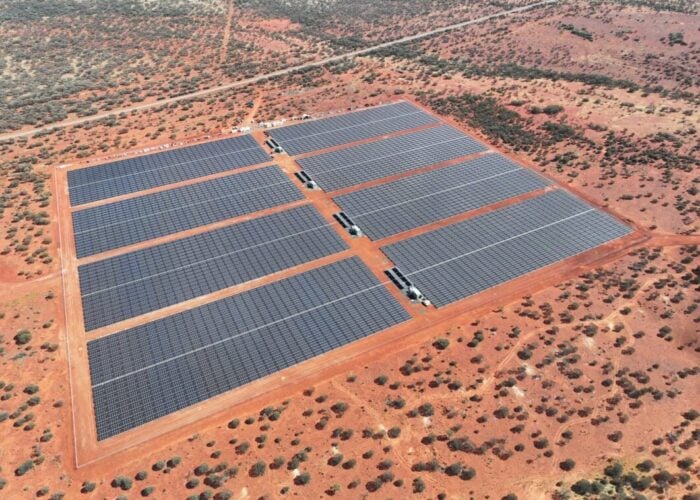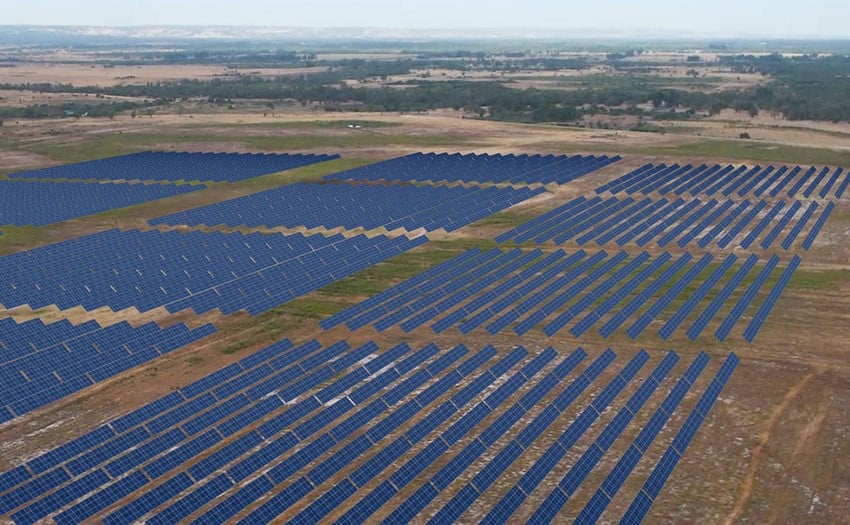
Australian power company Frontier Energy has secured an AU$215 million (US$140 million) debt facility from Infradebt to construct and operate the Waroona Energy Project’s first stage, a 120MWdc solar-plus-storage facility in Western Australia.
The terms of the deal with Infradebt, an Australian specialist infrastructure fund, will include a debt tenor of 17 years and a repayment structure that will allow the project to “maximise exposure to its attractive economics”, Frontier said.
Try Premium for just $1
- Full premium access for the first month at only $1
- Converts to an annual rate after 30 days unless cancelled
- Cancel anytime during the trial period
Premium Benefits
- Expert industry analysis and interviews
- Digital access to PV Tech Power journal
- Exclusive event discounts
Or get the full Premium subscription right away
Or continue reading this article for free
The agreement will also include terms for a long-term partnership. This could allow Infradebt to provide further finance to support the development of the second stage of the Waroona project. The agreement and security documentation are expected to be signed and completed in September 2024.
Waroona to implement co-located BESS
Frontier’s Waroona project has been described as “one of the largest renewable energy projects in Australia” and is located around 120km south of the state capital, Perth. The project will incorporate a co-located 80MW/360MWh DC-coupled battery energy storage system (BESS).
It will also connect to the South West Interconnected System (SWIS), Western Australia’s primary energy network, via the nearby 330kV Landwehr Electricity Terminal. As PV Tech reported on Tuesday (23 July), the SWIS is set to be reinforced via a new agreement between the Federal government and Western Australia.
The use of a BESS in the Waroona project not only enables the project to store energy produced from solar PV and release it when demand spikes, but it also qualifies Frontier to receive increased reserve capacity payments (RCPs), which reward developers for ensuring sufficient generation capacity on the grid.
Waroona is expected to be completed and connected to the grid by 2026 and, therefore, could be aided by the benchmark reserve capacity price, which was set at AU$230,000 at the end of last year. The Australian Energy Market Operator (AEMO) will set the reserve capacity price in late September 2024.
Adam Kiley, CEO of Frontier Energy, said the company’s Waroona project received interest from several major financial institutions, but ultimately, they settled with Infradebt deal due to its “highly attractive tenor and interest rate, whilst also providing greater flexibility compared to alternatives”.
“Infradebt’s proposal is also for 100% of the debt financing, meaning Frontier will only deal with a single party compared to a syndicate solution,” Kiley added.
It is worth noting that Waroona Energy, the original developer behind the Waroona Energy Project, was acquired by Frontier Energy in late 2023. Frontier already owned one-fifth of Waroona’s shares and, via the acquisition, took over the project’s development.