1366 Technologies and Hanwha Q CELLS edge cell record up to 20.3%

August 23, 2017
Facebook
Twitter
LinkedIn
Reddit
Email
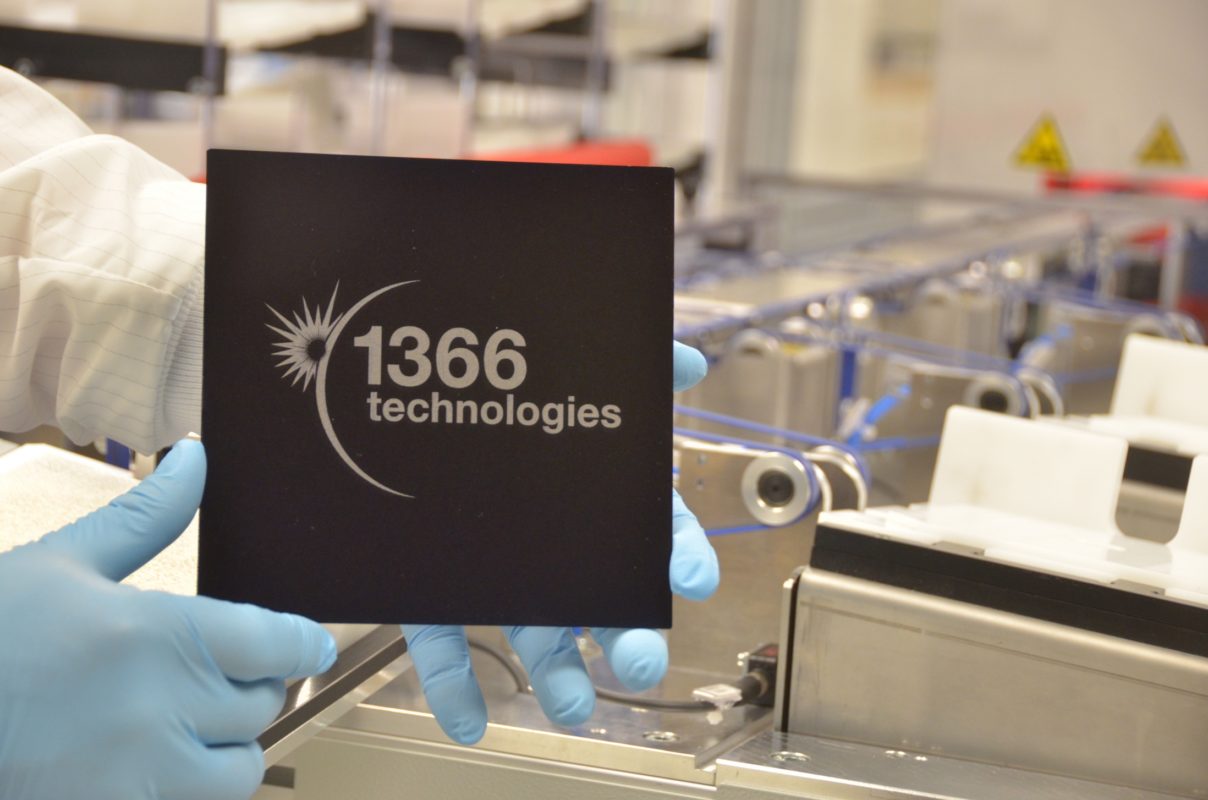
The records have been confirmed by Fraunhofer ISE CalLab. According to the companies they are currently increasing cell efficiencies at a rate of 0.8% per year. Image credit: 1366 Technologies.

US-based wafer producer 1366 Technologies and ‘Silicon Module Super League’ (SMSL) member Hanwha Q CELLS have announced a new cells record of 20.3% using direct wafer technology.

The pair also confirmed average cell efficiencies are now 20.1% on their pilot line that uses 1366 wafers and Hanwha Q CELL’s Q.ANTUM cell architecture. The records have been confirmed by Fraunhofer ISE CalLab. According to the companies they are currently increasing cell efficiencies at a rate of 0.8% per year.

This article requires Premium SubscriptionBasic (FREE) Subscription

Try Premium for just $1

  • Full premium access for the first month at only $1
  • Converts to an annual rate after 30 days unless cancelled
  • Cancel anytime during the trial period

Premium Benefits

  • Expert industry analysis and interviews
  • Digital access to PV Tech Power journal
  • Exclusive event discounts

Or get the full Premium subscription right away

Or continue reading this article for free

“Our strategic partnership with Hanwha Q CELLS is paving the way for a solar future where high-efficiency cells are realized at a substantially lower cost,” said Frank van Mierlo, CEO, 1366 Technologies. “Working at the melt level, rather than an ingot, means you can play with the make-up of the wafer as it is being formed. The wafer is no longer a commodity but a source for efficiency gains and differentiation.

“With the combined benefits of our Direct Wafer products and Hanwha’s Q.ANTUM cell technologies, we are rapidly closing in on 21% efficiency and demonstrating performance previously only achievable with monocrystalline wafers,” added van Mierlo. “The simple fact is sawing ingots – whether cast multi or pulled mono – is wasteful and energy intensive. It’s an old process for a modern industry.”

1366 Technologies production method draws individual wafers from the cooled surface of molten silicon rather than sawing wafers from ingots. This reduces the energy required and lowers material waste from sawing.

“Together, Hanwha Q CELLS and 1366 have made meaningful progress in increasing the efficiency of solar cells based on Direct Wafers. The latest performance record again shows the potential that lies in combining 1366’s innovative Direct Wafer technology with our established Q.ANTUM cell technology,” said Daniel Jeong, Global CTO and executive VP, Hanwha Q CELLS.

The first commercial use of the 1366 technology is a 500kW plant in Japan.
13 October 2026
San Francisco Bay Area, USA
PV Tech has been running an annual PV CellTech Conference since 2016. PV CellTech USA, on 13-14 October 2026 is our third PV CellTech conference dedicated to the U.S. manufacturing sector. The events in 2023, 2024 and 2025 were a sell out success and 2026 will once again gather the key stakeholders from PV manufacturing, equipment/materials, policy-making and strategy, capital equipment investment and all interested downstream channels and third-party entities. The goal is simple: to map out PV manufacturing in the U.S. out to 2030 and beyond.
9 March 2027
Location To Be Confirmed
PV CellTech Global will gather the key stakeholders from PV manufacturing, equipment/materials, policy-making and strategy, capital equipment investment and all interested downstream channels and third-party entities. Join us in Q1 of 2027

Read Next

February 10, 2026
Boviet Solar has affirmed its commitment to US solar PV manufacturing despite plans by its parent company to divest its ownership.
February 6, 2026
Chinese solar PV manufacturer Aiko Solar will license a raft of solar cell technology patents from Singapore-based manufacturer Maxeon.
February 5, 2026
Vietnam is the cheapest country to produce fully domestic solar modules outside of China, according to a report from the International Renewable Energy Agency (IRENA).
February 5, 2026
Explainer: Two new studies offer fresh insights into the performance of TOPCon solar modules, including a new degradation mode related to encapsulants.
February 4, 2026
US authorities have hit back at a WTO ruling that subsidies for domestically produced solar and other clean energy components discriminate against Chinese firms.
February 2, 2026
India’s Union Budget 2026-27 reinforces government support for renewables through duty exemptions and infrastructure spending.

Upcoming Events

Upcoming Webinars
February 18, 2026
9am PST / 5pm GMT
Solar Media Events
March 24, 2026
Dallas, Texas
Solar Media Events
April 15, 2026
Milan, Italy
Solar Media Events
June 16, 2026
Napa, USA
Solar Media Events
October 13, 2026
San Francisco Bay Area, USA