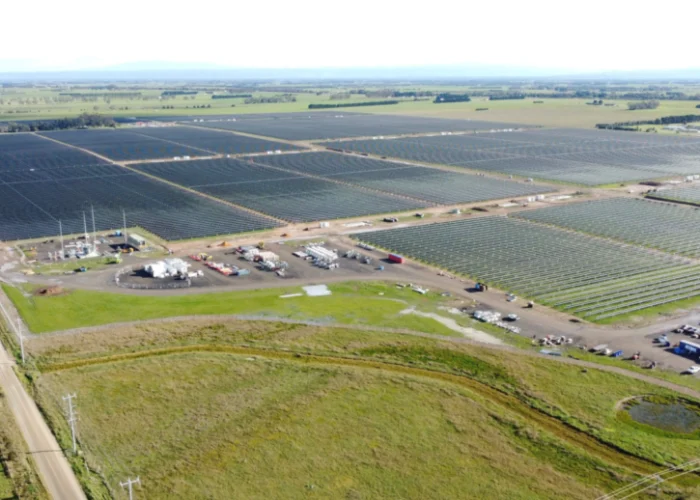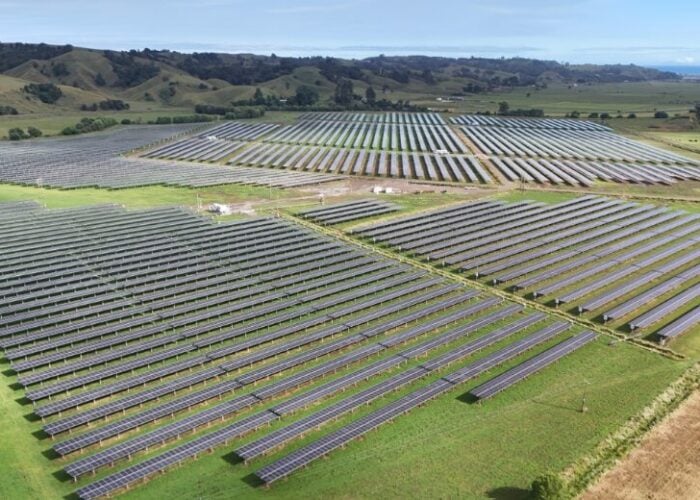
The 26GW Australian Renewable Energy Hub (AREH) in Western Australia has secured AU$21 million (US$14.71 million) in funding from the Australian Renewable Energy Agency (ARENA) to advance large-scale hydrogen production capabilities that will support green iron manufacturing in the Pilbara region.
The grant will support detailed technical, economic and regulatory studies for the next development phase of the project, which is owned and developed by InterContinental Energy, a private developer focused on producing giga-scale green hydrogen and green ammonia.
Try Premium for just $1
- Full premium access for the first month at only $1
- Converts to an annual rate after 30 days unless cancelled
- Cancel anytime during the trial period
Premium Benefits
- Expert industry analysis and interviews
- Digital access to PV Tech Power journal
- Exclusive event discounts
Or get the full Premium subscription right away
Or continue reading this article for free
The funding specifically targets green hydrogen production facilities at Boodarie near Port Hedland, integration with industrial partners, and environmental, water and cultural heritage assessments.
Isaac Hinton, head of Australia at InterContinental Energy, described the ARENA funding as a major vote of confidence in Australia’s emerging role as a green iron producer. The company positions the project as critical infrastructure for transforming the Pilbara from an iron ore export region to a green iron manufacturing hub.
“For the Pilbara to remain a major source of jobs and growth for Australia in the decades ahead, it must evolve from exporting iron ore to producing green iron,” Hinton said.
“As global customers increasingly demand affordable green iron, there is an incredible strategic opportunity for the Pilbara to combine its world-class renewable energy and iron ore resources to capture more of the value chain.”
This represents a significant development milestone for the project following BP’s exit from the 26GW development last year.
The oil and gas major had been a key partner in the renewable energy hub before withdrawing from the project as part of a broader strategic review of its renewable energy investments.
BP later explained that the company moved too quickly into large-scale renewable energy projects without sufficient development experience.
What is the Australian Renewable Energy Hub?
The AREH project, formerly known as the Asian Renewable Energy Hub due to plans to become a major exporter of green hydrogen and ammonia to the Asian market, is set to harness 26GW of solar and wind to produce green hydrogen, a clean energy carrier.
At full capacity, AREH is expected to produce around 1.6 million tonnes of green hydrogen or 9 million tonnes of green ammonia per year.
Situated on a 6,500-square-kilometre site in the Pilbara region, AREH is in an advantageous position, with access to abundant solar and wind resources that deliver consistent output.
Other partner shareholders in AREH are InterContinental Energy (26.4%), CWP Global (17.8%) and Macquarie Capital and Macquarie’s Green Investment Group (15.3%).
CWP Global previously forecast that AREH would cost AU$55 billion (US$36 billion) to fully develop.
The project will be built in stages before reaching the full 26GW of solar and wind generation capacity.
InterContinental Energy’s development approach focuses on creating industrial clusters that can leverage the project’s renewable energy and hydrogen production capabilities.
However, despite the potential the project could have on the Western Australian economy, cementing itself as a major renewable energy hub and supply of green ammonia for Asia, the project has run into issues since its first proposal in 2014.
After the AREH partners secured environmental approval from the state government, the development hit a snag in 2021 when the federal government blocked the project, citing its environmental impact.
In May 2024, the Labor government, which took office in 2022 and was recently re-elected for a second term, awarded AREH ‘Major Project Status’ to support the project. This status grants projects assistance from the Major Projects Facilitation Agency in navigating major Australian government approvals.