Abengoa Solar has joined the list of founders for the Desertec Initiative, a project that includes among its members the Club of Rome, the Union of the Mediterranean, TREC, and other institutions. Industry founders also include the industrial conglomerate Siemens AG, power companies RWE and E.ON, re-insurer Munich Re AG, Deutsche Bank AG, the electrical engineering firm ABB, Cevital, HSH Nordbank, M+W Zander, Schott Solar, and Solar Millennium/MSM.
Abengoa solar already has an established presence in Northern Africa with solar plants in Algeria and Morocco. Santiago Seage, Abengoa’s CEO, remarked that “Northern Africa and the Middle East are undoubtedly areas with a tremendous solar energy potential, for both the region’s own use as well as exporting as soon as we have the necessary infrastructure and regulatory measures in place.”
Try Premium for just $1
- Full premium access for the first month at only $1
- Converts to an annual rate after 30 days unless cancelled
- Cancel anytime during the trial period
Premium Benefits
- Expert industry analysis and interviews
- Digital access to PV Tech Power journal
- Exclusive event discounts
Or get the full Premium subscription right away
Or continue reading this article for free
He continued by saying that “this initiative should bring us closer to making this vision come true. Abengoa Solar is contributing its expertise in innovative solar technologies to this international group of partners.”
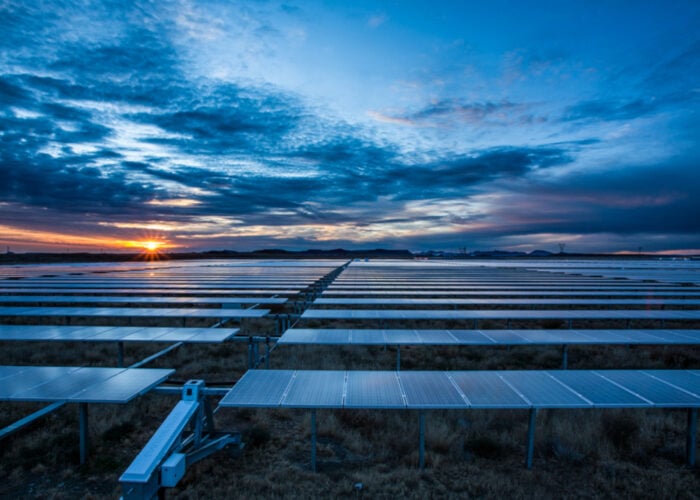
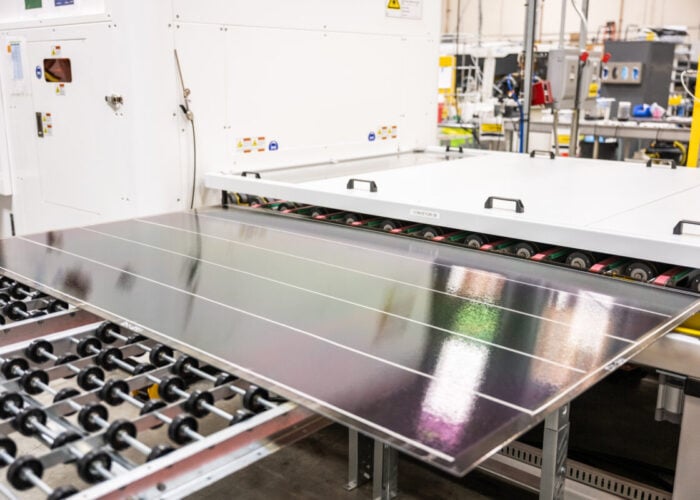
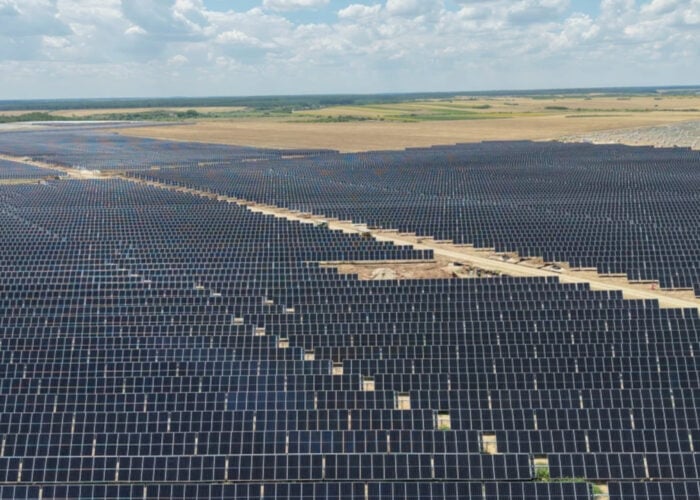
The plan of this project is to harvest the solar energy from the deserts of Northern Africa and other regions in the ‘sun belt’ to be distributed in locally and throughout Europe. Solar thermal power plants would make up the majority of the energy-harvesting techniques. Such plants are already running in the U.S., Spain and elsewhere.
Desertec would like to see 15% of European energy come from this region and have the Middle East and Northern Africa energy independent and efficient by 2050. Because the infrastructure and technology needed to support this wide-ranging initiative, Desertec’s first benchmark is to garner support for what will be a multi-decade project.
The German Aerospace Centre completed a study that indicates the energy transport network alone (almost 3000km in length) could cost €45 billion (US$63 billion) and that the entire project would cost about €400 billion. Though members view the project as “scientifically substantiated and economically feasible,” some doubt the effectiveness of the measures when they are proposed to other countries in the EU. “The question now, above all, is the politics—particularly the EU Commission,” stated Friedbert Pflueger, a German Democratic politician.