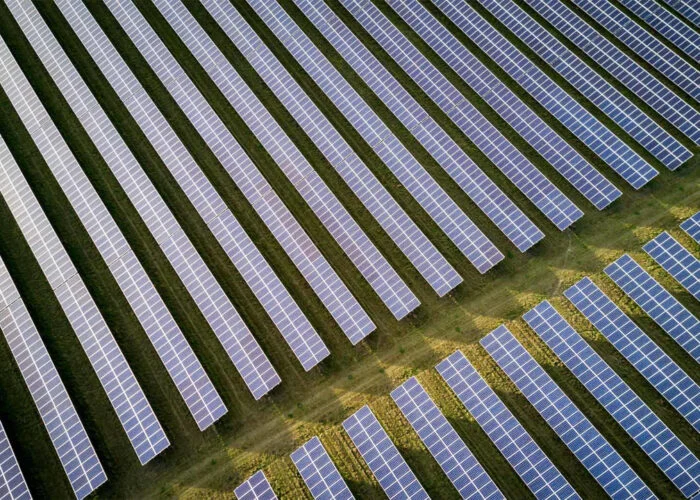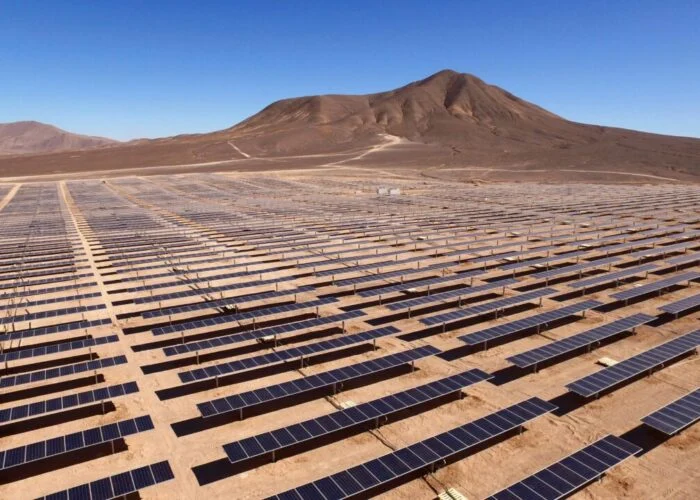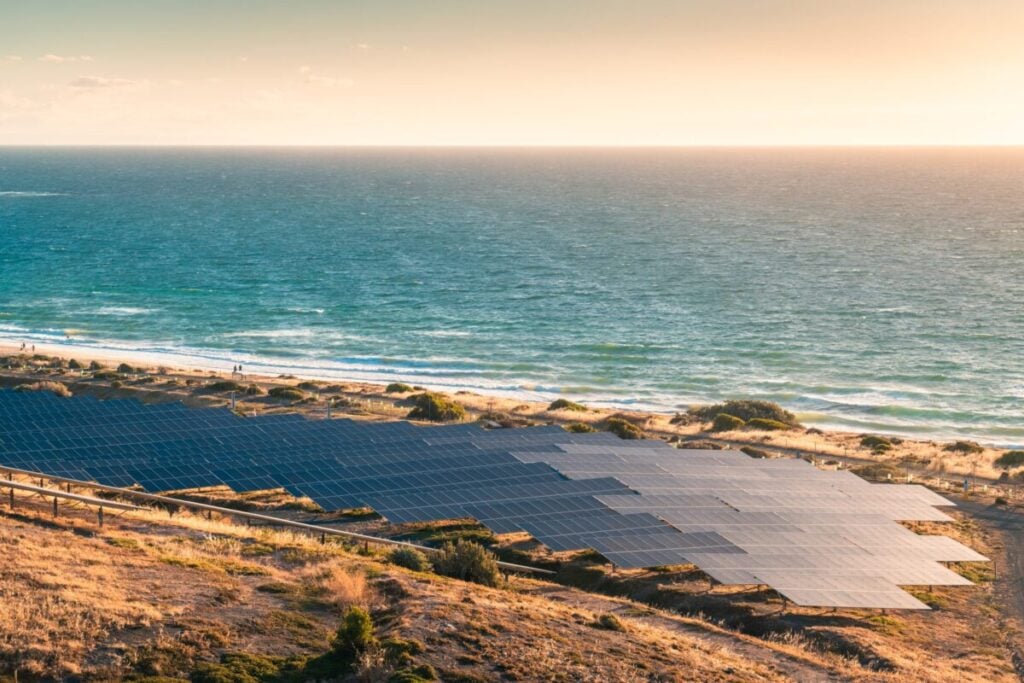
The Australian Renewable Energy Agency (ARENA) has launched a third round of its Solar Sunshot programme, offering up to AU$250 million (US$175 million) to companies that manufacture or demonstrate equipment for building large-scale solar PV power plants in Australia.
ARENA, the federal government agency that funds renewable energy innovation, said Round 3 is open to Australian and international companies seeking to establish, expand or demonstrate manufacturing and product development in the country.
Try Premium for just $1
- Full premium access for the first month at only $1
- Converts to an annual rate after 30 days unless cancelled
- Cancel anytime during the trial period
Premium Benefits
- Expert industry analysis and interviews
- Digital access to PV Tech Power journal
- Exclusive event discounts
Or get the full Premium subscription right away
Or continue reading this article for free
The round targets commercial-scale manufacture of solar balance-of-plant and deployment technologies, which ARENA said could include racking and tracking systems, robotics, advanced automation, and prefabrication, with the aim of reducing the cost and time involved in building and operating large-scale solar PV plants.
Technologies must be at least at technology readiness level 8 and a commercial readiness index of 3 when manufacturing begins, and the project must take place primarily in Australia.
ARENA chief executive Darren Miller said: “The next challenge is to reduce the cost and complexity of building projects at much greater scale.”
He added that ARENA wants to hear from companies with commercially mature technologies that can be made at scale in Australia, and is looking for projects that build lasting capability, strengthen local supply chains and share skills and knowledge across the solar sector.
The round’s funding announcement expects requests of between AU$2 million and AU$40 million per project, although ARENA can consider requests outside that range.
Funding takes the form of grants, which can be capital grants, production credits or both, and the programme’s FAQs state that production credits are expected to be the primary mechanism, with capital grants available where upfront costs are a barrier.
Production credits are paid per unit of eligible output, quarterly in arrears, for up to 10 years, and are intended to bridge the gap between production costs and the expected sales price.
ARENA said it will provide the minimum funding a project needs to proceed and that applicants must show the project would not be commercially viable without it.
The round does not support module and cell manufacturing, ingots and wafers, polysilicon or other upstream activity, pilot-scale technology, recycling or feasibility studies, which differs from the upstream focus of earlier Solar Sunshot awards.
Applications are assessed against four equally weighted criteria covering contribution to the round’s objective, applicant capability, project design and risk, and financial viability and co-funding.
There is no minimum local-content requirement; instead, ARENA considers supply chain resilience and community benefit.
Expressions of interest open on 2 November 2026, and ARENA encouraged applicants to contact the agency early.
An expression of interest is required unless ARENA waives it; assessment is open and merit-based rather than ranked, and successful applicants are invited to submit a full application, with a final deadline of 12 April 2028.
The funding page lists 12 November 2027 as the final date for expressions of interest.
Inside Australia’s Solar Sunshot programme
Readers of PV Tech will be aware of the Solar Sunshot programme, which prime minister Anthony Albanese announced in March 2024 to support Australian-made solar PV manufacturing and which ARENA administers.
ARENA now describes it as an AU$850 million programme, although its guidelines and earlier PV Tech coverage gave a total of up to AU$1 billion. PV Tech Premium also examined the initiative in PV Tech Power Volume 40.
The programme supports ARENA’s Ultra Low-Cost Solar concept, which envisages a ‘30-30-30’ approach of 30% module efficiency and an installed cost of 30 cents per watt by 2030. That would mean a levelised cost of electricity below AU$20 per megawatt-hour, one-third of its 2023 level.
Round 1 awarded AU$91.5 million, including up to AU$46 million to 5B for its Maverick automated solar deployment system and AU$34.5 million to Tindo Solar to expand domestic module production, alongside AU$11 million for three feasibility studies covering silicon refining, ingot and wafer production, and solar glass.
ARENA opened a second round of AU$150 million in September 2025 for domestic manufacturing and supply chain projects, and the programme’s FAQs state that ARENA expects to commit it in full.
This month, ARENA committed up to AU$32.3 million from that round to build solar installation and piling robots, including up to AU$17.8 million for Luminous Robotics to build its module-installing LUMI robots in Melbourne and up to AU$14.5 million for Built Robotics Australia to build 12 robotic piling systems in Brisbane.
ARENA also named Sunman among the companies funded in the first two rounds.
The government launched a complementary programme, the AU$100 million Solar ScaleUp Challenge, in June 2024.
While Solar Sunshot targets domestic manufacturing, the ScaleUp Challenge focuses on removing barriers to installing, operating and maintaining solar PV projects, and ARENA also opened an AU$60 million research and development round in 2025 covering cells and modules and balance systems, operation and maintenance.