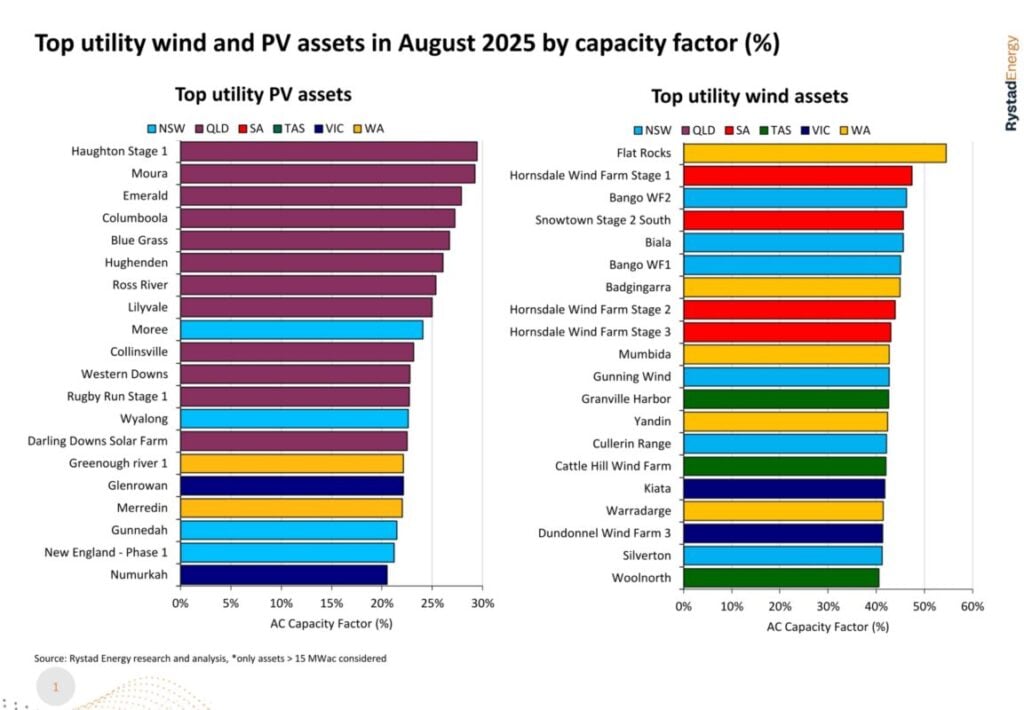
Research firm Rystad Energy has found that Queensland’s utility-scale solar PV power plants have dominated the best-performing assets, in terms of AC capacity factor, rankings for August 2025 in Australia.
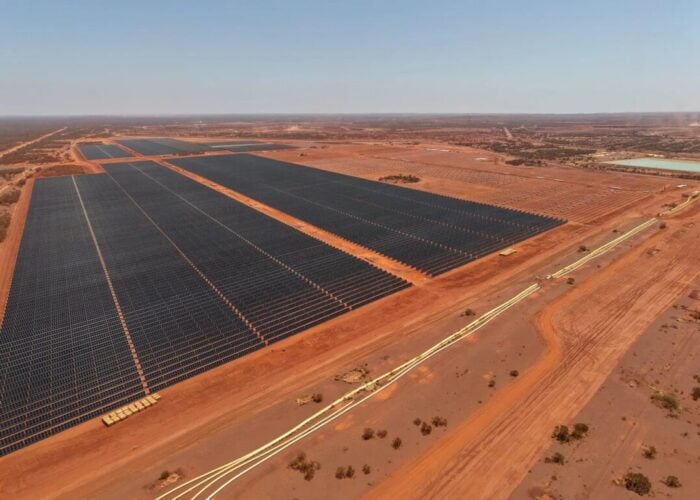
The top utility-scale solar PV assets for the month were Pacific Blue Australia’s 100MW Haughton stage 1, Greek energy company Metka’s 110MW Moura solar PV plant and Lighthouse Infrastructure’s 72MW Emerald solar plant, all located in Queensland.
Try Premium for just $1
- Full premium access for the first month at only $1
- Converts to an annual rate after 30 days unless cancelled
- Cancel anytime during the trial period
Premium Benefits
- Expert industry analysis and interviews
- Digital access to PV Tech Power journal
- Exclusive event discounts
Or get the full Premium subscription right away
Or continue reading this article for free
Rystad Energy analyst David Dixon on LinkedIn said Victoria ranked first in renewable energy generation, producing 1,363GWh. This included 1,188GWh from wind and 175GWh from utility-scale solar PV systems.
In August, renewable energy sources, comprising PV, wind, hydro, and biomass, accounted for 40% of the National Electricity Market (NEM) generation, while the Wholesale Electricity Market (WEM) achieved a 36% share from renewables.
Despite this, it is worth noting that the NEM hit a record high for the combined utility-scale solar PV and wind share in the electricity mix on 30 August, coming in at 47.2% at 07:50.
For readers unaware, the NEM refers to the wholesale electricity market where generators sell electricity to retailers, who then on-sell it to consumers. It operates on one of the world’s longest interconnected power systems, linking Queensland, New South Wales (including the Australian Capital Territory), Victoria, Tasmania, and South Australia.
Meanwhile, the WEM, which is specific to Western Australia, is the system that governs the trading and supply of electricity in the state’s South West Interconnected System (SWIS). The Australian Energy Market Operator (AEMO) operates both of these.
Dixon also pointed out that in August, there were 554 hours of negative prices across the NEM and WEM states. This number is lower than in the comparable periods of August 2024 and August 2023, and the decrease can be attributed in part to higher underlying demand and increased charging from battery energy storage systems (BESS) and pumped hydro energy storage (PHES) systems.
Negative pricing typically arises when solar PV generation peaks, creating a surplus of energy in the middle of the day. Due to Australia’s strong solar PV capacity, Tim Buckley, founder and director of the think tank Climate Energy Finance, has dubbed the country a “world leader in negative pricing in wholesale markets.”
Data from AEMO earlier this year revealed that during the fourth quarter of 2024, negative price events occurred in 23.1% of instances across the NEM.
Metlen Energy’s 154MW Munna solar PV plant enters AEMO registration phase in Queensland
In other news, Metlen Energy & Metals’ 154MW Munna Creek solar PV power plant has now been registered in the AEMO Market Management System, signalling its readiness for commissioning and performance testing.
The 154MW solar facility, located approximately 40km north-northwest of Gympie in Queensland’s Fraser Coast region, has completed construction and entered the final stages before full commercial operation.
Registration with AEMO signals the project’s readiness to undergo testing against its Generator Performance Standards (GPS), a mandatory requirement for all new generators connecting to the NEM.
Situated on Blowers Road in Munna Creek, the project spans 460 hectares, with 233 hectares dedicated to the solar array. The installation features approximately 255,000 solar modules.
Construction of the Munna Creek facility began in June 2024 and reached completion this month, representing a 15-month build timeline. The project’s completion aligns with Queensland’s renewable energy targets, which include achieving 70% renewable electricity by 2032 and 80% by 2035, as outlined within the Queensland Energy and Jobs Plan.