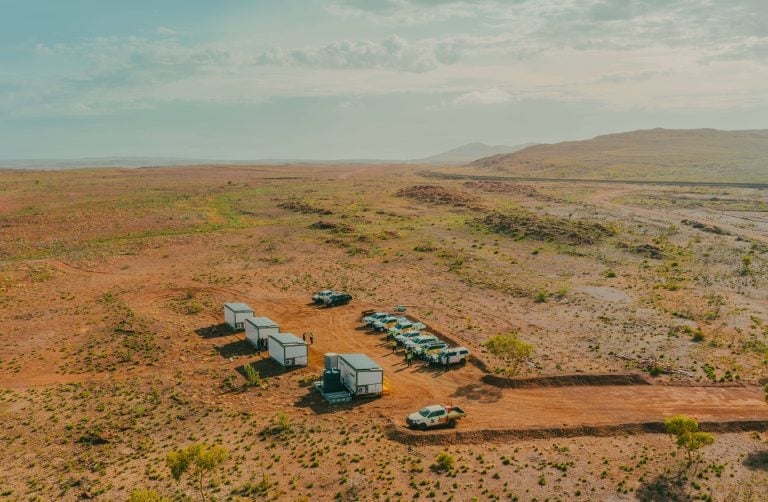
Mining giant BHP and Yindjibarndi Energy Corporation (YEC) will assess potential large-scale energy solutions for BHP’s iron ore operations in Western Australia’s Pilbara region.
The two parties have signed a memorandum of understanding (MoU). The non-binding agreement will see BHP and the Indigenous-led energy developer work together to assess options across power generation, electricity transmission and enabling infrastructure, including scalable renewable energy solutions.
Try Premium for just $1
- Full premium access for the first month at only $1
- Converts to an annual rate after 30 days unless cancelled
- Cancel anytime during the trial period
Premium Benefits
- Expert industry analysis and interviews
- Digital access to PV Tech Power journal
- Exclusive event discounts
Or get the full Premium subscription right away
Or continue reading this article for free
Areas of focus include exploring opportunities to deliver reliable, scalable electricity to BHP’s mining, rail and Port Hedland operations. The MoU, however, does not commit either party to specific projects or investment decisions.
BHP vice-president of WA Nickel and Operational Decarbonisation, Daniel Heal, said the partnership would combine local knowledge with technical capability to deliver practical outcomes.
“Partnerships like this are key to unlocking the next phase of decarbonisation in the Pilbara,” Heal said.
YEC CEO Craig Ricato said the agreement reflects YEC’s focus on developing energy solutions that are technically robust, commercially viable and capable of supporting long-term energy security in the Pilbara.
“As an Indigenous-led energy developer, our role is to bring together Country, capability and capital to support regional decarbonisation and electrification,” Ricato said.
“We will continue to work collaboratively with Traditional Owner groups across the Pilbara to help ensure these opportunities deliver shared, enduring economic and social benefits for Indigenous communities.”
BHP’s Pilbara iron ore operations currently run on an islanded network, with power supplied by its 190MW Yarnima gas-fired power station. At the same time, the company also uses approximately 1,500 megalitres of diesel annually across more than 1,000 pieces of equipment.
The mining company has set a medium-term target to reduce operational emissions by at least 30% from FY2020 levels by 2030, and net zero by 2050. Earlier renewable energy steps have been taken elsewhere in its Western Australian portfolio.
As previously reported by PV Tech, BHP commissioned a solar-plus-storage facility at its Nickel West operations in the Northern Goldfields in partnership with TransAlta, which, at the time, was its first on-site large-scale renewable energy project globally.
A separate solar-plus-storage project to power two of BHP’s Australian mines has also been progressed in recent years.
Yindjibarndi Aboriginal Corporation’s growing development pipeline
YEC is a partnership between the Yindjibarndi Aboriginal Corporation and Philippines-based renewable energy developer ACEN Corporation.
The group is advancing a 3GW renewable energy pipeline across 13,000 square kilometres of Yindjibarndi Ngurra, or Country. Its flagship development, Baru-Marnda, would feature 500MW of solar PV and up to 1GW of wind capacity, with an option to include a battery storage system.
A proposed high-voltage shared transmission project, the Chichester Range Transmission Corridor (CRTC), is intended to connect renewable energy developments on Yindjibarndi Ngurra to the North West Interconnected System (NWIS) via the Maitland Strategic Industrial Area in the Pilbara.
Both Project Baru-Marnda and the CRTC have been included on the Australian government’s National Renewable Energy Priority List, granting streamlined federal approvals.
Earlier this year, YEC opened a formal expression of interest process for commercial and industrial customers seeking renewable energy offtake from its project portfolio. This targets major energy users across mining, minerals processing, heavy industry and hydrogen production.
The BHP MoU follows that process and represents one of the highest-profile responses to it.
This agreement caps off a busy month for YEC. The group reached financial close on the Jinbi Solar Project and signed a 30-year power purchase agreement with Rio Tinto.
Stage 1 of the Jinbi project will feature a 75MWac solar facility, with an option to expand to 150MWac and the potential addition of battery storage, with full commercial operations expected in mid-2028.