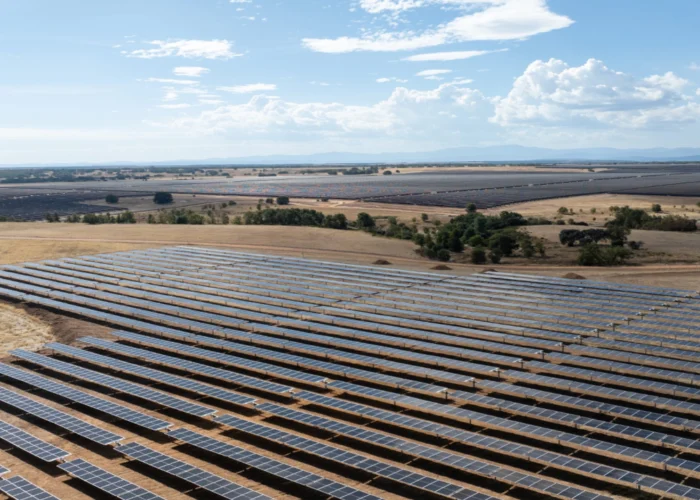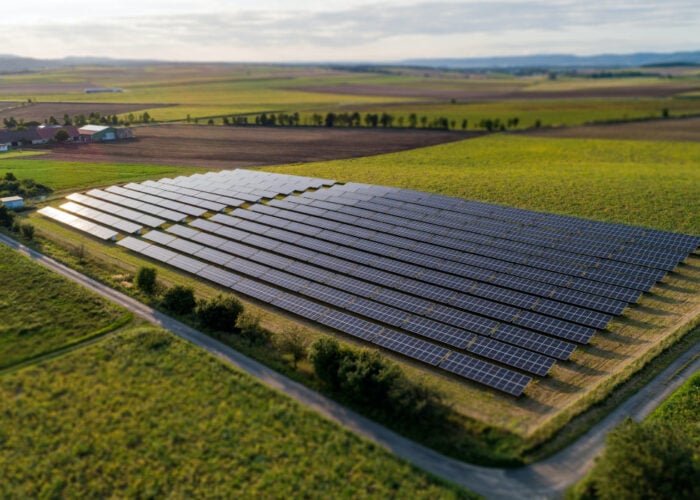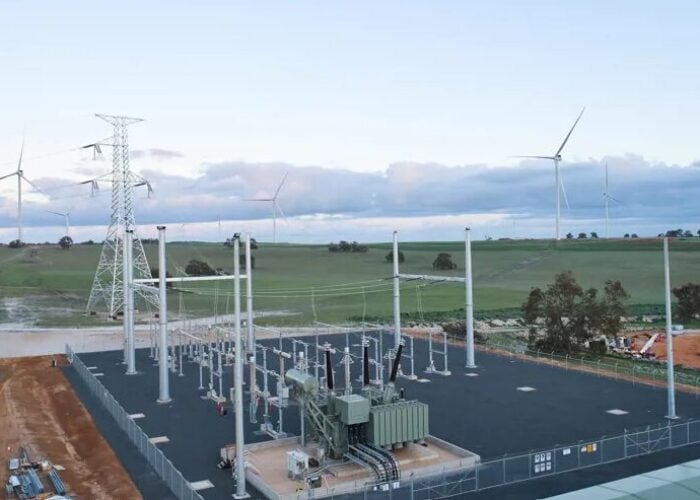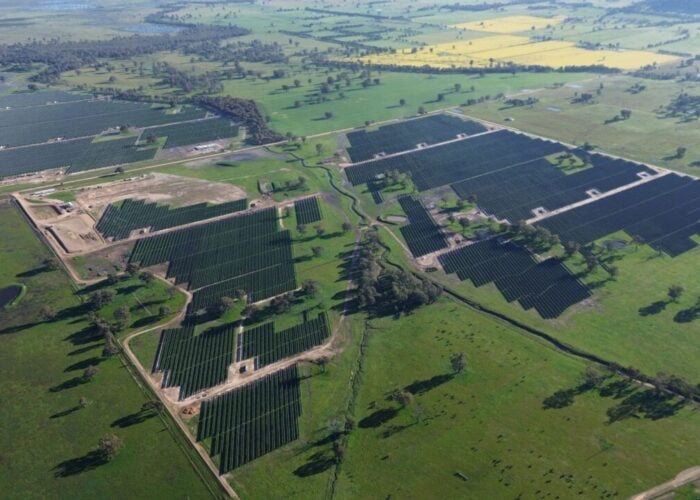
Australia’s utility-scale solar and wind assets generated a combined 4.99TWh across the National Electricity Market (NEM) in August 2026, up 3% from 4.86TWh in the same month last year, according to analysis from Rystad Energy senior analyst David Dixon.
Utility-scale solar drove much of that growth. New South Wales, Queensland and Victoria each achieved record monthly utility PV generation for August, at 684GWh, 665GWh and 213GWh, respectively.
Try Premium for just $1
- Full premium access for the first month at only $1
- Converts to an annual rate after 30 days unless cancelled
- Cancel anytime during the trial period
Premium Benefits
- Expert industry analysis and interviews
- Digital access to PV Tech Power journal
- Exclusive event discounts
Or get the full Premium subscription right away
Or continue reading this article for free
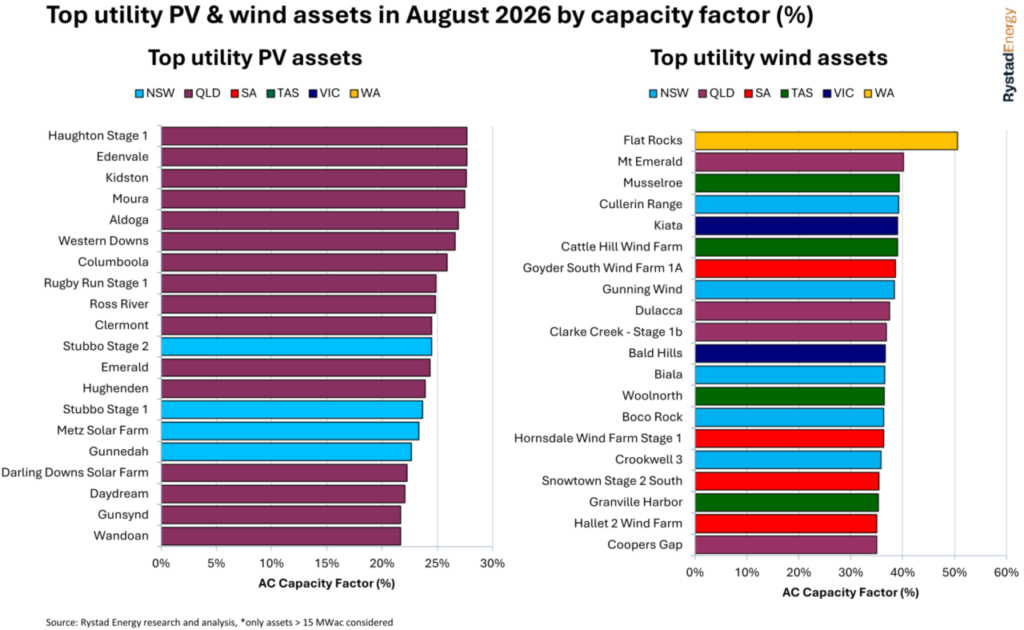
Queensland hosted the month’s three top-performing utility-scale solar assets by capacity factor: Pacific Blue Australia’s Haughton Stage 1, ENEOS Group and Sojitz Corporation’s Edenvale, and Genex Power’s Kidston, each recording a 28% AC capacity factor.
That performance builds on a broader recovery already visible in NEM-wide solar data.
Combined utility-scale and rooftop solar generation across the NEM reached 3,893GWh in August, according to separate analysis of Open Electricity data, with utility-scale output climbing 12.4% from July to 1,628GWh (Premium access), 25.6% above August 2025 and the strongest monthly total since April.
That solar strength coincided with a marked reduction in curtailment. NEM utility PV curtailment fell to 168GWh in August 2026, around 9% of available generation, compared with 284GWh, or roughly 18% of available generation, in August 2025.
Spot prices also fell year-on-year across every NEM state during the month, with all states averaging below AU$80/MWh (US$57.60/MWh), consistent with the Australian Energy Regulator’s recent finding that rising solar and wind generation, supported by growing battery storage capacity, has eased pressure across the wholesale market, even as prices remain elevated relative to pre-2022 levels during the evening peak and overnight.
Wind generation declines even as new capacity reaches financial close
Wind performance moved in the opposite direction to solar. Generation fell in every NEM state except Queensland compared with August 2025, down approximately 205GWh nationally, despite Victoria remaining the top-performing state overall for combined utility solar and wind output at 1,387GWh, of which 1,174GWh came from wind and 213GWh from utility PV.
The top-performing wind assets for the month were geographically dispersed: Potentia Energy’s Flat Rocks in Western Australia (51% capacity factor), RATCH Australia’s Mount Emerald in Queensland (40%), and Woolnorth Renewables’ Musselroe in Tasmania (39%).
Despite the softer generation month, more than 1GW of utility-scale generation and storage capacity reached financial close across the NEM during August.
Notable projects included Edify Energy’s 150MW/600MWh Majors Creek and 150MW/600MWh Ganymirra solar-plus-storage projects, BW ESS’ 250MW/1,000MWh Yanco BESS in New South Wales, Quinbrook’s 260MW/1,216MWh Supernode Stage 3 BESS in Queensland, and Copenhagen Infrastructure Partners’ 408MW Gawara Baya wind farm in Queensland.
That continued investment activity follows a broader pattern of accelerating deployment across Australia’s clean energy sector; the Clean Energy Regulator recently reported record quarterly growth in rooftop solar, battery uptake and large-scale solar investment for the June quarter.
Meanwhile, Victoria’s State Electricity Commission (SEC) connected the solar component of its 119MW SEC Renewable Energy Park to the grid during the same period, moving toward commissioning ahead of a battery storage system due on site later in the year.
Recent policy changes have also supported continued investor confidence in the sector.
In August, the federal government extended a capital gains tax concession for foreign investors in Australian wind, solar and battery storage assets to 2040, pushing back a deadline that had originally been set for 2030 following pressure from the Greens and crossbench MPs during debate on the enabling legislation.