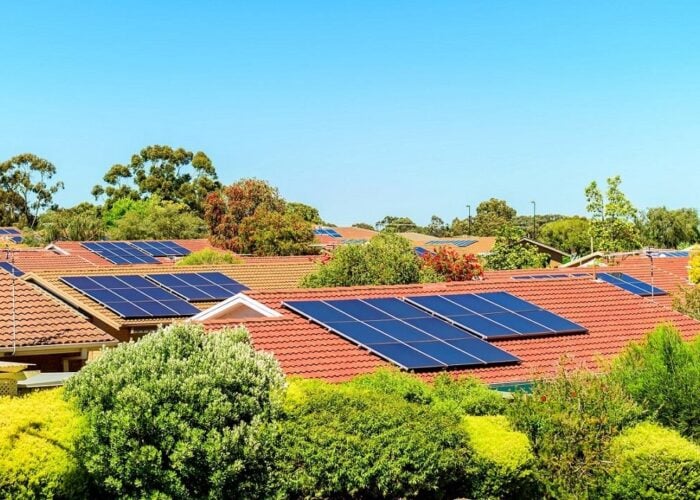
Australia recorded its strongest quarter yet for rooftop solar installations, household battery storage uptake and large-scale solar investment in Q2 2026, according to the Clean Energy Regulator’s (CER) latest Quarterly Carbon Market Report.
The CER, the federal body responsible for administering Australia’s carbon and renewable energy schemes, said 1GW of rooftop solar was installed in the June quarter, breaking the previous quarterly record of 942MW set in the final quarter of 2023.
Try Premium for just $1
- Full premium access for the first month at only $1
- Converts to an annual rate after 30 days unless cancelled
- Cancel anytime during the trial period
Premium Benefits
- Expert industry analysis and interviews
- Digital access to PV Tech Power journal
- Exclusive event discounts
Or get the full Premium subscription right away
Or continue reading this article for free
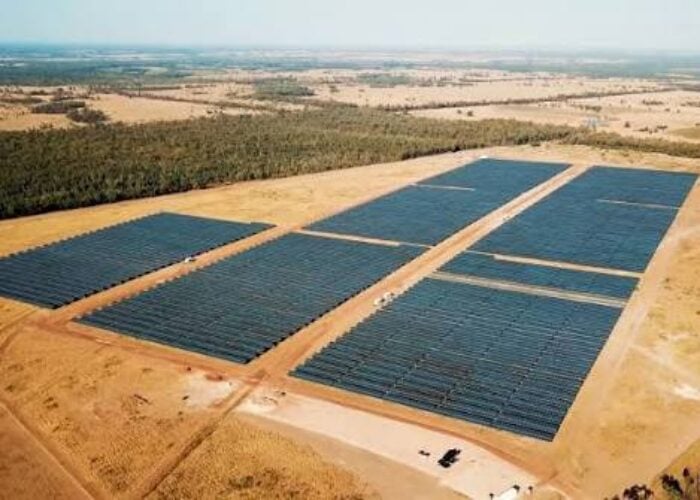
Large-scale solar investment also reached a new high, with 1.8GW of generation capacity reaching final investment decision (FID), the strongest quarterly result since the CER began tracking investment activity and the strongest quarter for solar investment overall since 2022.
All of that capacity came from solar. No wind projects were approved or reached FID during the quarter, the CER revealed.
CER acting chair Carl Binning said the results reflect the accelerating pace of Australia’s energy transition.
“The speed of the transition is accelerating,” Binning said.
“We are seeing ongoing growth and record outcomes across the CER’s administered schemes and markets, from rooftop solar and household batteries to large-scale solar investment and the Australian Carbon Credit Unit (ACCU) market.”
Binning pointed to a combination of factors driving the results, including progress on Capacity Investment Scheme (CIS) projects, falling battery storage costs, demand generated by the Cheaper Home Batteries Program, and growing recognition of the ACCU market’s role in supporting the Safeguard Mechanism.
Battery incentive changes reshaped installation patterns through the quarter
The quarter’s record battery storage uptake was closely tied to changes made to the Cheaper Home Batteries Program on 1 May, which introduced revised small-scale technology certificate (STC) rates intended to provide more consistent support across battery sizes, equivalent to roughly a 30% reduction in installation costs.
More than 111,000 battery installations, representing 3.6GWh of storage capacity, were approved under the programme during the quarter, with the CER noting it had received more than 500,000 applications since the scheme launched.
“We’ve now received more than 500,000 battery applications since the programme started, which shows the scale of household demand when the economics stack up,” Binning said.
Installation activity is split into two distinct phases around the 1 May changes. In April alone, 78,000 installations representing 2.8GWh of capacity were approved, with average home battery size reaching 36kWh as installers worked through weekends and public holidays to complete larger systems before the revised incentive rates took effect.
Following the changes, installation rates moderated and average battery size fell to around 23kWh across May and June, though the CER said underlying demand remained strong even as system sizes shrank.
That battery surge also pulled forward solar installation activity. More than 80% of small-scale solar installations in April were paired with a battery storage system, compared with less than half in May and June, because eligibility for the Cheaper Home Batteries Program requires an existing or concurrent solar system.
April alone accounted for an estimated 480MW of small-scale solar capacity, the strongest month on record and a marked departure from typical seasonal patterns, in which April has historically been comparatively weak for installations.
Large-scale solar investment climbs as mid-scale segment awaits policy support
Beyond the residential segment, large-scale solar investment activity strengthened considerably during the quarter.
Major projects reaching FID included the 690MW Turner River Solar Hub in Western Australia; the 300MW Guthrie’s Gap and Smoky Creek solar power stations in Queensland; the 281MW Lower Wonga Solar Farm in Queensland; and the 135MW Muswellbrook Solar project in New South Wales.
Three of these, Smoky Creek, Guthrie’s Gap and Lower Wonga, are supported by the CIS.
The record quarter follows sustained warnings from analysts and government bodies about the scale of deployment Australia still needs to meet its renewable energy targets.
AEMO’s 2026 Integrated System Plan, published in June, called for nearly 120GW of utility-scale wind and solar by 2050, roughly five times current levels, alongside close to 40GW of grid-scale storage and hydro, as coal-fired generation continues to retire from the National Electricity Market (NEM).
AEMO chief executive Daniel Westerman said the roadmap for that larger, more complex system was clear, with the focus now firmly on delivery.
While utility-scale and residential solar both posted record results, the CER’s report points to a persistent gap in mid-scale deployment, systems between 100kW and 1MW typically installed by businesses, schools, farms and community organisations.
Approvals for mid-scale renewable energy projects have run below historical averages through the first half of 2026, a trend consistent with earlier analysis from the Institute for Energy Economics and Financial Analysis (IEEFA), which found that Australian businesses have installed only a fraction of their available rooftop solar potential despite favourable underlying economics, describing the segment as a “missing middle” between household and utility-scale solar.
The federal government has moved to address that gap directly. From 1 October 2026, solar systems up to 1MW will become eligible for STCs under an expansion of the Small-scale Renewable Energy Scheme, a change the CER expects to support increased investment across the commercial, industrial and agricultural sectors, alongside a request to the Australian Energy Market Commission (AEMC) to consider rule changes that could streamline grid connection processes for mid-scale systems.
“Expanding the Small-scale Renewable Energy Scheme, expected from October, will help businesses, farmers and community organisations install mid-scale solar and reduce their energy costs,” Binning said.
The CER noted that systems of this size typically take at least eight months from design to approval, meaning the full effect of the policy change is likely to build gradually rather than appear immediately in installation data.
The quarter’s results also build on continued government investment in solar research and development.
The Australian Renewable Energy Agency (ARENA) recently committed AU$105.6 million (US$70.5 million) to 20 research and development projects aimed at reducing the cost of large-scale solar, spanning advanced cell and module efficiency work alongside innovations targeting the balance-of-system and installation costs that have increasingly come to dominate total project expenses as module prices have fallen.
Renewable energy generation accounted for around 42% of NEM generation in the June quarter, up from 37% a year earlier, contributing to a record quarterly total of 15.2 million large-scale generation certificates (LGCs) created.
Wind and solar each grew their share of generation over the year, while coal and gas-fired generation declined.
Binning acknowledged that challenges remain despite the quarter’s records, particularly regarding social licence issues affecting wind investment and the ongoing development of new ACCU methods and participation in the Guarantee of Origin.
“Across our markets, progress has exceeded the expectations of many industry participants, but much work remains to be done,” he said.