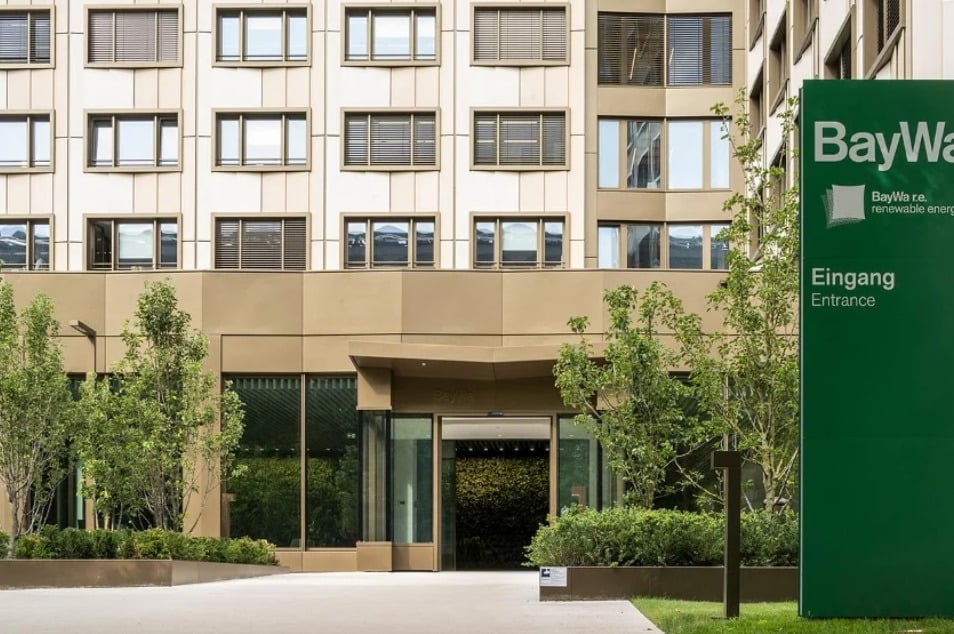
German multinational BayWa has published its financial results for the first half of the year, which include total revenues of €10.7 billion (US$11.9 billion), compared to €12.7 billion (US$14.1 billion) in the first half of 2023.
The company noted that much of this decline stemmed from poor performance in its renewable power division, with revenue across its clean energy business reaching €1.8 billion, compared to €3 billion in the first half of the previous year. In the renewable power sector, BayWa’s earnings before interest and taxation fell to -€102.8 million (-US$114.3 million) in the first half of the year, compared to a positive result of €98.4 million (US$109.4 million) in the first six months of 2023.
Try Premium for just $1
- Full premium access for the first month at only $1
- Converts to an annual rate after 30 days unless cancelled
- Cancel anytime during the trial period
Premium Benefits
- Expert industry analysis and interviews
- Digital access to PV Tech Power journal
- Exclusive event discounts
Or get the full Premium subscription right away
Or continue reading this article for free
These results build on similarly poor performances in the first quarter of the year, which saw the value of the company’s assets reach €417.6 million (US$464.2 million), a 3.3% increase over the fourth quarter of 2023, but around €500 million (US$555.8 million) lower than in the first quarter of 2023.
More specifically, BayWa concluded that it had to reduce the value of its renewable power generation facilities by €171.5 million, with its independent power producer (IPP) business losing €114.4 million of its value, due to “valuation assumptions” changing amid macroeconomic fluctuations, such as the price of power and higher financing costs.
Variable power, variable asset value
While BayWa expects these fortunes to reverse in the coming months—having appointed a chief restructuring officer, commissioning an in-house restricting report and anticipating greater sales in its solar, wind and battery storage businesses in the fourth quarter of 2024—uncertainty as to the value of renewable power generation assets is a growing concern in the solar sector in particular.

Experts from renewable power analyst kWh Analytics wrote for an issue of PV Tech Power this year that the solar industry would benefit from more accurate value modelling and forecasting practices, specifically to prevent these kinds of fluctuations in value assessment that can increase the perceived risk of investing in a solar asset.
Considering the changes made to the company’s own valuation of its assets, BayWa noted that it is not in a position to provide a forecast for full-year financial figures at this time. The news follows growing uncertainty over BayWa’s financial performance in general, with the company reporting over €5 billion (US$5.6 billion) in debt in June of this year, and its raising of around €550 million (US$611.4 million) in fresh loan financing, with repayments suspended until September, from a number of banks in August.
The news follows similarly discouraging results from fellow European firm Meyer Burger, which delayed the publication of its half-year results yesterday, and has already announced both job cuts and a change in leadership amid a “strategic realignment”.