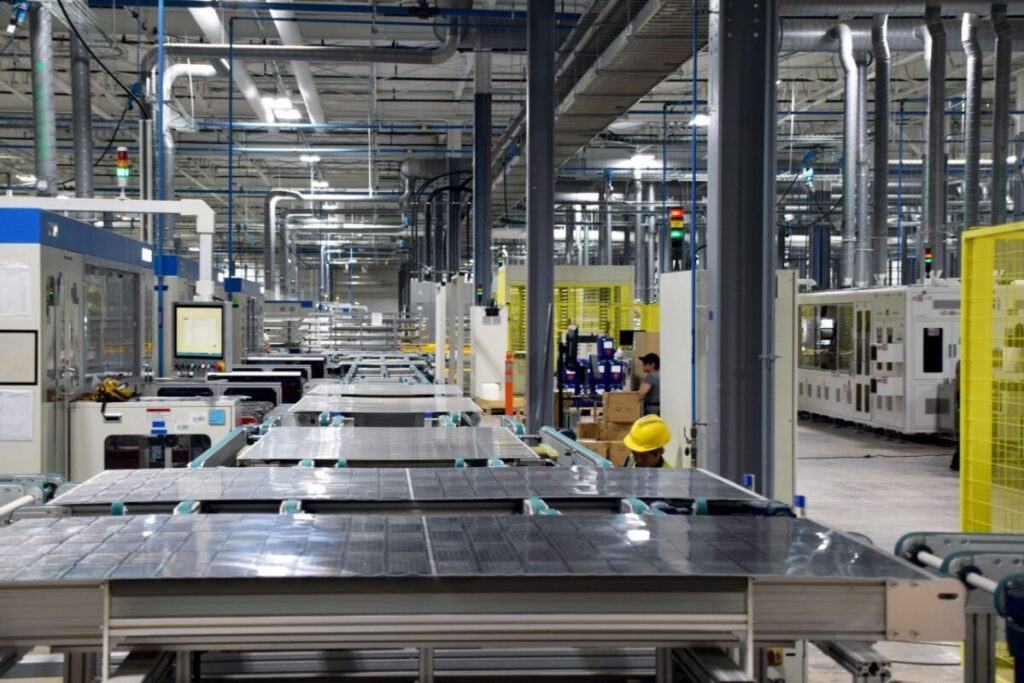
PV manufacturer Canadian Solar’s first US-made solar cells are expected to be produced by the end of March in Jeffersonville, Indiana.
According to its chairman and CEO, Shawn Qu, the company is moving in equipment for the first phase of its solar cell plant in Jeffersonville, with a full ramp-up expected by the end of June.
Try Premium for just $1
- Full premium access for the first month at only $1
- Converts to an annual rate after 30 days unless cancelled
- Cancel anytime during the trial period
Premium Benefits
- Expert industry analysis and interviews
- Digital access to PV Tech Power journal
- Exclusive event discounts
Or get the full Premium subscription right away
Or continue reading this article for free
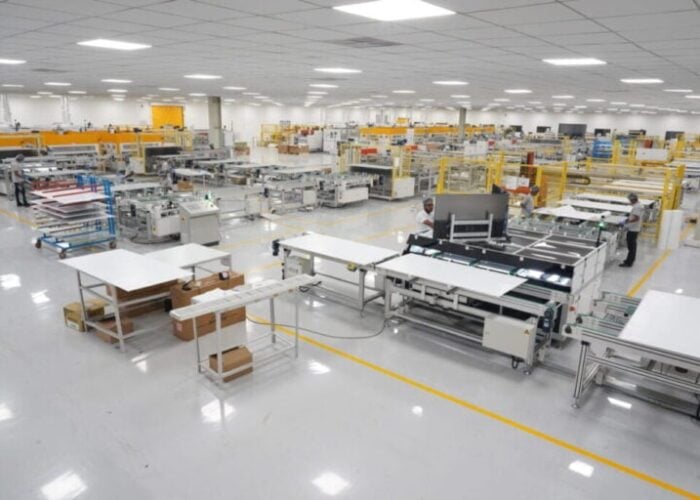
Trial production is scheduled to begin in April of this year, with the solar cell processing plant focusing on heterojunction (HJT) solar cells. The first phase of the plant will have an annual nameplate capacity of 2.1GW.
The second phase of the HJT solar cell processing plant will add 4.2GW of annual nameplate capacity, with trial production expected to begin by the end of 2026.
“Furthermore, we are advancing the second phase, which once operational, will bring our US cell capacity to 6.3 GWp, establishing the largest crystalline silicon technology footprint in the country,” added Qu.
The company also aims to expand the annual nameplate capacity of its module assembly plant in Mesquite, Texas, from 5GW to 10GW by the second half of 2026.
“Our commitment to the US market remains steadfast as we spearhead the reshoring of manufacturing to North America. Our solar module factory in Mesquite, Texas has fully ramped up, and we intend to double its nameplate capacity to support a more resilient domestic supply chain,” said Qu.
Canadian Solar’s commitment to the US market, as explained by Qu, comes as the company announced a shift in its US solar and energy storage manufacturing assets to North American ownership last December.
At the time, the manufacturer said it would establish a joint venture with its majority-owned manufacturing subsidiary, CSI Solar, and other US shareholders to take ownership of its US facilities through a new entity, CS PowerTech, and hold a 75.1% stake in the new company.
This was later followed in December by the appointment of Colin Parkin as president of Canadian Solar, replacing Shawn Qu, who remains the chairman and CEO of Canadian Solar.
Record module shipments in the US as global volume drops to 24.3GW in 2025
These capacity expansions in the US market come as Canadian Solar registered a record 8.1GW of modules delivered to the US in 2025.
However, global module shipments in 2025 decreased by 21.8% after a record year in 2024, when shipments totalled 31.1GW. Overall, Canadian Solar shipped 24.3GW of modules in 2025, of which 4.3GW were shipped in the fourth quarter, representing a 47% year-on-year decrease, as shown in the chart below.
Revenues from the solar manufacturing business side are down both on a quarterly and yearly basis, from US$944 million in Q4 2024 to US$719 million in Q4 2025, while its battery energy storage solutions revenues are up year-on-year from US$241 million in Q4 2024 to US$297 million in Q4 2025.
However, on a quarterly basis numbers are down from the US$486 million registered in Q3 2025. Overall, Canadian Solar’s revenues for its manufacturing – which also includes solar system kits and EPC – are down for 2025 from US$5.68 billion to US$5.2 billion.
As revenues from its energy storage business continues to increase, so does its shipments, which reached a record 7.8GWh in 2025. The US market accounted for half of it with 3.9GWh.
Qu: ‘2026 will be a transition year’
Canadian Solar’s business outlook for Q1 forecasts module shipments to range between 2.2GW and 2.4GW, while energy storage shipments are expected to be between 1.7GWh and 1.9GWh. It forecasts revenue to range between US$900 million and US$1.1 billion.
“While the first quarter tends to be seasonally softer, we are navigating a complex macro environment, including elevated and volatile input costs across supply chains and policy uncertainty in key markets. In our project development business, we are rebalancing toward asset monetisation and optimising our cost structure,” said Qu.
He added that solar module shipments to the US are expected to be “slightly lower” in 2026 than it was in 2025 due to a limited supply of solar cells that qualify as non-prohibited foreign entity (PFE) under the One Big Beautiful Bill Act (OBBA) during the first half of the year.
“The high cost of such cells will also affect our profitability. I believe this is temporary, as our own production will ramp up in Q2 and Q3. 2026 will be a transition year, as we accelerate our US manufacturing roadmap and diversify our long-term profitability drivers,” said Qu.