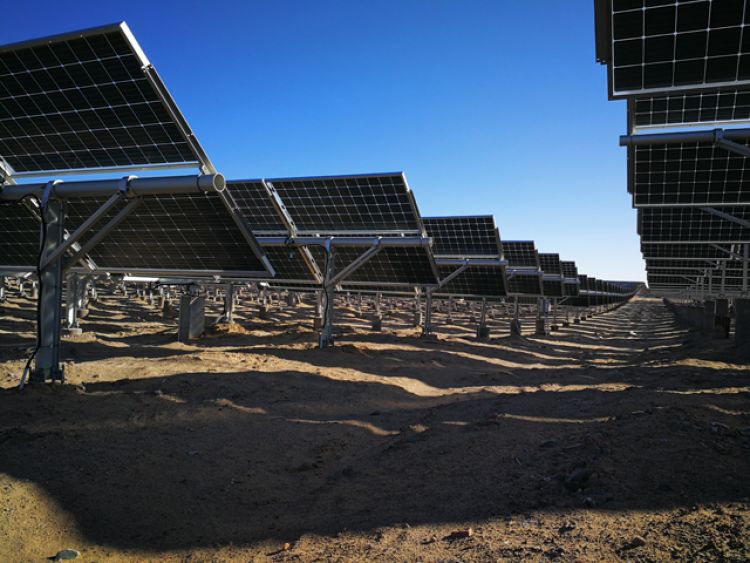
According to Asia Europe Clean Energy (Solar) Advisory Co (AECEA) a string of policy support changes in China have failed to prevent a collapse in solar installations in 2019.
Official figures put solar installations at 17.5GW through October 2019, while unconfirmed figures for November could be as low as only 500MW of installations, bringing total installs for the first 11 months of the year to only around 18GW.
Try Premium for just $1
- Full premium access for the first month at only $1
- Converts to an annual rate after 30 days unless cancelled
- Cancel anytime during the trial period
Premium Benefits
- Expert industry analysis and interviews
- Digital access to PV Tech Power journal
- Exclusive event discounts
Or get the full Premium subscription right away
Or continue reading this article for free
AECEA said that official full-year 2019 figures were expected in mid-January 2020.
The advisory firm has maintained its 2019 forecast for installations in China to be within a range of 20GW to 24GW. Official solar installations in China in 2018 topped 44.26GW.
Prospects for a recovering in 2020 remain uncertain. AECEA noted that in mid-December 2019, a “first draft of the 2020 solar PV policy” was made available to garner feedback but was essentially comprised of policies belatedly put in place in mid-2019 but including a lower support budget for solar installations.
The key priority would remain grid-parity projects, secondly utility-scale + distributed PV projects but both would be bid-based. Residential PV would be the third priority, while poverty-alleviation programmes would also be supported but subject to a different budget.
The total support budget earmarked for 2020 could be around RMB 1.75 billion (US$252 million), according to AECEA, which would include a support budget of around RMB 500 million (US$72 million) for residential PV. AECEA noted that this could be a 42% reduction in budget support compared to 2019.
However, changes to the initial draft policies could be forthcoming as well yet released FIT rates for 2020, which could provide the need support to make projects viable under the new mechanisms.