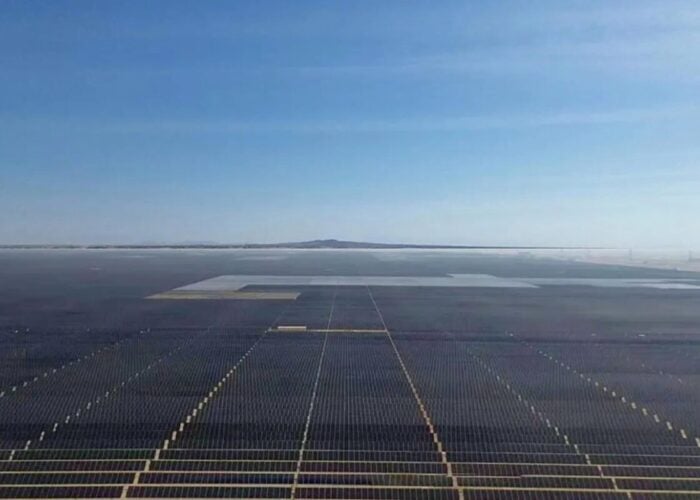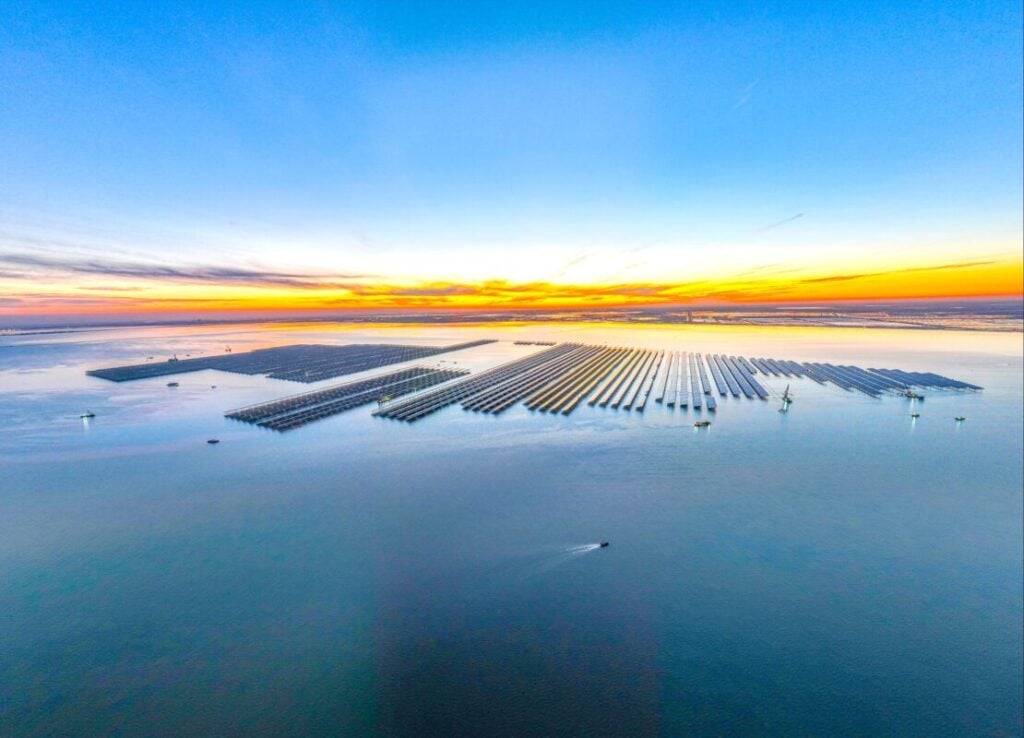
The China Energy Investment Corporation (CHN Energy) has started full commercial operations at the 1GW HG14 floating PV (FPV) project off the coast of Dongying in China.
The project, developed by Guohua Investment, is the world’s largest FPV project of this type. The project consists of 2,934 PV platforms and over 2.3 million modules, connected to the mainland via a 66kV subsea transmission cable, and has sufficient output to meet 60% of the Kenli District of Dongying, the coastal region that is closest to the project.
Try Premium for just $1
- Full premium access for the first month at only $1
- Converts to an annual rate after 30 days unless cancelled
- Cancel anytime during the trial period
Premium Benefits
- Expert industry analysis and interviews
- Digital access to PV Tech Power journal
- Exclusive event discounts
Or get the full Premium subscription right away
Or continue reading this article for free
710W n-type bifacial modules have been deployed at the facility, which also makes use of what CHN Energy’s Zhang Bo called a “four-pile foundation and photovoltaic platform optimised structure”.
“The platform tilt angle is precisely adjusted to 15 degrees, which can not only resist the strong wind of level 11 and winter ice conditions, but also save more than 10% of the steel used in the project, providing experience for the development and construction of similar projects,” explained the deputy manager.
Effectively protecting a solar project from extreme weather is an increasingly important part of project design and financing, with wintery conditions such as hail accounting for the majority of financial losses. According to figures from kWh Analytics, hail alone is responsible for 70% of financial losses for US solar projects, despite accounting for just 6% of loss incidents.
The start of commercial operations comes just over a year after the first part of the project was connected to the local grid, which took place in November 2024. At the time, the developers noted that the project is integrated with fishing work, so as not to disrupt other activities in the waters around Dongying.
The news follows growing appetite for FPV projects, particularly in coastal parts of Asia. Earlier this year, the Philippines awarded 2.28GW of capacity for new FPV projects under the fourth round of its Green Energy Auction Program, around one-fifth of all the new energy capacity accounted.