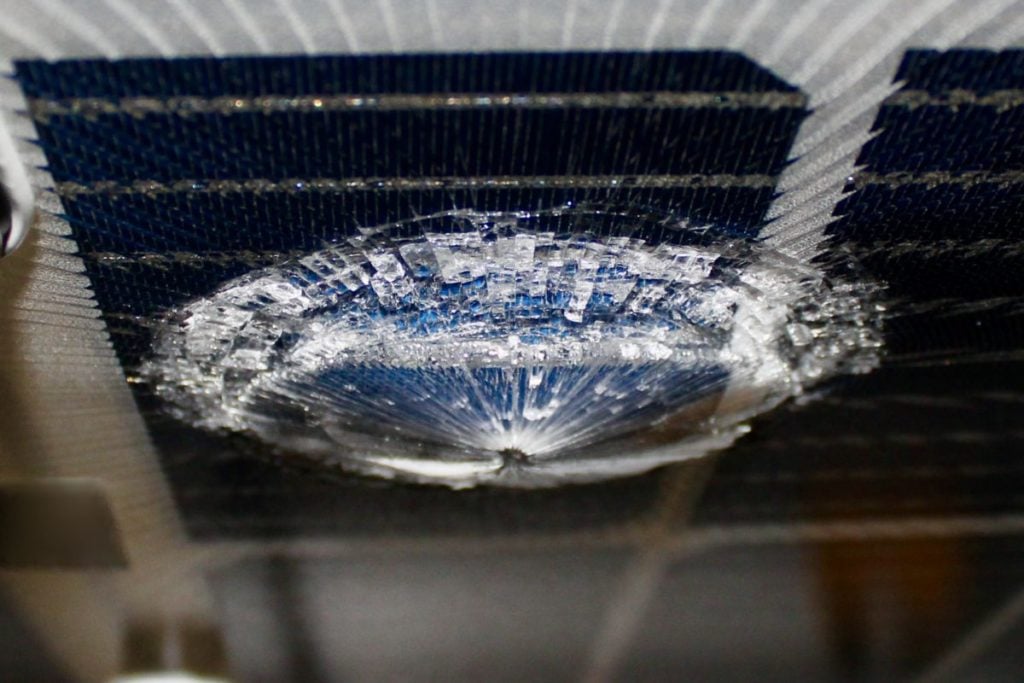
Hail accounts for 73% of financial losses for US solar PV projects, despite representing just 6% of the total number of loss incidents.
According to a new report from US-based climate insurance provider kWh Analytics, the financial impact of severe hail on solar installations is “disproportionately severe” for the frequency with which they occur.
Try Premium for just $1
- Full premium access for the first month at only $1
- Converts to an annual rate after 30 days unless cancelled
- Cancel anytime during the trial period
Premium Benefits
- Expert industry analysis and interviews
- Digital access to PV Tech Power journal
- Exclusive event discounts
Or get the full Premium subscription right away
Or continue reading this article for free
Most of the damage from hail comes from breakages in solar module glass, the report said, which continues to make headlines as many module manufacturers try to turn a profit amid low selling prices and slim margins.
The report said that module selection is “key” to avoiding glass breakage from hail damage, with thicker, tempered glass less likely to break under hail.
This analysis follows similar conclusions found in the Kiwa PVEL (PV Evolution Labs) Module Reliability Scorecard last week, which found that a record proportion of solar modules broke under stress testing. PV Tech Premium interviewed a VP at PVEL, who said a straight line can be drawn between poor finances for manufacturers and decreased module quality.
kWh Analytics’ Solar Risk Assessment 2025 report also said that 99% of US PV plants have a 10% chance of being hit by hailstones bigger than 2 inches every year. Over a 25-year period, almost every US plant will experience large hailstones, with the frequency decreasing to 91.18% over a ten-year span.
Last year, a hailstorm severely damaged the Fighting Jays’ solar project in Texas, garnering widespread media coverage.
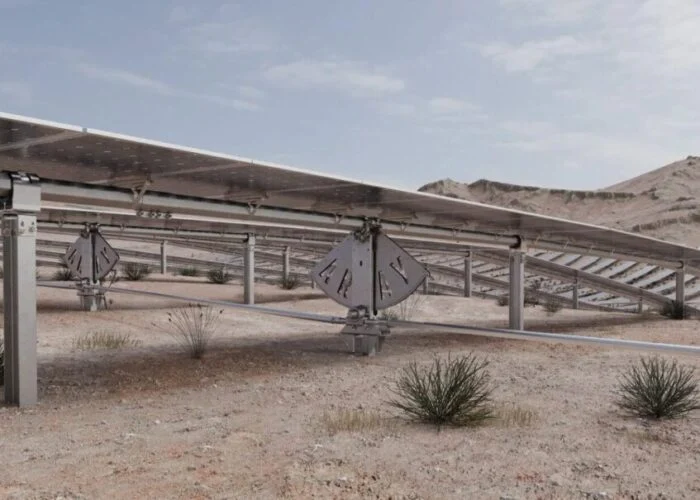
Effective stowing is crucial to preserving modules over the long term, the report finds. Stowing refers to changing the angle of panels during hail storms or strong winds to reduce their exposure to the weather.
An article from VDE Americas included in the Risk Assessment said that other utility-scale solar projects near the Fighting Jays site managed to largely avoid damage in the same hailstorm by effectively stowing their modules. John Sedgwick, president and co-founder of VDE Americas, wrote in detail about this phenomenon for PV Tech in January.
“As renewable energy becomes the backbone of the electrical grid, ensuring system resilience is no longer optional—it’s imperative,” said Jason Kaminsky, CEO at kWh Analytics. “Keeping these assets operational requires unprecedented collaboration among asset owners, operators, financiers, insurers, brokers, and manufacturers.”
PV Tech Premium sat down with Geoffrey Lehv, senior VP of kWh Analytics, ahead of the publication of the Solar Risk Assessment to discuss the report’s findings on cybersecurity, AI and solar asset underperformance. The full interview can be read here.
Beyond hail, the report contains research saying that solar projects can lose up to 6% of annual returns due to wildfire smoke, even when the fire takes place “hundreds of miles away”. The article, from 60Hertz Energy, said that almost 700 wildfires were identified across the US last year, 65% of which were burning in the Midwest, Northeast and Southeast, contrasting the general view that US wildfires are limited to the West of the country.