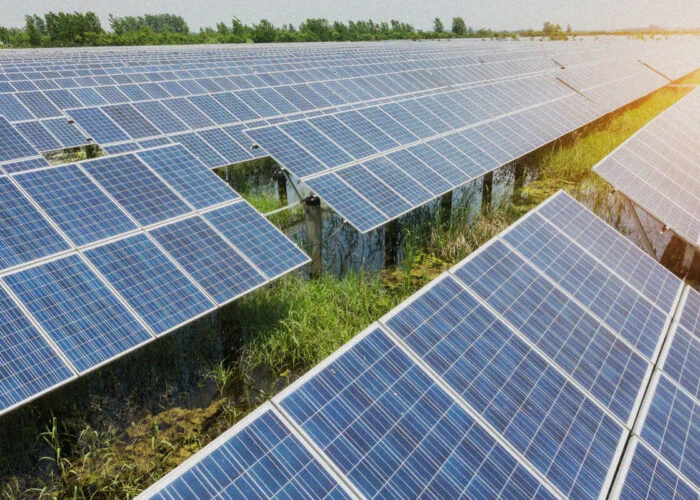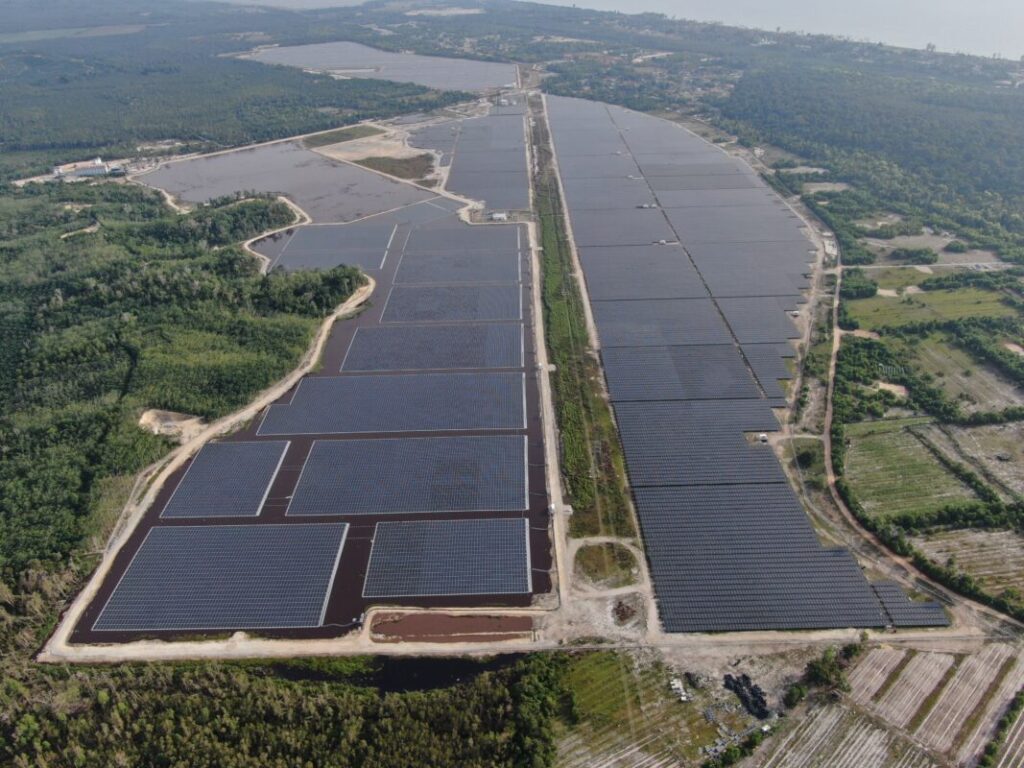
Malaysian energy company Cypark Resources Berhad has commissioned a 100MW hybrid project in its home state, which includes 35MW of floating solar capacity.
The project, built in Merchang, a coastal town in the north-eastern state of Terengganu, comprises solar facilities built on land and water. Both facilities use leading Chinese manufacturer Trinasolar’s 210 Vertex 590-595W bifacial modules, which have a power conversion efficiency of 21.4%, and which the company notes are particularly resilient in high-humidity environments, such as Malaysia.
Try Premium for just $1
- Full premium access for the first month at only $1
- Converts to an annual rate after 30 days unless cancelled
- Cancel anytime during the trial period
Premium Benefits
- Expert industry analysis and interviews
- Digital access to PV Tech Power journal
- Exclusive event discounts
Or get the full Premium subscription right away
Or continue reading this article for free
“This is Malaysia’s largest hybrid solar power plant and consists of 35MW floating solar panels on the water surface and 65MW solar panels installed on land,” said Cypark executive chair Dato’ Ami Moris. “This project demonstrates Cypark’s ability to integrate solar power plant development with the natural environment of Terengganu, which is susceptible to flooding.”
The project builds on a memorandum of understanding signed by Cypark and Trinasolar last year, in which the companies agreed to collaborate on the expansion of renewable power in Malaysia, and the potential for exporting electricity to Singapore.
“We foresee significant opportunities in Southeast Asia for large-scale hybrid solar projects, integrating both floating and ground-mounted installations,” said Elva Wang, head of Southeast Asia at Trinasolar. “This project is a clear demonstration of the potential for hybrid solar projects in the region. We look forward to driving more such initiatives and contributing to Southeast Asia’s renewable energy ambitions.”
Malaysia’s energy mix remains heavily reliant on fossil fuels, with just 1.93GW of solar capacity in operation in 2023, compared to 17.7GW of gas and 13.3GW of coal, and Cypark estimates that, if the country is to achieve its target of meeting 70% of its electricity demand with renewable power by 2050, around US$143.1 billion (MYR637 billion) will need to be invested in the next two decades.
As a result, the commissioning of the project is a positive development for the Malaysian renewable power sector in particular, and the Asian floating solar sector in general. Earlier this year, research firm Rystad Energy noted that it expects Southeast Asia to add around 300MW of new floating solar capacity, and this report was quickly followed by the construction of the first floating solar project in Japan by SolarDuck and Tokyu Land.
However, as floating solar projects become more commonplace, the risks associated with these facilities loom larger. Earlier this year, experts from kWh Analytics, Ciel & Terre US and Willis Towers Watson wrote for PV Tech Premium that these risks can include both the “immense” threat of natural catastrophes, and the uncertainty regarding financing and insuring such projects.