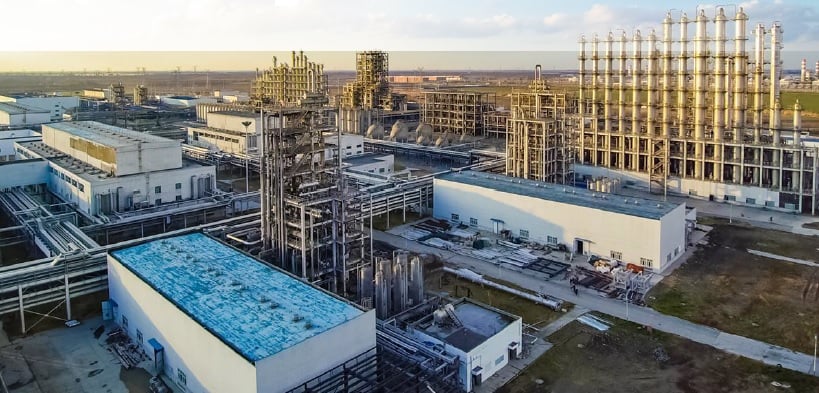
Chinese polysilicon producer Daqo New Energy recorded over RMB1 billion in losses in 2025, roughly halving its losses compared with 2024.
The company issued preliminary financial results for its main subsidiary, Xinjiang Daqo, which said that losses for shareholders will amount to between RMB1-1.3 billion (US$143-186 million) for the period ending 31 December 2025.
Try Premium for just $1
- Full premium access for the first month at only $1
- Converts to an annual rate after 30 days unless cancelled
- Cancel anytime during the trial period
Premium Benefits
- Expert industry analysis and interviews
- Digital access to PV Tech Power journal
- Exclusive event discounts
Or get the full Premium subscription right away
Or continue reading this article for free
This is a significant improvement on the roughly RMB2.7 billion losses the company posted in 2024, though the ongoing losses still show the difficult circumstances facing the polysilicon industry.
Daqo said it has reported preliminary results for Xinjiang Daqo – in which it owns 72.8% of the equity – in RMB and according to Chinese accounting principles, whereas the full financial statement of the parent company, Daqo New Energy, will be reported in USD according to US principles.
Xinjiang Daqo is Daqo New Energy’s major polysilicon production subsidiary. The company began producing polysilicon in the Xinjiang region of northwestern China in 2013, having previously operated in the Chongqing region. Polysilicon and other industries in Xinjiang have been associated with alleged forced labour practices by the Chinese government against the region’s native Uyghur Muslim population.
Polysilicon sector shifts
China’s polysilicon industry is in a state of change as the industry and government pursue ways to counteract the low prices and oversupply, which have caused problems for the sector’s biggest players.
Last year, the government unveiled a number of “anti-internal competition” laws across various industries, in order to curb the low prices and fierce competition which had emerged between Chinese firms. The polysilicon industry has seen that “cutthroat” dynamic play out over the last two years, leading to massive industry overcapacity and ensuing low prices which saw the sector’s major players post regular financial losses.
More recently, the major polysilicon industry firms, led by Daqo, Tongwei and GCL Technologies, established a RMB3 billion “inventory platform” company designed to manage the flow and level of polysilicon capacity and inventory. This would mark a significant change, from harsh competition to a more managed price and supply environment.
But earlier this month, China’s market supervision body warned that this plan ran the risk of creating an unfair monopoly in the polysilicon industry and warned the involved entities to find a different solution.
Polysilicon prices have rallied in recent weeks, likely as a result of these industry changes. However, the price increases have yet to echo down the supply chain. Polysilicon market expert Johannes Bernreuter said earlier this month that the Chinese industry’s efforts to reduce inventory and raise prices were “unsustainable”, and that leading companies were trying to “turn market laws upside down”, as the end demand for their products was not rising in line with prices.