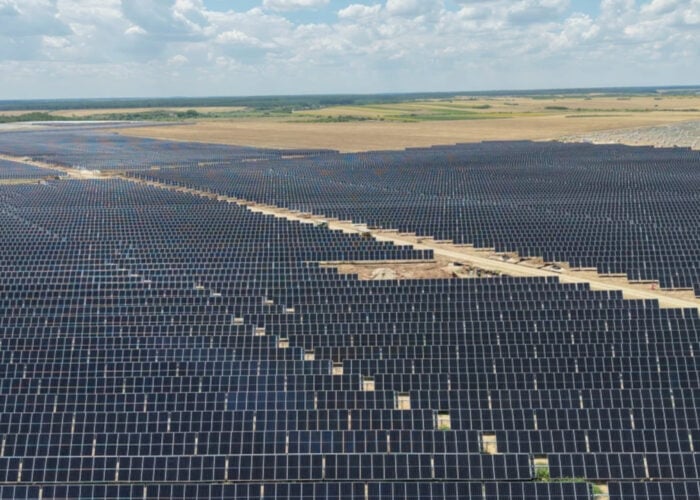
With a lengthy period of political turmoil only just behind it, Egypt has rapidly emerged to become one of the most promising renewable energy markets in the Middle East North Africa (MENA) region, according to a report.
Analysis from German clean-tech consultancy, Apricum, says a combination of rapidly growing demand for power, “exceptional” solar and wind resources and, now, the necessary political impetus, has put Egypt on the “hot list” of global renewable energy markets.
Try Premium for just $1
- Full premium access for the first month at only $1
- Converts to an annual rate after 30 days unless cancelled
- Cancel anytime during the trial period
Premium Benefits
- Expert industry analysis and interviews
- Digital access to PV Tech Power journal
- Exclusive event discounts
Or get the full Premium subscription right away
Or continue reading this article for free
“With well-managed implementation, Egypt could become one of the leading renewable energy markets in the MENA region in a short space of time,” said the report’s author, Martin Mitscher, also a project manager at Apricum.
Key to Egypt’s sudden rise to prominence on the global clean energy stage is the advent of its feed-in tariff, which was announced last September. With a target of procuring 4.3GW of solar and wind power by 2017, the FiT has generated significant interest and the first projects to qualify for it have already been selected.
“After the FiT announcement, we saw a rush from local and international solar developers to get their foot in the door. A stunning 178 project proposals were submitted for more than double the announced capacity of 2GW,” said Mitscher. That 2GW is for larger projects, with FiT support available for an additional 300MW of rooftop solar.
In total, 69 large-scale solar projects qualified for the FiT.
“The key step towards realisation of these projects will be for the government to provide a bankable framework to potential debt providers so that developers can reach financial close of their projects. The underlying PPA and associated securities are currently being drafted,” said the Apricum paper.
If the Egyptian authorities can get these key elements of the process right, some have already said the country has the potential to emulate the feats of South Africa, whose transparent and stable procurement process has been credited for the rapid development of that country’s renewable energy market.
Apricum said it expected Egypt’s PV market to grow to a cumulative 2-3GW by 2020, initially driven by the FiT, but with utility projects from a separate procurement process that Egpyt has been running potentially boosting the overall market size.
However, other observers have said the jury is still out on whether Egypt will be able to implement a smooth procurement process. Speaking to PV Tech earlier this year, IHS analyst Josefin Berg said of Egpyt’s FiT tender: “There will be a lot of hurdles for these projects to be deployed, but it definitely raises our outlook for Egypt and we’re looking into that now to see how we should assess it – whether it could go like what we’ve seen in South Africa, or if there will be a lot of hurdles. They’ve awarded the projects, but they still have to go through the whole processing of PPAs, and it could be like Jordan where it’s been a very cumbersome process to get projects ready to build.”
This story was updated from its original version to correct information about the number of solar projects qualifying for Egypt's feed-in tariff.