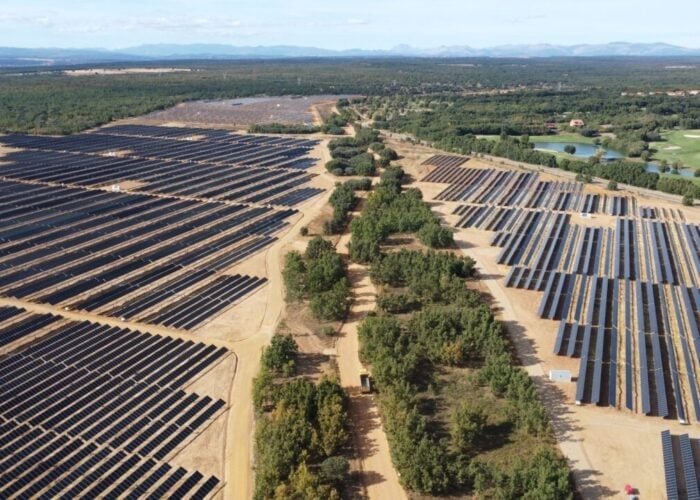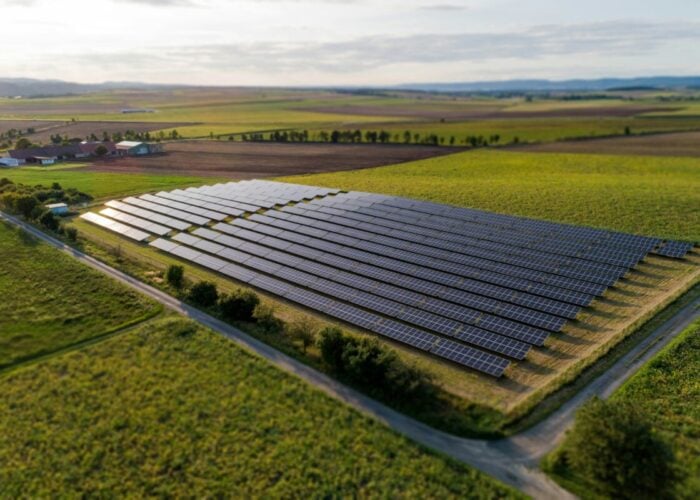
Spanish utility Endesa has started commercial operations at a 131MW solar PV portfolio in its home country.
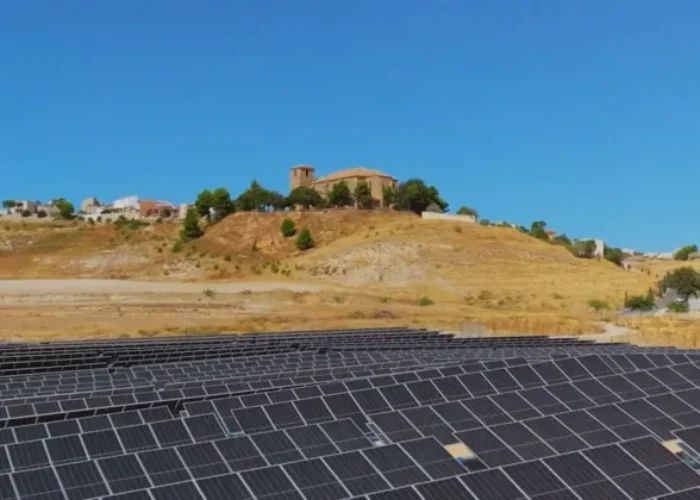
Located in the southern Spanish region of Andalusia, the three PV plants – dubbed Envatios I, II and III – coexist with unique archaeological remains discovered during the construction phase. Excavation of the sites was carried out in parallel with the construction of the PV plants.
Try Premium for just $1
- Full premium access for the first month at only $1
- Converts to an annual rate after 30 days unless cancelled
- Cancel anytime during the trial period
Premium Benefits
- Expert industry analysis and interviews
- Digital access to PV Tech Power journal
- Exclusive event discounts
Or get the full Premium subscription right away
Or continue reading this article for free
Some of the findings at the site, which includes centuries- and millennia-old burial sites and hut foundations, will be carried out by the Archaeological Museum of Seville.
In order to carry out both the construction of the solar PV plants and the excavation, the company used drones equipped with thermal imaging and photographic cameras to analyse the state of the work.
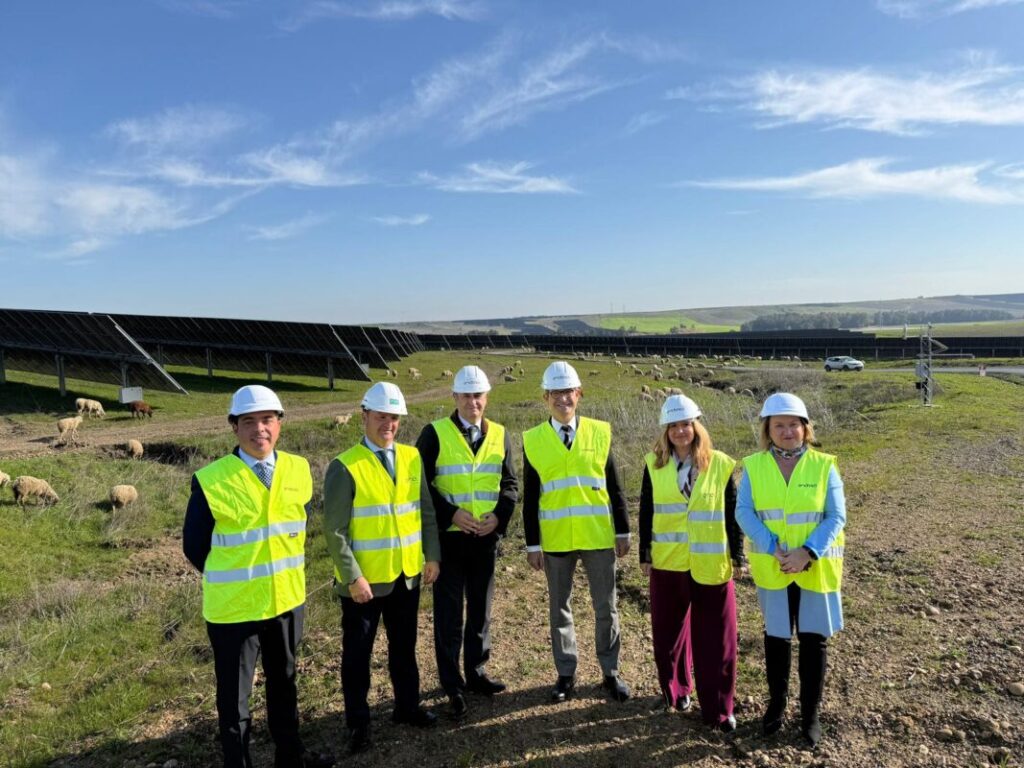
On top of the archaeological findings, the site will also implement agrivoltaics (agriPV) with more than 200 sheep grazing the site and also the addition of beehives, which Endesa had already used in previous solar PV projects.
All three PV plants will have PV trackers and bifacial modules installed, as well as a transformer at each site that will enable the increase of the voltage to 220kV.
With the commercial operation of these three projects, Endesa brings the total of operational PV plants in the province of Seville to 11, with four other operational PV projects across the region of Andalusia.
Moreover, in its latest financial results, the company revealed that its operational renewable energy capacity stood at 11.3GW by the end of 2025. In the next three years, the Spanish utility forecasts to add nearly 3GW of new renewable energy capacity to its portfolio.