Enertis Applus+ conducts quality control on 2.5GW of US solar projects

December 16, 2022
Facebook
Twitter
LinkedIn
Reddit
Email
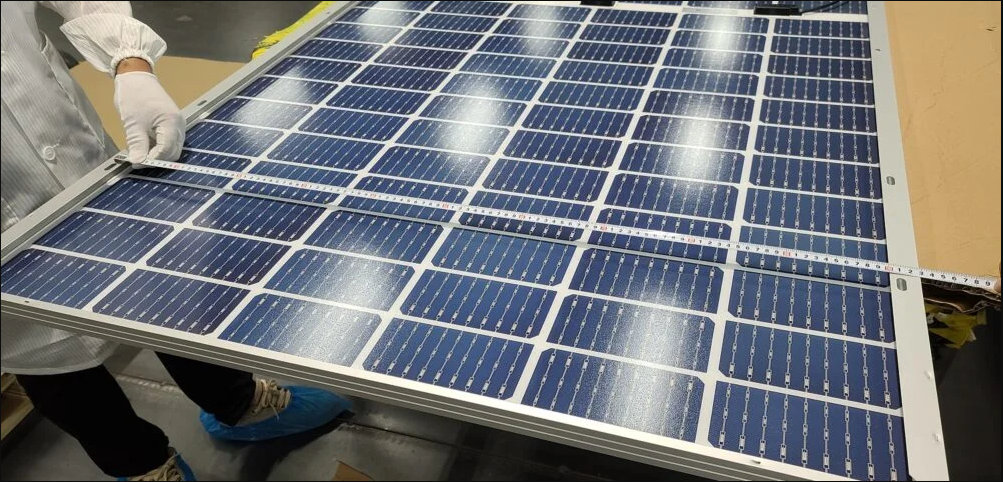
The inspected modules came from factories in India, Thailand, Vietnam and Cambodia. Image: Enertis Applus+.

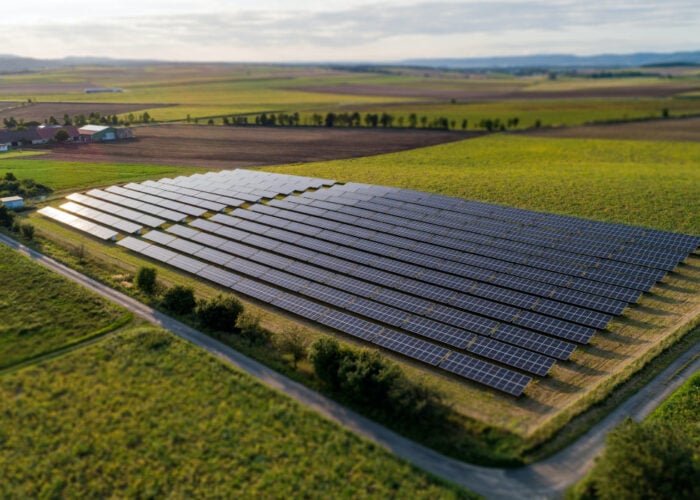
Enertis Applus+, the global quality control and testing firm, is providing supply chain quality control and assurance services to a 2.5GW portfolio of solar PV projects across the US.

The company’s services focus on mitigating long-term risk in PV projects by preventing the purchase of non-reliable or unethically traced components. In particular, it said that it has focused on ensuring that risks or exposure to unethical labour practices from polysilicon production in Xinjiang, China, were ruled out. In June, the US introduced the Uyghur Forced Labor Prevention Act to rule out imports of products from the province.

This article requires Premium SubscriptionBasic (FREE) Subscription

Try Premium for just $1

  • Full premium access for the first month at only $1
  • Converts to an annual rate after 30 days unless cancelled
  • Cancel anytime during the trial period

Premium Benefits

  • Expert industry analysis and interviews
  • Digital access to PV Tech Power journal
  • Exclusive event discounts

Or get the full Premium subscription right away

Or continue reading this article for free

Enertis also said that it acted, and will act, as a technical advisor during negotiations with the projects’ main component suppliers, ensuring that manufacturing quality and technical standards were upheld.

The modules used in the projects came from seven suppliers with factories in Vietnam, India, Cambodia and Thailand. A recent US Department of Commerce investigation found that some solar manufacturers in Southeast Asia have been circumventing import duties on Chinese PV cells. Enertis said that it audited these factories and supervised manufacturing processes to detect non-conformities and evaluate procedures.

All of the modules inspected used bifacial mono-PERC cells, according to Enertis. The projects will be located in Texas, Ohio, Illinois, Louisiana, West Virginia, New York, and Maine and range in size from 50MWp to over 600MWp.

Traceability is an increasingly pressing issue for the solar industry, both in the US and elsewhere. PV Tech discussed the rising scrutiny on European supply chains, and the potential solution in domestic manufacturing, last month.


16 June 2026
Napa, USA
PV Tech has been running PV ModuleTech Conferences since 2017. PV ModuleTech USA, on 16-17 June 2026, will be our fifth PV ModulelTech conference dedicated to the U.S. utility scale solar sector. The event will gather the key stakeholders from solar developers, solar asset owners and investors, PV manufacturing, policy-making and and all interested downstream channels and third-party entities. The goal is simple: to map out the PV module supply channels to the U.S. out to 2028 and beyond.
13 October 2026
San Francisco Bay Area, USA
PV Tech has been running an annual PV CellTech Conference since 2016. PV CellTech USA, on 13-14 October 2026 is our third PV CellTech conference dedicated to the U.S. manufacturing sector. The events in 2023, 2024 and 2025 were a sell out success and 2026 will once again gather the key stakeholders from PV manufacturing, equipment/materials, policy-making and strategy, capital equipment investment and all interested downstream channels and third-party entities. The goal is simple: to map out PV manufacturing in the U.S. out to 2030 and beyond.

Read Next

February 6, 2026
The Australian government has launched a formal inquiry into the reuse and recycling of solar modules across the country.
February 5, 2026
Vietnam is the cheapest country to produce fully domestic solar modules outside of China, according to a report from the International Renewable Energy Agency (IRENA).
February 5, 2026
Explainer: Two new studies offer fresh insights into the performance of TOPCon solar modules, including a new degradation mode related to encapsulants.
February 4, 2026
In the wake of Russia’s invasion of Ukraine, European energy has gone from an overreliance on Russia to an overreliance on China.
February 4, 2026
Avangrid, a subsidiary of Spanish utility Iberdrola, has reached commercial operations at two PV power plants in the US state of Oregon.
February 4, 2026
Spanish renewable energy company Zelestra has finalised a power purchase agreement with Facebook’s parent company Meta for its 176MW Skull Creek Solar Plant in Texas.

Upcoming Events

Upcoming Webinars
February 18, 2026
9am PST / 5pm GMT
Solar Media Events
March 24, 2026
Dallas, Texas
Solar Media Events
April 15, 2026
Milan, Italy
Solar Media Events
June 16, 2026
Napa, USA
Solar Media Events
October 13, 2026
San Francisco Bay Area, USA