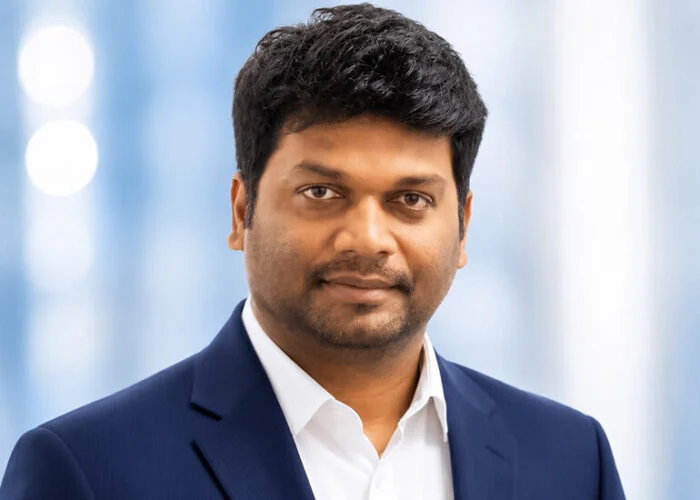
“Europe plays a critical role in the provision of renewable energy, both in manufacturing and services,” Justin Thesiger, managing director of UK-based independent power producer (IPP) Low Carbon, told PV Tech, when asked about the role of Europe in the solar manufacturing sector.
Manufacturing, in particular, has historically relied on sustained policy support to be financially viable, but Thesiger, who will speak on a panel about mitigating geopolitical solar supply chain risks at next week’s Solar Finance & Investment Europe summit in London, is optimistic that Europe will have a role to play in the future of solar manufacturing.
Try Premium for just $1
- Full premium access for the first month at only $1
- Converts to an annual rate after 30 days unless cancelled
- Cancel anytime during the trial period
Premium Benefits
- Expert industry analysis and interviews
- Digital access to PV Tech Power journal
- Exclusive event discounts
Or get the full Premium subscription right away
Or continue reading this article for free
“To achieve the targets required for the energy transition, the entire global supply chain will need to operate effectively, with Europe playing an increasingly important role,” he said.
“Our supply chain spans multiple industries, including financial services, planning, site surveys, equipment manufacturing, construction and operations.” The rest of his conversation with PV Tech, covering Europe’s policy landscape and global supply chain risks faced by developers, is included below.
PV Tech: What is the current policy landscape for solar manufacturing in the EU?
Justin Thesiger: The policy landscape in Europe supports the manufacturing of certain solar components; however, it is unlikely that Europe will be able to fully secure its own supply chain for some equipment, such as panels.
We are actively assessing which equipment can be sourced from the UK and Europe. Currently, the mounting equipment we procure is manufactured in the UK, while switchgear, inverters and transformers for our projects are sourced from Europe. Further diversification of the supply chain is a long-term objective, but achieving this will take time.
What are some of the global supply chain risks and considerations?
The most finite resource in achieving national renewable energy targets today is labour. Major infrastructure projects—such as roads, rail and housing—are all competing for the same trades, and skilled project managers are particularly difficult to find. Labour shortages are likely to persist in the coming years, making the ability to offer contractors long-term continuity of work critical to delivering projects on schedule.
When procuring equipment, Low Carbon makes every effort to ensure full traceability of components and that they are sourced ethically. This is a key consideration when selecting the partners we work with.
We also work closely with our trade body, Solar Energy UK, to support Europe-wide efforts to ensure forced labour is not used within supply chains and to help drive positive change across the industry. In support of this, Low Carbon is a sponsor of the Solar Stewardship Initiative (SSI), where we actively contribute to the development of an industry-led traceability protocol.
Has uncertainty regarding supply chains impeded the deployment of new solar PV capacity in Europe?
The global equipment supply chain has “flexed” over the past two years, delivering an additional 1TW of solar capacity on top of the roughly 1TW installed over the previous two decades. This demonstrates that manufacturing capacity can scale rapidly in response to increased demand, while also enabling continued technological advancement through higher-efficiency products and larger-scale projects.
Thesiger will speak at the 13th edition of the Solar Finance & Investment Europe event in London on 3 – 4 February 2026, hosted by PV Tech publisher Solar Media. This event annually attracts infrastructure funds, institutional investors, asset managers, banks and development platforms at the forefront of European renewables. For more details, visit the website.