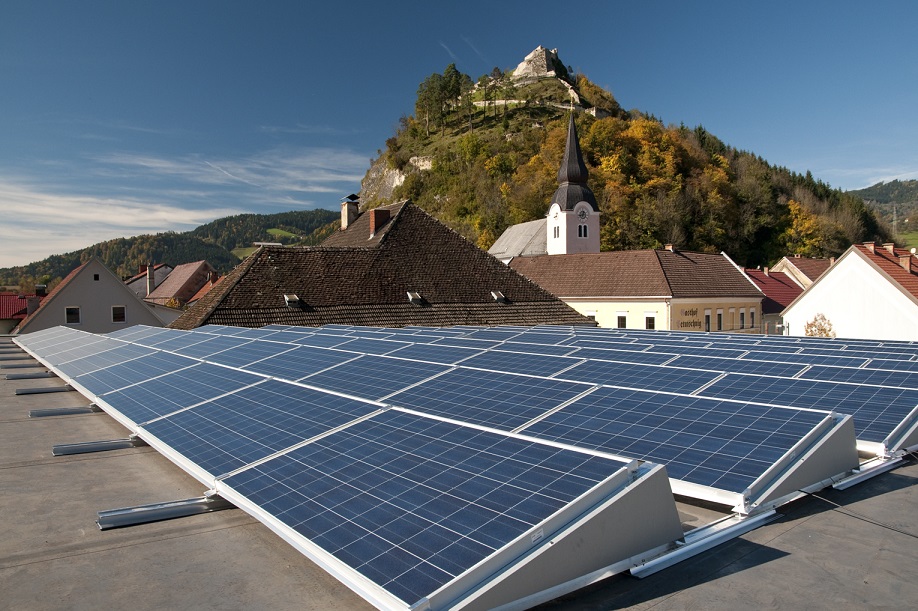
While renewables were the largest source of generation in Europe for the sixth consecutive quarter, solar output in the continent shrunk during Q3, a new report from energy data analyst EnAppSys says.
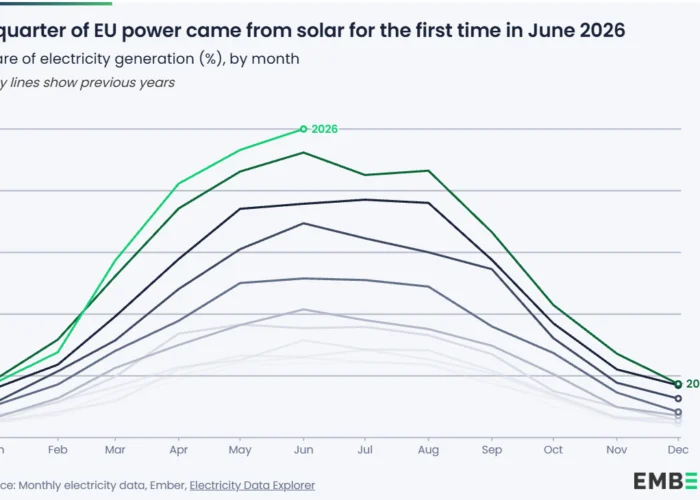
After hitting an all-time high of 47.6TWh in Q2 2020, thanks in part to ideal weather conditions, European solar generation fell by 26% to 35.1TWh in Q3, the lowest third-quarter output for the technology since 2016.
Try Premium for just $1
- Full premium access for the first month at only $1
- Converts to an annual rate after 30 days unless cancelled
- Cancel anytime during the trial period
Premium Benefits
- Expert industry analysis and interviews
- Digital access to PV Tech Power journal
- Exclusive event discounts
Or get the full Premium subscription right away
Or continue reading this article for free
The three months to 30 September saw total renewables output increase 8% year-on-year to 264.5TWh, which represented the highest amount of green energy generation seen in any previous third quarter.
EnAppSys said demand “recovered strongly” after falling away rapidly at the end of Q1 as much of Europe went into a coronavirus-induced lockdown. By the end of the third quarter, total European demand had returned to levels seen in the same period in 2019.
The report notes that both fossil fuels and nuclear saw an upturn from their low levels in Q2, as the easing of lockdowns meant boosted demand across Europe and these generation sources rose to help meet this increase. Despite this growth for both categories, their generation was down year-on-year, with fossil fuel output 4% lower and nuclear 15% lower.
When individual technology types, rather than groupings, are considered, nuclear has the largest generation, followed by gas and then hydro.
EnAppSys director Jean-Paul Harreman said that while overall European demand recovered as lockdown restrictions were eased, there were some variations between countries’ typical demand shapes.
“Towards the end of Q3 2020, as COVID-19 cases began to rise again across Europe, some countries started to reintroduce measures to delay or prevent a second wave of the virus. As we move into the final quarter of the year, demand shapes are likely to change once again as countries implement different policies in a bid to slow the spread of the virus,” said Harreman.