FIMER and PV Tech are co-hosting a webinar, exploring An inverter’s role in delivering high availability and low LCOE for a new era of utility-scale solar. The webinar, which is free to attend, will take place on at 15:00 CET / 14:00 BST / 09:00 EST on 20 October 2021. To register, click here.
FIMER has launched two new platforms for the utility-scale solar sector, the PVS-350-TL string inverter for decentralised applications and the PVS-260/PVS-300 modular conversion solution designed for centralised applications.
Try Premium for just $1
- Full premium access for the first month at only $1
- Converts to an annual rate after 30 days unless cancelled
- Cancel anytime during the trial period
Premium Benefits
- Expert industry analysis and interviews
- Digital access to PV Tech Power journal
- Exclusive event discounts
Or get the full Premium subscription right away
Or continue reading this article for free
Problem
While string inverters are becoming increasingly popular for utility projects, more traditional central architectures are still prevalent, currently accounting for almost 40% of the market. A solution was needed that could cater for all utility project needs, including future storage requirements.
Solution
FIMER’s new platforms – a high-power multi-MPPT inverter, the PVS-350-TL, and the PVS-260/PVS-300 modular conversion platform – are designed to cater for both decentralised and centralised applications, covering 100% of utility customer needs.
The PVS-350-TL is the most powerful and power dense multi-MPPT string inverter in the solar industry, optimized for decentralised PV system architectures with a maximum efficiency of ɳMAX > 99% to ensure the highest energy yield. It also has the smallest footprint when compared to other similar products, and significantly reduces the risk of downtime that can occur with central inverters.
Applications
All utility-scale solar projects.
Platform
The PVS-350-TL offers record-high AC capacity combined with a DC front-end optimised for the latest PV modules. With a record-high capacity and power-to-weight ratio exceeding 3kW/kg, it delivers up to 350kVA at 800Vac. It reduces logistics and installation costs and also the electrical balance of system costs for free field utility-scale ground mounted PV installations. MV stations of up to 15% higher capacity can be combined with the PVS-350-TL, increasing the single power block capacity and reducing the overall number of stations per MWac of installed power. The inverter comes equipped with 12 MPPTs, each rated 45A Impp and 60A Isc and has been specifically optimised for the connection of two strings of the latest ultra-high power PV modules based on M10 (182x182mm) and G12 (210x210mm) cells.
The DC/AC ratio can be optimised to fully exploit the benefits of these new module formats while offering maximum system yields (ηMAX > 99%), enabling additional cost savings on trackers compared to traditional 166mm modules. Quick and easy to install, existing PV module mounting systems can be used to install the inverters.
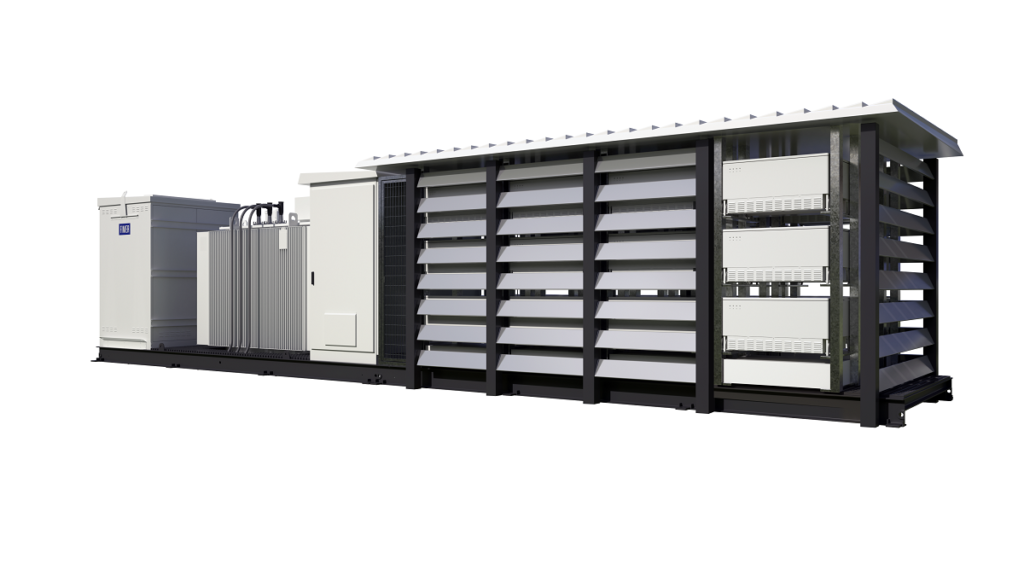
The PVS-260/PVS-300 modular conversion platform has a large capacity combined with super-compact design single MPPT power block, to enable system designers to keep a ‘centralised’ system architecture if preferred. All power electronics are also concentrated nearby to the other critical AC power assets to simplify control and routine maintenance.
By combining the power modules in a factory pre-assembled and pretested MV station, the new platform can compete with multi-megawatt scale station designs of the latest central inverters, allowing system designers to apply the modular architecture to systems of any size.
Availability
Latin America, USA, Australia, Asia, EMEA.