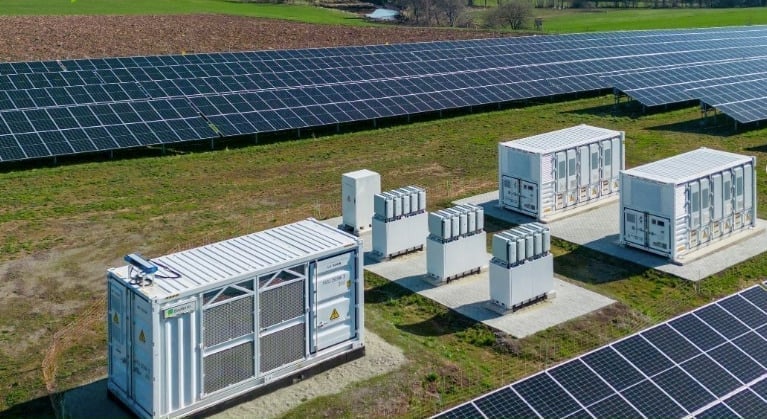
A study has underlined the importance of flexibility to Europe’s energy transition as the dominance of renewable energy generation grows.
A report by UK-based consultancy LCP Delta has revealed that the ongoing buildout of grid-scale renewables such as PV and an accompanying surge in household electrification across major European economies will lead to “high and sustained” levels of power market volatility and distribution network congestion. This will necessitate a rapid growth in flexibility through demand shifting and the deployment of grid-scale energy storage to maintain the transition.
Try Premium for just $1
- Full premium access for the first month at only $1
- Converts to an annual rate after 30 days unless cancelled
- Cancel anytime during the trial period
Premium Benefits
- Expert industry analysis and interviews
- Digital access to PV Tech Power journal
- Exclusive event discounts
Or get the full Premium subscription right away
Or continue reading this article for free
According to LCP Delta’s report, ‘The road ahead: markets, value chains and pacesetters shaping Europe’s energy transition’, between now and 2030, 267GW of grid-scale solar and wind will be deployed in Europe. Alongside that, a similar capacity – 261GW – of electrification assets will be added to households via an estimated 42 million individual assets, encompassing electric heating, EV charging points, residential solar and batteries.
The report said the deployment of the necessary flexibility to support such a system, characterised by volatility and bottlenecks, was rapidly accelerating. It predicted that by 2030, 41GW of battery energy storage capacity would come online, as well as an estimated 81GW of demand-side flexibility.
The report explored the interactions between consumers, power markets, grid-scale assets and networks in the green energy transition. It identified six value chains that together are driving Europe’s energy transition – customer electrification, smart energy retail, demand-side flexibility, grid-scale BESS, grid-scale renewables and green hydrogen – and the challenges associated with these, including customer engagement, distribution network congestion and power market volatility.
LCP Delta said the companies that would “win” in this new paradigm would be those that are able to work across the traditional “silos” in the energy system.
“The energy transition requires competencies that connect across value chains, both for successful commercial strategies as well as for policy makers and regulators. This contrasts with historic approaches that were often siloed,” the report said.
Jon Slowe, partner at LCP Delta, said: “We are currently witnessing the disruption of traditional energy value chains, as the old energy retail system gives way to a new interconnected value chain, filled with opportunity for companies able to evolve and even pivot their businesses.
“A lot of the recent focus of the transition has rightly been on the supply side and developing the infrastructure we need. This ongoing transformation is crucial. But the next step will see flexibility and customer engagement play a much more central role. The opportunities for companies that can bring flexibility to market, and can simplify customer’s electrification journeys, is enormous.
“Our report suggests that in this brave new world, only holistic approaches that overcome traditional siloed thinking will find success.”