Shreeyashi Ojha reports on a European PV recycling venture looking to maximise the value of materials recovered from end-of-life modules.
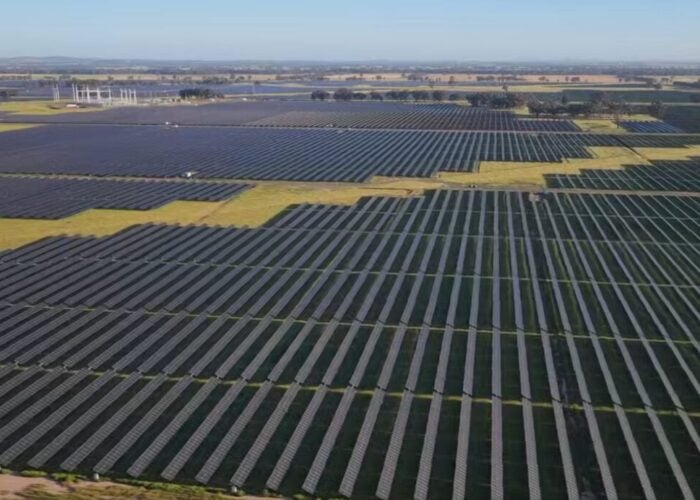
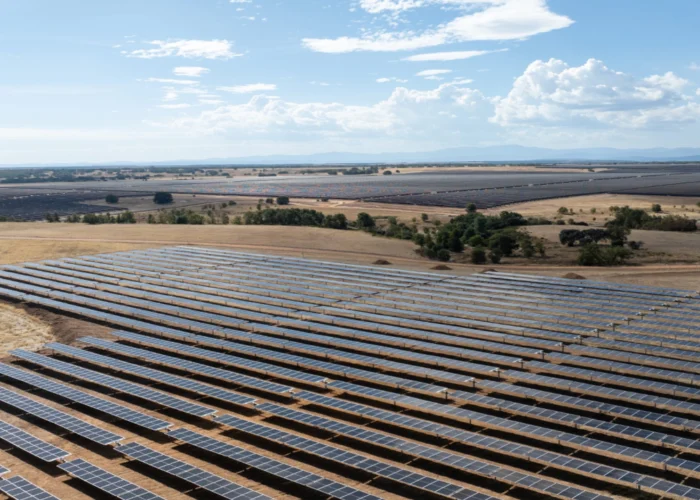
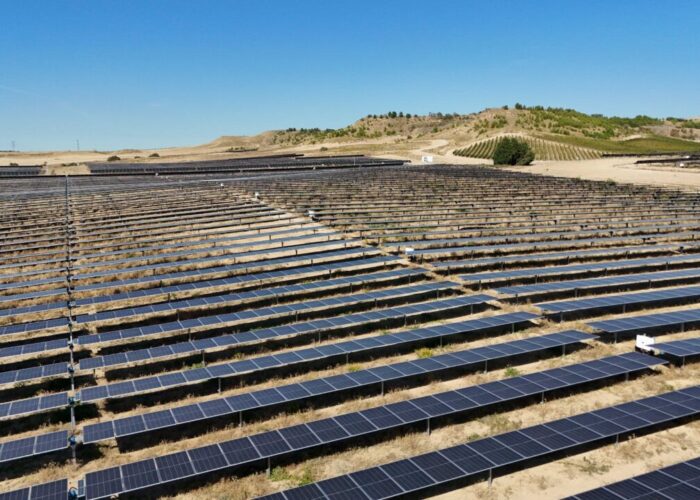
As the solar industry matures, decommissioning and waste management are becoming increasingly important. According to Jan-Philipp Mai, CEO of German solar panel recycling firm Solar Materials, large volumes of utility-scale modules are already returning earlier than expected, with many projects being repowered after just 10-15 years rather than operating for decades like residential rooftop systems.
Try Premium for just $1
- Full premium access for the first month at only $1
- Converts to an annual rate after 30 days unless cancelled
- Cancel anytime during the trial period
Premium Benefits
- Expert industry analysis and interviews
- Digital access to PV Tech Power journal
- Exclusive event discounts
Or get the full Premium subscription right away
Or continue reading this article for free
Mai attributes this trend to both commercial and technical factors. On the commercial side, developers are upgrading sites with higher-efficiency modules and battery storage systems to maximise constrained land and grid connections.
“You build the same capacity and power, but you need less land, and then you can install some batteries as well,” he explains.
At the same time, many modules installed during the industry’s first major growth phase between 2010 and 2015 are now experiencing quality-related failures.
“A lot of those panels fail after 10 or 15 years,” he says. “That is a really big amount of what we see today.”
New installations are also contributing to growing waste streams through breakage during transport, construction and installation. Even failure rates below 1% translate into hundreds of thousands of damaged modules annually across Europe. The result is an industry preparing for a major rise in PV waste volumes over the coming decade.
Fragmented regulation complicates Europe’s circularity ambitions
Despite growing political focus on circular economy principles, the regulatory landscape for PV recycling remains fragmented across Europe.
Solar panels fall under the EU’s Waste Electrical and Electronic Equipment (WEEE) framework, but implementation differs between member states. According to Mai, this lack of harmonisation creates operational challenges for recyclers and manufacturers alike.
“Although it’s quite similar, it’s not the same in every European market,” he says.
The commercial and utility-scale segment presents the biggest complexity. Unlike residential systems covered by structured collection schemes, large-scale projects require bespoke approaches involving asset owners, manufacturers and recyclers across multiple jurisdictions.
Mai argues the industry is moving beyond viewing recycling purely as a regulatory burden. Growing recognition of the value embedded within end-of-life modules is shifting attention towards commercially viable circular business models.
At the same time, Mai identifies illegal exports and grey-market activity as one of the sector’s biggest unresolved risks. Modules classified as reusable products rather than waste are frequently exported outside Europe despite being close to end-of-life. “That is a far bigger issue from a regulatory point of view,” he says.
Building the recycling business case
The economics of PV recycling are increasingly centred around recovering high value raw materials, particularly silver and aluminium. Mai says his company aims to make solar recycling economically viable without relying on disposal fees or regulatory subsidies. “The key question is how can I extract silver profitably,” he says.

Silver remains the highest-value material recovered from PV modules, followed by aluminium. Copper and silicon also hold commercial value; plastics and lower-grade glass generate comparatively little return.
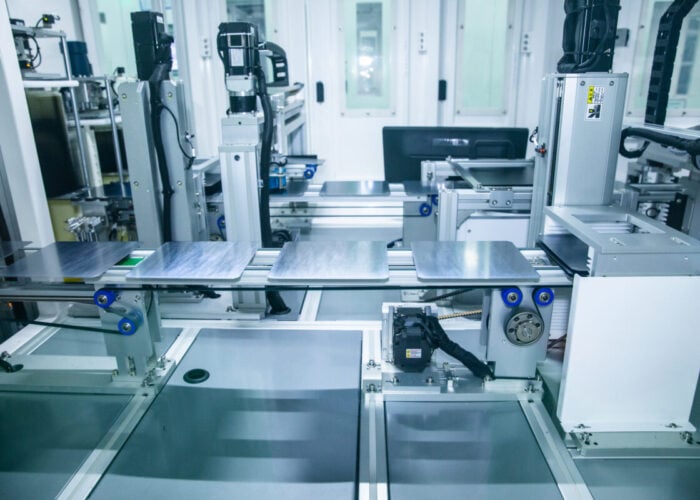
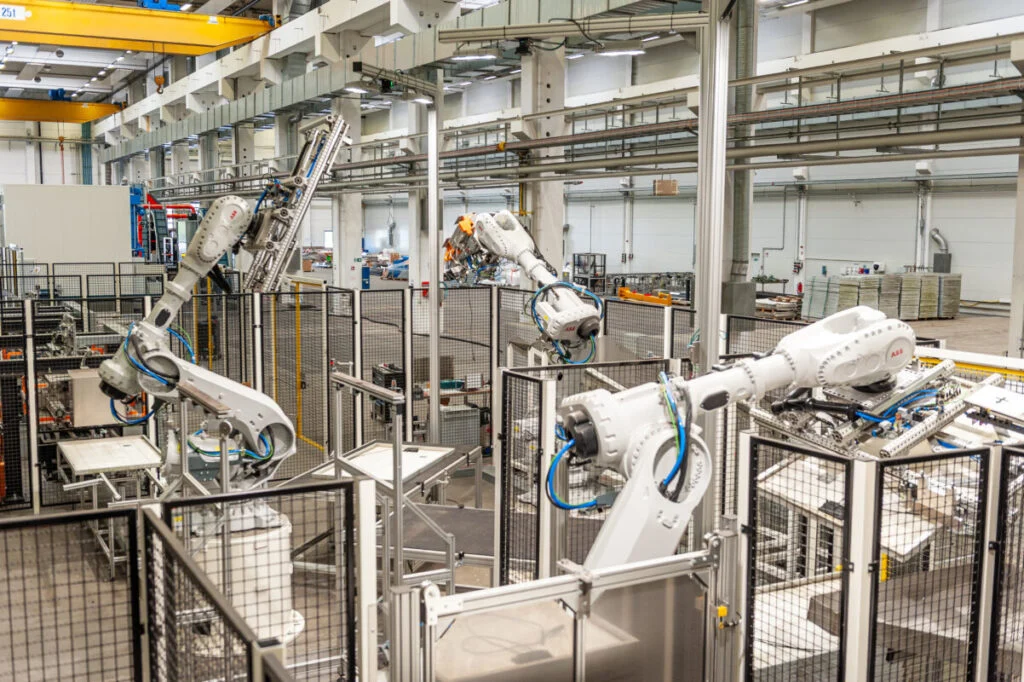
Rather than relying solely on shredding and bulk separation, newer recycling approaches aim to dismantle modules layer by layer, separating aluminium frames, junction boxes, glass, silicon and silver into unmixed fractions.
“If you want to use the glass, it has to be at a higher quality to allow float glass production,” Mai explains.
Recovered materials are sold into local industrial supply chains. Aluminium can be reused in construction and framing applications, copper in electrical systems and silicon potentially reintroduced into battery or polysilicon production.
Alongside recycling, second-life applications are also emerging as part of the circular PV ecosystem. Modules with sufficient remaining lifespan can be tested and resold rather than immediately recycled.
Recyling bottlenecks
Despite improving recycling economics, logistics remains one of the industry’s biggest operational hurdles. A single 30MW solar park can generate roughly 300 truckloads of decommissioned modules, creating challenges around storage, transport and waste-handling infrastructure.
Transporting waste over long distances significantly increases costs, particularly in markets where recycling facilities remain concentrated in only a few locations. As a result, companies are exploring decentralised collection hubs and mobile recycling solutions.
Looking ahead, Mai believes emerging solar markets may have an opportunity to integrate circularity more effectively from the outset than Europe did during its initial solar expansion. He points to India in particular as a market capable of developing both domestic solar manufacturing and recycling infrastructure simultaneously.
“If we now build the circle right from the beginning, we can create a surplus solar economy,” he says.
For Mai, the future of PV recycling will depend on building localised circular economies supported by infrastructure investment and international collaboration. As Mai says: “It is a global problem that needs a local solution.”
Read more in our circular solar economy series, including perspectives from Michael Müller of PVMRC on decommissioning and material recovery in Europe, and Huan Li of Curtin University on China’s growing role in PV recycling and circular manufacturing.