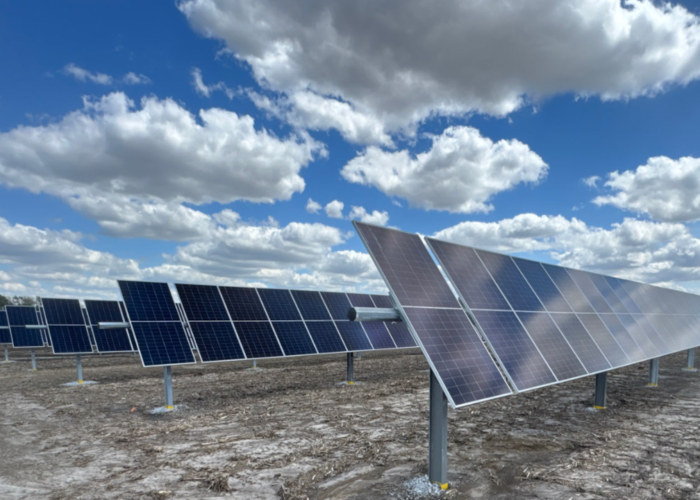
US PV tracker manufacturer Array Technologies has launched a suite of foundation-to-tracker solutions, dubbed Atlas, to improve the connections between Array trackers and foundations provided by APA Solar Racking.
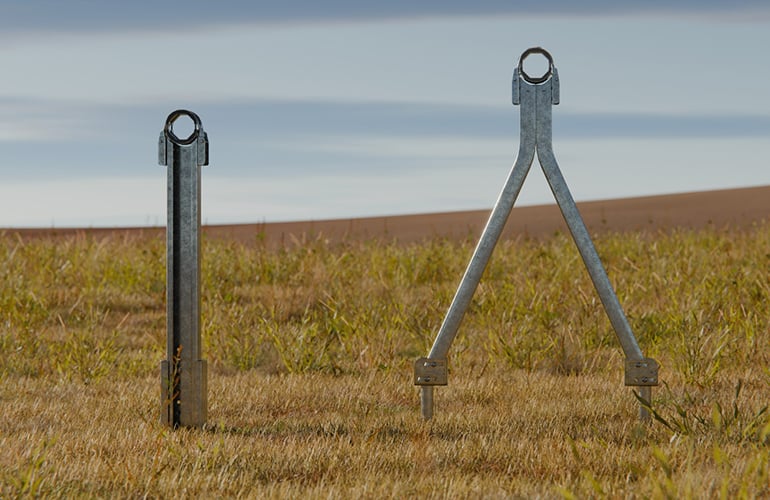
APA is a subsidiary of Array, and the Atlas portfolio consists of two solutions to improve connections between the companies’ products. Atlas I removes steel beams and uses an adjustable rolled steel C-channel and bearing interface to connect foundations, such as a shortened W-beam, to the tracker, which Array says offers greater design flexibility; Atlas II connects engineering foundations with a dual-leg interface and bearing interface and is designed for use in what Array describes as “challenging soil conditions”.
Try Premium for just $1
- Full premium access for the first month at only $1
- Converts to an annual rate after 30 days unless cancelled
- Cancel anytime during the trial period
Premium Benefits
- Expert industry analysis and interviews
- Digital access to PV Tech Power journal
- Exclusive event discounts
Or get the full Premium subscription right away
Or continue reading this article for free
The latter solution also boasts an “integrated design with fewer connection points” that Array notes has 70% fewer components than the APA A-Frame foundation.
The company also describes this solution as “designed for challenging soil conditions,” which is becoming an increasingly common challenge in the solar industry; as developers look to install projects in new regions that could be exposed to uneven ground, unstable soil or extreme weather, there is a greater need for projects to be resilient to these physical risks.
Earlier this year, risk analysis first Renew Risk launched a “first-of-its-kind” model to assess the impacts of thunderstorms on US utility-scale solar projects, for instance, while testing from the US Renewable Energy Test Centre (RETC) has shown that many modules are ill-equipped to operate in damp heat environments in the long-term. This is to say nothing of hailstorms, which have long been understood to be a significant environmental risk for solar PV projects.
APA CEO Josh Van Deylen added that the new solutions replace a reliance on “steel piles that were never engineered as part of the tracker system”.
“Atlas changes that by bringing the foundation and tracker interface together in a purpose-built solution that helps customers install faster, source more efficiently and execute projects with greater confidence,” he said.
The news follows a number of new product launches from Array as it looks to expand its offerings for solar projects exposed to physical and climactic risks. Last week the company launched a 60-degree version of its DuraTrack single axis tracker in order to deliver better resilience, and last month added a two-row module format to its DuraTrack trackers.