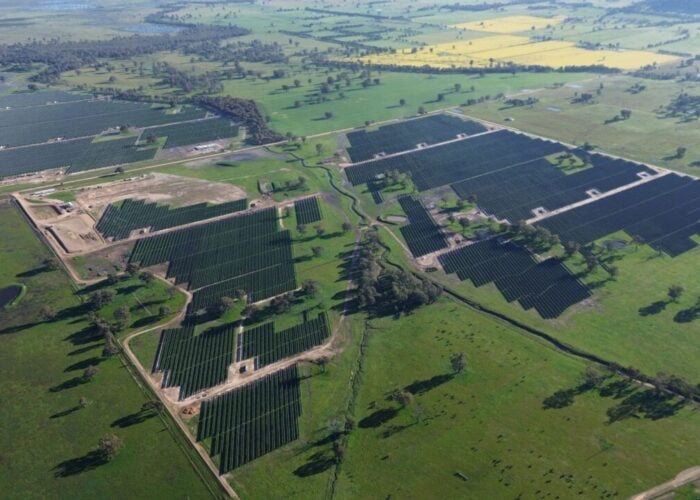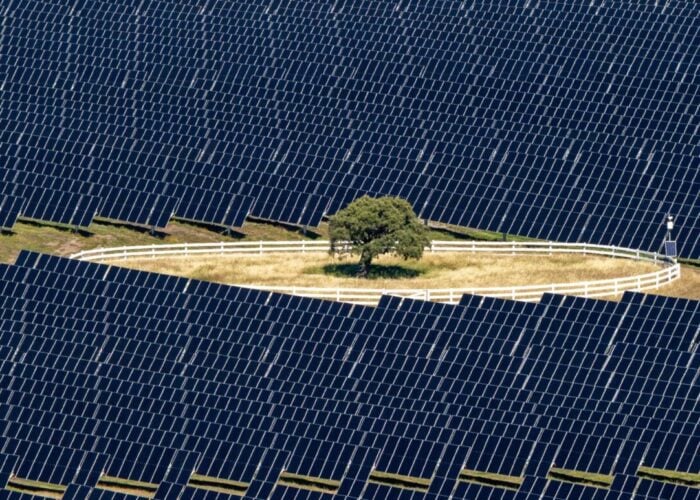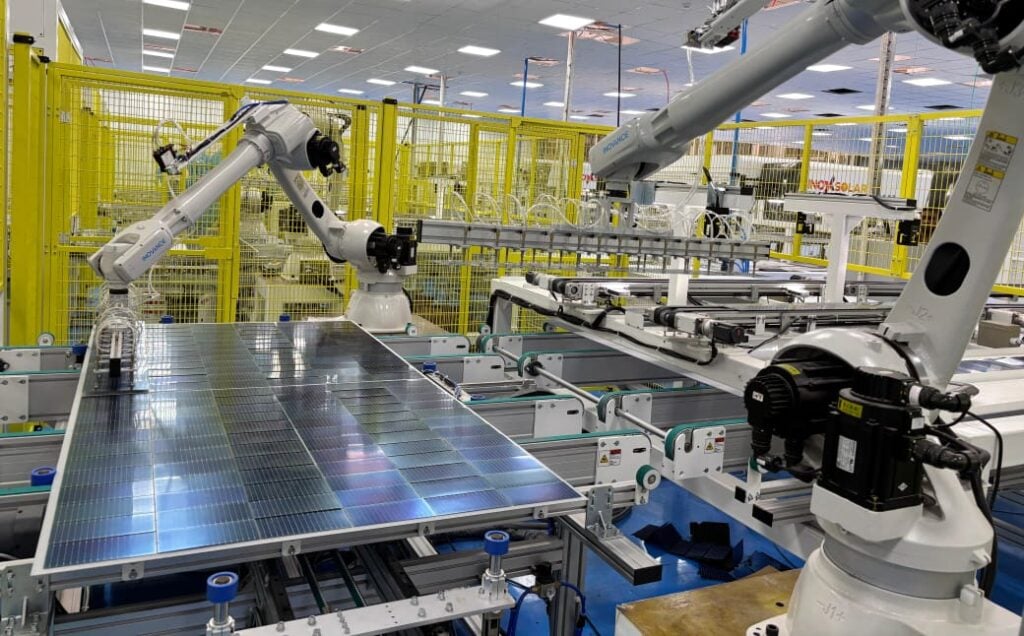
Over the past several months, Indian renewable energy company INOXGFL Group has expanded across the renewable energy value chain through a series of acquisitions, including moves into solar manufacturing, project development and international markets.
Through a string of deals, including the acquisitions of SunSource Energy, Vibrant Energy and SkyPower, Inox has expanded beyond domestic manufacturing into project development to international markets.
Try Premium for just $1
- Full premium access for the first month at only $1
- Converts to an annual rate after 30 days unless cancelled
- Cancel anytime during the trial period
Premium Benefits
- Expert industry analysis and interviews
- Digital access to PV Tech Power journal
- Exclusive event discounts
Or get the full Premium subscription right away
Or continue reading this article for free
This culminated in the company’s entry into the US solar market through the acquisition of Boviet Solar, which represents a broader push to build capabilities across the renewable energy value chain.
Recently, Inox acquired Vena Energy India’s 6GW renewable energy portfolio, adding operational assets, projects under development and a wider solar and wind pipeline. The portfolio included around 1GW of operational capacity, 1.7GW of advanced-stage projects, and additional development potential across renewable energy and battery storage.
However, as the company’s executive director Devansh Jain tells PV Tech Premium, the company’s focus has now moved away from acquisition-led growth towards integrating these businesses, improving operational synergies and unlocking the full value of the platform it has assembled.
“Over the last year, we have transformed Inox Clean from a collection of strong businesses into one of the most integrated clean energy platforms globally, which has resulted strong growth, investor growth leading to the current valuation of Inox Clean to be over INR 700 billion (US$7.3 billion),” he says.
“Every acquisition has been driven by a clear strategic objective rather than opportunistic expansion. Together, these acquisitions have strengthened our presence across the entire renewable energy value chain—from solar manufacturing and equipment to project development, engineering, procurement and construction (EPC), renewable power generation, and long-term operations and maintenance.”
Vertical integration extends beyond modules and cells
Manufacturing remains a core pillar of INOX’s strategy. The company has established solar module production in India and the US while developing domestic and international cell manufacturing capabilities.
In India, its Bavla facility in Gujarat currently has 3GW of annual module capacity. The company is also developing an integrated solar manufacturing facility in Dhenkanal, Odisha, with 4.8GW of cell capacity and 4.8GW of module capacity.
Through the acquisition of Boviet Solar, Inox has gained access to a 3GW solar module manufacturing facility in North Carolina, with plans for an additional 3GW solar cell facility at the same location. But Jain argues that vertical integration cannot stop at modules and cells.
“The future of the renewable energy industry belongs to companies that can control multiple parts of the value chain while maintaining scale, quality and cost competitiveness,” he says.
For Inox, this means combining solar, wind and battery storage to deliver round-the-clock renewable power.
On the independent power producer (IPP) side, the company has reached around 4GW of operational renewable assets, achieved through what Jain describes as “the fastest build-out in Indian renewable energy history.”
Inox’s target is to reach 10GW of renewable assets by March 2028, supported by both organic development and selective acquisitions. Alongside this, it is targeting approximately 10GW of integrated solar manufacturing capacity.
‘Made in India for India, made in America for America’
One of the clearest strategic messages from Jain is that Inox does not view India and US manufacturing as competing supply chains. Instead, the company is building separate regional manufacturing strategies designed around meeting local demand.
“India makes in India for India. America makes in America for America,” Jain says.
The approach reflects the changing global solar trade environment, which includes ongoing investigations into antidumping and countervailing duties (AD/CVD) in the US and the expansion of the Approved List of Models and Manufacturers (ALMM) in India, which have discouraged imports of overseas products and components, and incentivised domestic manufacturing, respectively.
Rather than relying on exports from India into the US market, INOX intends to use its Indian facilities to serve domestic demand while its US manufacturing footprint supports American customers.
Jain emphasises that Inox’s US strategy was built around local manufacturing rather than exports, following its acquisition of Boviet Solar.
“As soon as we got an opportunity to enter the US solar market, we moved rapidly and took over one of the largest integrated solar manufacturers in the country. For us, the US operation is very strong and will become a significant cash flow driver as we move forward,” he adds.
TOPCon remains the technology choice
While solar technology continues to evolve, with increasing discussion around HJT, back-contact technologies and perovskite-based solutions, Inox is maintaining a clear focus on tunnel oxide passivated contact (TOPCon).
The company believes TOPCon will remain the dominant mainstream technology for the foreseeable future and is building its manufacturing strategy around the platform.
“We are focused on TOPCon because we believe it is the most advanced mainstream technology available today,” says Jain. “Future improvements may come through technologies such as back contact or perovskite, but our strategy remains centred on TOPCon. We do not see a move towards HJT at this stage, as the global solar industry—led by China—is largely built around TOPCon technology.”
Africa becomes the next frontier
Inox currently operates in countries across three continents—including India, the US and Zambia—with its ambition centred around building a geographically diversified clean energy platform. The acquisition of SkyPower also INOX with an entry point into international renewable development, particularly across Africa and the Middle East.
Jain says Africa should not be viewed simply as an export market but as a “strategic growth market where we can build long-term partnerships and contribute to sustainable infrastructure development.”
With strong solar resources, rising electricity demand and increasing policy support, the company believes its integrated capabilities could position it well to participate in Africa’s energy transition.
“We believe our integrated capabilities—from manufacturing to project development and execution—position us well to participate in Africa’s energy transition,” Jain says.
Having assembled assets across India, the US and Africa, Inox’s ambition is to become one of the world’s leading integrated clean energy companies. The challenge now shifts from acquisition-led growth to execution—scaling manufacturing, expanding renewable generation and creating a platform capable of competing globally.