Liam Stoker recaps recent policy moves in the US and explores the difficult balancing act President Biden must now face between stimulating domestic solar manufacturing in the US and supporting solar deployment.
Reports have emerged alleging that US officials have begun detaining solar module shipments suspected of infringing the withhold and release order (WRO) implemented in June.
Tianjin Zhonghuan Semiconductor (TZS) has more than doubled its revenue in the first half of the year as the wafer provider took advantage of what it described as a rapidly developing PV industry.
An amendment added to the US budget resolution bill this week seeks to prevent renewables projects using technology built in China from claiming federal funds and subsidies. Liam Stoker explores the amendment’s potential to disrupt solar deployment.
Canadian Solar has tweaked its planned capacity expansions for this year, stripping back module assembly capacity expansion to instead produce more solar wafers and cells as the industry continues to recalibrate following months of supply chain volatility.
Canadian Solar reported record quarterly revenue in Q2 2021, buoyed by a return to profit from its manufacturing division, but reduced its total shipment guidance for the year amidst continued industry headwinds.
Nine US projects will receive funding from the country’s Department of Energy (DOE) to accelerate the commercialisation of technologies that can help integrate more solar electricity into the energy grid.
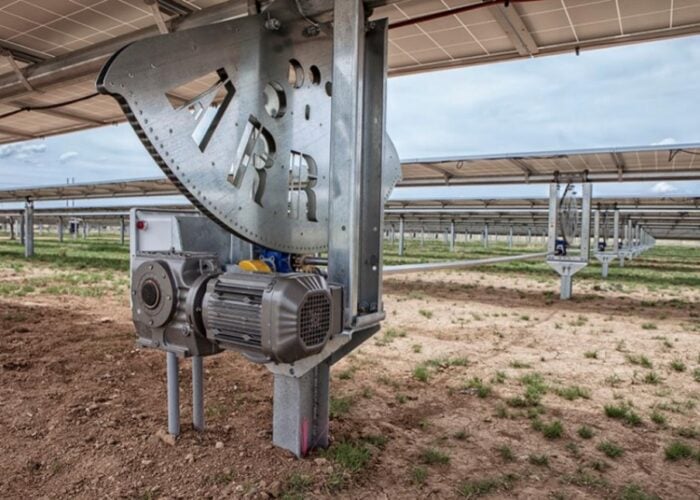
US solar tracker provider Array Technologies slipped to a loss in the second quarter of 2021, but has changed business processes in order to reduce its exposure to future rises in commodity and shipping costs.
PV manufacturing equipment supplier Singulus Technologies has received an order for a pilot line of its next-generation selenisation machine from a subsidiary of existing customer China National Building Materials (CNBM).
Three Indian manufacturers are said to be eyeing up investments in their solar manufacturing capacity as efforts to take advantage of protective measures and financial supports ramp up.