JinkoSolar adds name to ARENA project intended to reduce solar cell conversion losses

February 12, 2018
Facebook
Twitter
LinkedIn
Reddit
Email
The project, which is being lead by the Australian National University (ANU) and The University of New South Wales (UNSW).

A research project to identify solar cell conversion losses and provide commercial solutions, which was initiated in December 2017 by the Australian Renewable Energy Agency (ARENA), has attracted ‘Silicon Module Super League' (SMSL) leader JinkoSolar.

The project, which is being lead by the Australian National University (ANU) and The University of New South Wales (UNSW) has attracted $29.2 million in funding and includes BT Imaging, Fraunhofer Institute for Solar Energy Systems, US National Renewable Energy Laboratory (NREL), Sinton Instruments, Norwegian Crystals, Topsil Global Wafers, MiaSole Hi-Tech Corp and Tesla.

This article requires Premium SubscriptionBasic (FREE) Subscription

Try Premium for just $1

  • Full premium access for the first month at only $1
  • Converts to an annual rate after 30 days unless cancelled
  • Cancel anytime during the trial period

Premium Benefits

  • Expert industry analysis and interviews
  • Digital access to PV Tech Power journal
  • Exclusive event discounts

Or get the full Premium subscription right away

Or continue reading this article for free

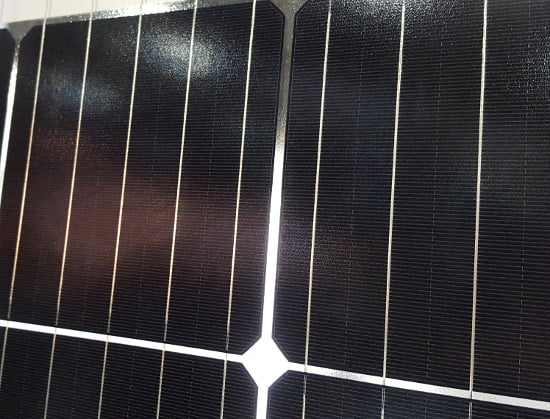
Although much is known about cell to module losses, the research program will include the entire supply chain, from silicon ingot growth, wafer, cell and module production. Also, new methods for detecting and eliminating defects in silicon modules are expected to be developed, and then applied in manufacturing.

13 October 2026
San Francisco Bay Area, USA
PV Tech has been running an annual PV CellTech Conference since 2016. PV CellTech USA, on 13-14 October 2026 is our third PV CellTech conference dedicated to the U.S. manufacturing sector. The events in 2023, 2024 and 2025 were a sell out success and 2026 will once again gather the key stakeholders from PV manufacturing, equipment/materials, policy-making and strategy, capital equipment investment and all interested downstream channels and third-party entities. The goal is simple: to map out PV manufacturing in the U.S. out to 2030 and beyond.
9 March 2027
Location To Be Confirmed
PV CellTech Global will gather the key stakeholders from PV manufacturing, equipment/materials, policy-making and strategy, capital equipment investment and all interested downstream channels and third-party entities. Join us in Q1 of 2027

Read Next

February 2, 2026
India’s Union Budget 2026-27 reinforces government support for renewables through duty exemptions and infrastructure spending.
Premium
January 30, 2026
In an interview with PV Tech Premium, two UNSW researchers emphasise the need for enhanced UV testing for TOPCon solar cells.
January 29, 2026
The cost of Chinese solar module manufacturing will rise in the first half of 2026, though prices may fall again before the end of the year.
January 29, 2026
PV module defects are increasing as manufacturers struggle to achieve consistent quality through robust bill-of-material and process controls.
January 28, 2026
Fraunhofer ISE is exploring how medium-voltage technology can reduce the use of raw materials such as copper and aluminium in PV systems.
January 27, 2026
Researchers from the University of New South Wales (UNSW), Australia, have directly observed how silicon solar cells can self-repair UV damage under sunlight.

Upcoming Events

Solar Media Events
February 3, 2026
London, UK
Upcoming Webinars
February 18, 2026
9am PST / 5pm GMT
Solar Media Events
March 24, 2026
Dallas, Texas
Solar Media Events
April 15, 2026
Milan, Italy
Solar Media Events
June 16, 2026
Napa, USA