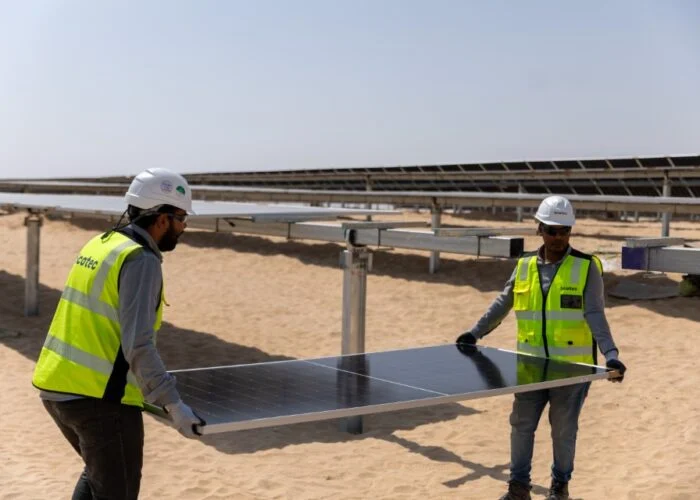
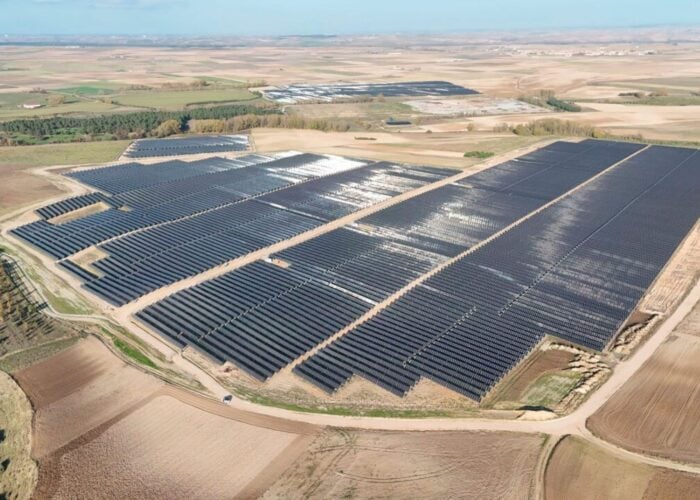
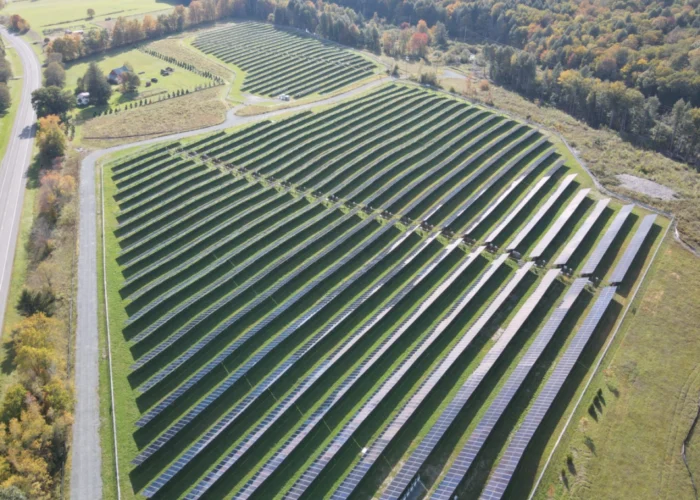
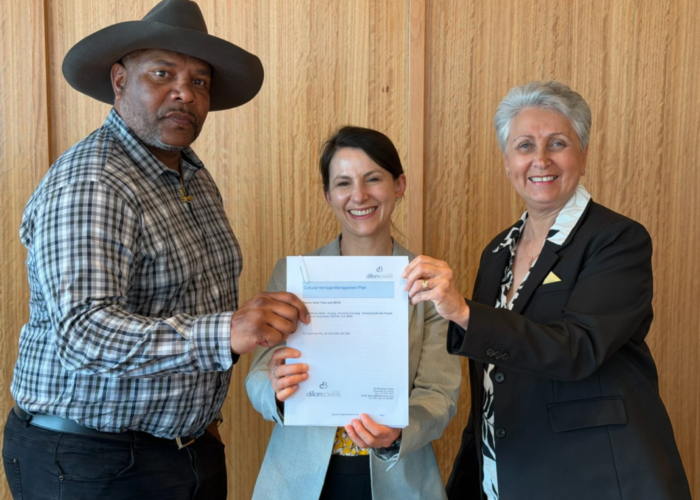
US private equity firm KKR has invested AU$500 million (US$328 million) in Australia’s CleanPeak Energy to support the rollout of distributed energy resources (DERs) such as rooftop solar PV, battery storage and micro‑grid solutions.
CleanPeak Energy specialises in providing DERs for Australia’s commercial and industrial (C&I) sector. It claims to operate over 50 distributed generation sites across Australia, including over 140MW of solar PV and 35MWh of battery energy storage systems (BESS).
Try Premium for just $1
- Full premium access for the first month at only $1
- Converts to an annual rate after 30 days unless cancelled
- Cancel anytime during the trial period
Premium Benefits
- Expert industry analysis and interviews
- Digital access to PV Tech Power journal
- Exclusive event discounts
Or get the full Premium subscription right away
Or continue reading this article for free
The investment, announced yesterday (27 July), will be delivered by signing definitive agreements. KKR is making this investment from its Global Climate Transition strategy, marking the strategy’s first in Asia-Pacific and its sixth transaction globally.
The transaction is expected to close in the second half of 2025, subject to customary regulatory approvals.
According to Neil Arora, partner and head of KKR’s Climate Transition strategy for Asia, Australia’s C&I energy market is “at an inflection point as corporates seek bankable pathways to better energy efficiency, reliability and affordability.”
Arora adds that the deal will leverage the two companies’ specialisations to help capitalise on the market opportunity for DERs in Australia.
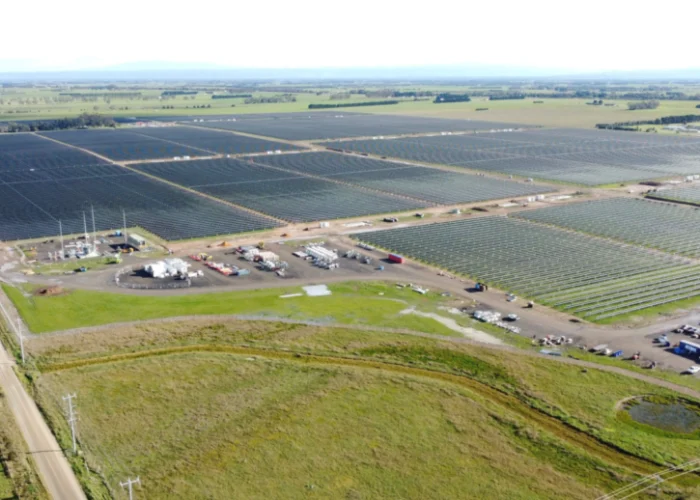
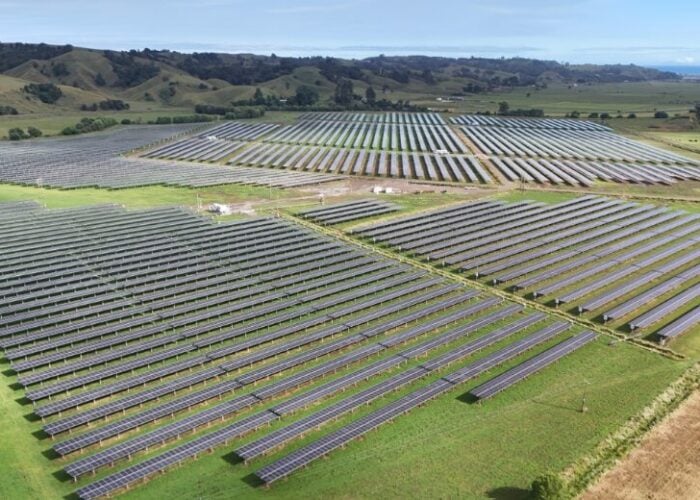
Although CleanPeak Energy primarily operates in the DER market in Australia, it has also dipped into the utility-scale solar market.
Indeed, in October last year, CleanPeak Energy bought two solar PV plants in New South Wales from Dutch solar project developer and asset owner Photon Energy Group, with a combined generation capacity of 14.5MW.
The deal, which was worth €6 million (US$7 million), resulted in a €1.5 million loss for Photon Energy Group.
CleanPeak Energy recently completed an AU$465 million debt refinancing for its funding vehicle CPE Renewable Investment Unit Trust (CPERI), which was launched via a joint venture with Igneo Infrastructure Partners.
The refinancing will see CPERI refinance its portfolio of energy assets, which includes behind and front-of-meter solar and BESS. It will also support the development of co-located battery storage at utility-scale power plants across Australia.
Industrial warehouses could generate an excess of 500% of their energy needs
Engineering consultancy Arcadis noted the potential of DERs, specifically rooftop solar at C&I sites, as one of the primary arguments for creating a Sydney Renewable Energy Zone (REZ).
The report, developed in partnership with think tank the Committee for Sydney, distribution network company Endeavour Energy, Ausgrid and Arup, said industrial warehouses often have very low energy demands but high rooftop surface area.
By installing a solar PV system on this, an industrial warehouse can, depending on its size, generate up to 500% more energy than it needs.
However, asset owners currently tend to size a rooftop solar PV system to meet the building’s needs instead of tapping into an additional revenue stream by selling excess energy back to the grid, something that can be maximised via the installation of a small-scale BESS.
As such, the report claimed that often only 10-20% of the roof space on an industrial warehouse is needed to meet the demand.
It should be noted that commercial towers and residential flats would likely only be able to deliver 5% of their energy demand from a rooftop solar PV system, with this growing to 15% of a manufacturing facility, 20% for a medium-density residential or commercial building, and 100% for a detached residential building.