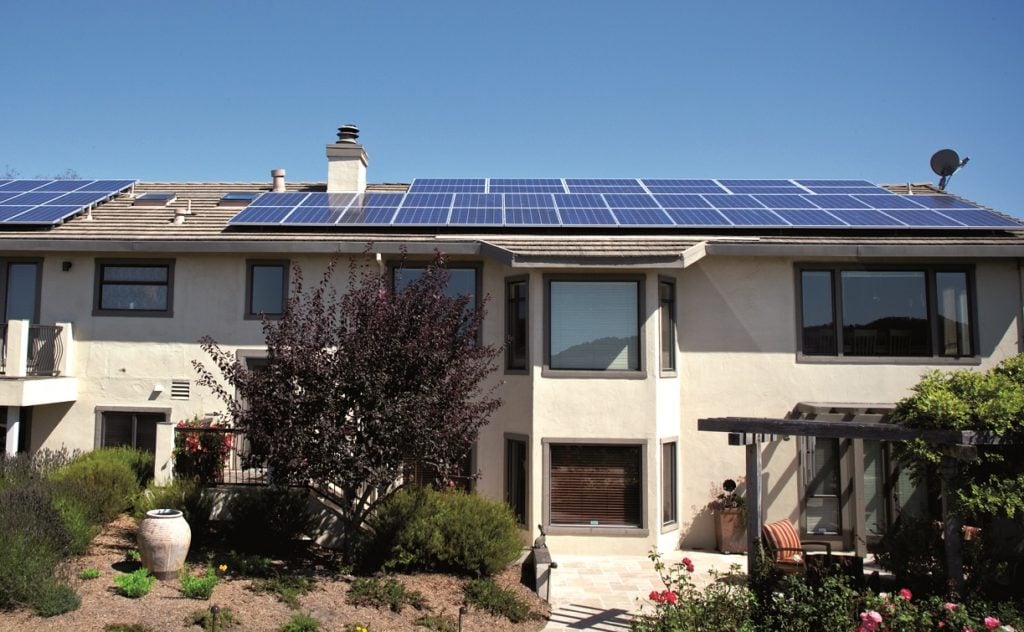
Residential solar PV installations in California since the introduction of the NEM 3.0 – a billing structure of California’s rooftop solar net metering scheme – have been roughly equal to the amount in the prior year, with more customers installing battery energy storage systems (BESS), according to a study conducted by Lawrence Berkeley National Lab (LBNL).
In the study One Year In: Tracking the Impacts of NEM 3.0 on California’s Residential Solar Market, Galen Barbose, lead author of the study, said the passage of NEM 3.0 in December 2022 had set off a surge of applications seeking to qualify under the previous net metering tariffs (NEM 2.0) before its close in April 2023. The increase in applications led to a subsequent spike in net energy metering installations during the summer of 2023, and after that, the number of installations began a steady decline.
Unlock unlimited access for 12 whole months of distinctive global analysis
Photovoltaics International is now included.
- Regular insight and analysis of the industry’s biggest developments
- In-depth interviews with the industry’s leading figures
- Unlimited digital access to the PV Tech Power journal catalogue
- Unlimited digital access to the Photovoltaics International journal catalogue
- Access to more than 1,000 technical papers
- Discounts on Solar Media’s portfolio of events, in-person and virtual
Installations under NEM 3.0 have started to increase since the second half of 2023. On average, approximately 8,000 installations took place per month in Q1 2024. Currently, about 50,000 systems have been interconnected under NEM 3.0, in addition to 200,000 NEM 2.0 systems interconnected over the same period.
Barbose said the reason for the large number of installations in the past year was the clearing of the backlog of NEM 2.0 applications.
Driving residential BESS installations
In addition to clearing this backlog, NEM 3.0 has driven a significant increase in residential BESS installations. Since H2 2023, the fraction of solar PV installations paired with BESS has risen significantly, with more than 60% of the installations under NEW 3.0 paired with BESS, up from about 10% of PV installs paired with BESS under NEM 2.0. Since November 2023, residential BESS installations have averaged roughly 5,000 systems per month, more than double the monthly pace over the preceding three years.
The surge in BESS installations in California has increased installed prices of solar PV systems paired with BESS in California. Median prices for customer-owned solar-plus-storage systems were 17% higher, up from US$5.2/W to US$6.1/W.
Barbose said the higher prices for paired PV-plus-storage systems under NEM 3.0 were attributable to the sudden increase in demand and related shortages of equipment and/or trained installers.
Lastly, the market share of the top five installers in California rose from 40% during the last year of NEM 2.0 to 51% during the first year of NEM 3.0.
In December 2022, The Calicofrnia Public Utility Commission (CPUC) passed NEM 3.0. The net metering legislation purported to incentivise battery storage systems to bolster grid security and manage loads in peak summer months. To that end, the proposal offers time-flexible export rates that “have significant differences between peak and off-peak prices to incentivise battery storage and load shifting from evening hours to overnight or midday hours”, the CPUC said in a release.
However, the legislation has export rates for power sold back to the grid by around 75%, significantly reducing the amount of money residential owners can make from selling power, and disincentivising installing new residential systems. PV Tech reported that, after the implementation of the NEM 3.0 in April 2023, year-on-year solar sales were down between 57% and 85%, according to the California Solar & Storage Association (CALSSA).