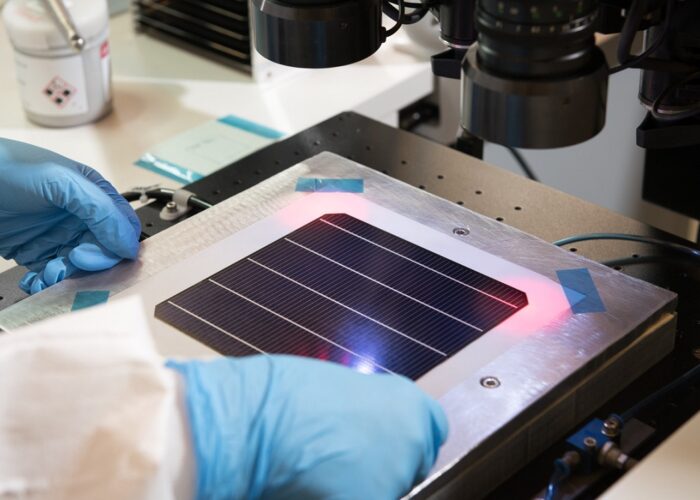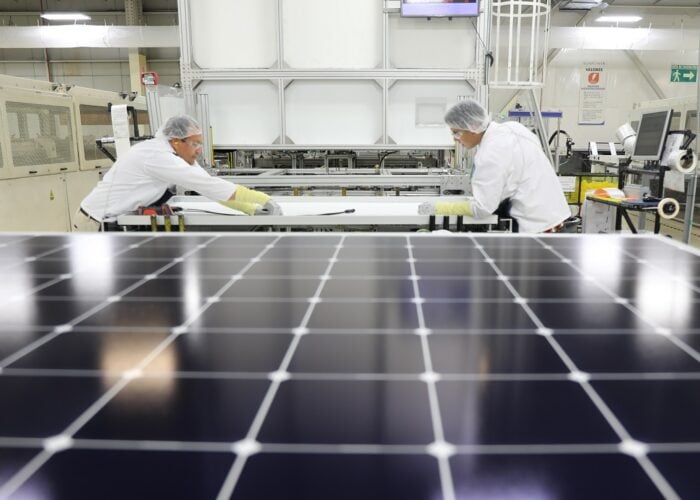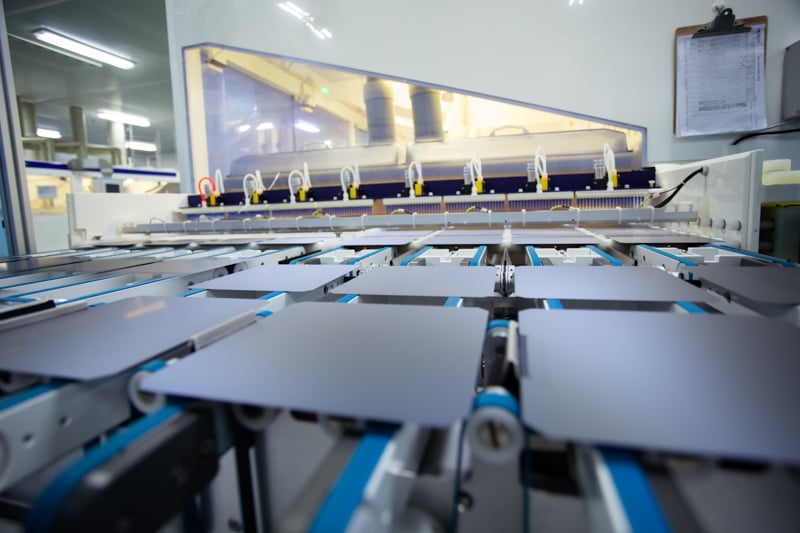
Leading Chinese module manufacturer LONGi Solar has developed a crystalline silicon heterojunction back-contact (HBC) solar cell with a conversion efficiency of 27.09%, verified by the Institute for Solar Energy Research Hamelin (IFSH) in Germany.
The solar cell breaks LONGi’s conversion efficiency record for silicon HBC cells, which it set at 26.81% in November 2022. LONGi noted that the primary technological innovation in the new cell is the use of an “all-laser patterning process”, which replaces the photolithographic process – by which UV light is used to fabricate thin-film components, such as those used in solar cells – typically used to produce these kinds of bifacial solar cells.
Try Premium for just $1
- Full premium access for the first month at only $1
- Converts to an annual rate after 30 days unless cancelled
- Cancel anytime during the trial period
Premium Benefits
- Expert industry analysis and interviews
- Digital access to PV Tech Power journal
- Exclusive event discounts
Or get the full Premium subscription right away
Or continue reading this article for free
“Innovation is the core competitiveness of enterprises and LONGi is committed to making the best of solar energy to build a green world,” said LONGi founder and president Li Zhengou. “We at LONGi believe that photovoltaics will play a crucial role in the worldwide energy transition.”
While the company did not specify how close the cell is to commercial implementation, its mineral composition could also be a source of optimism in the solar sector. The new cell uses one-fifth of the indium that a conventional solar cell would require in its transparent conductive oxide layers. Indium is a metal used in the production of such layers, but deposits around the world are rare, with the US Geological Survey (USGS) reporting that the majority of indium is extracted from a separate ore, the zinc-sulphide ore sphalerite.
In HBC cells, connection infrastructure is placed on the rear of cells, opening up more of the front to receive sunlight, potentially improving the overall conversion efficiency of the cell. Back contact cells are likely to follow tunnel oxide passivated contact (TOPCon) cells as the next major innovation in cell technology, and LONGi’s work will only accelerate this transition.
Much of this transition is owed to increased levels of spending on TOPCon research and development in particular. LONGi’s annual manufacturing output reached 70GW in 2021, accounting for more than one-quarter of the total solar manufacturing sector, and this investment has led to sustained development.
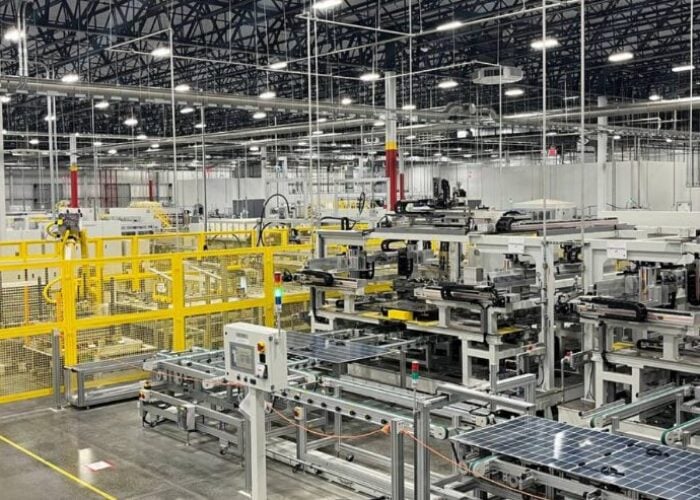
LONGi also announced that its Jiaxing production base has been recognised by the World Economic Forum as a “global lighthouse factory,” and is the first solar module manufacturing base to be acclaimed as such. The facility will join the WEF’s Global Lighthouse Network, as a manufacturing plant that embraces “tech-enabled operations,” such as automation and artificial intelligence.
Last November, LONGi broke a separate conversion efficiency record, this time for a perovskite tandem solar cell, with a figure of 33.3%.