Thailand's government has announced plans to support a major expansion of the country's solar rooftop sector on both domestic and commercial buildings.
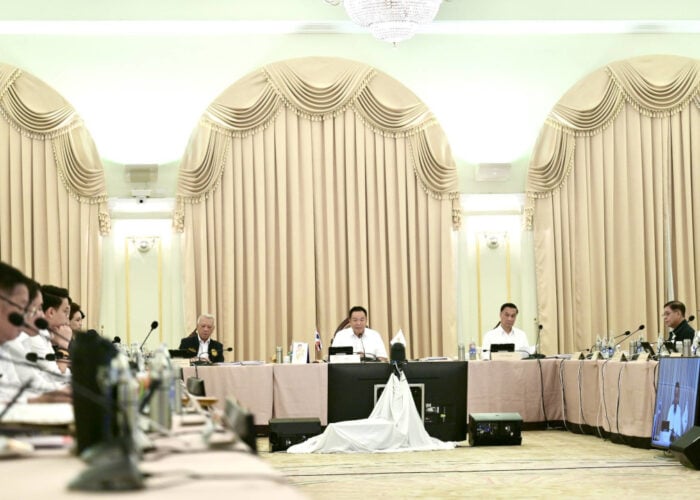
Energy minister Pongsak Ruktapongpisal told 1,000 members of the Thailand's Institute of Electrical and Electronic Engineers in Bangkok on Tuesday that the full details would be published next month.
Try Premium for just $1
- Full premium access for the first month at only $1
- Converts to an annual rate after 30 days unless cancelled
- Cancel anytime during the trial period
Premium Benefits
- Expert industry analysis and interviews
- Digital access to PV Tech Power journal
- Exclusive event discounts
Or get the full Premium subscription right away
Or continue reading this article for free
Thailand's alternative energy development strategy has been in place since 2008. This covers all renewable energy sectors, including large-scale solar projects. But until now there has been no rooftop policy in place, either for large commercial and public buildings or the domestic sector.
The Bangkok Post reported that a working group had been tasked with producing a financial framework covering a feed-in tariff and other supporting measures.
The group is also expected to recommend the abolition of current restrictive regulations that require homes or offices wishing to install solar panels to apply for licences from the government's Industrial Works Department.
Sources have said that the government is proposing to support the installation of 100,000 domestic rooftop systems and 1,000 commercial systems.
The total capacity installed is expected to be approximately 800MW.
As well as a FiT, the government is understood to be looking at a system of tax breaks and soft loans to financially underpin the policy.
Dusit Kruangam, the chairman of the Thai Photovoltaic Industries Association, told PV-Tech that the policy, while not ideal, was a significant step forward.
He said: “We are convinced that a lot of home owners would like to participate in the solar energy sector”.
Rumours of an announcement have been circulating for months and some companies have been positioning themselves to take advantage of the move.
One of the Southeast Asia's biggest solar farm developers, SPCG, has recently set up a new company called the Solar Power Roof Company specifically to focus on the Thai domestic market, using Kyocera solar modules.