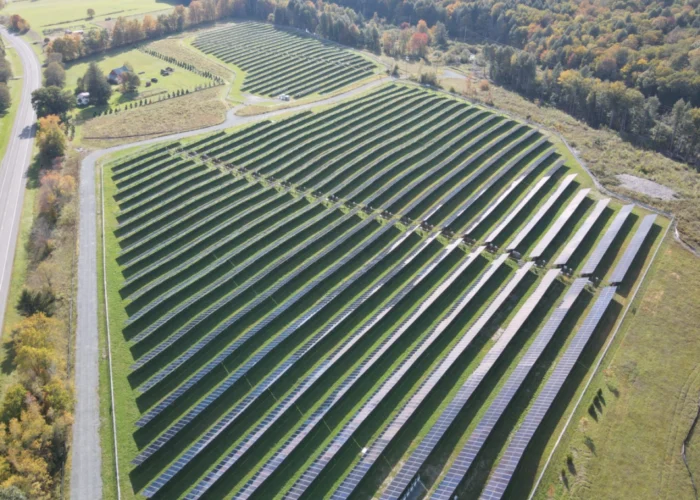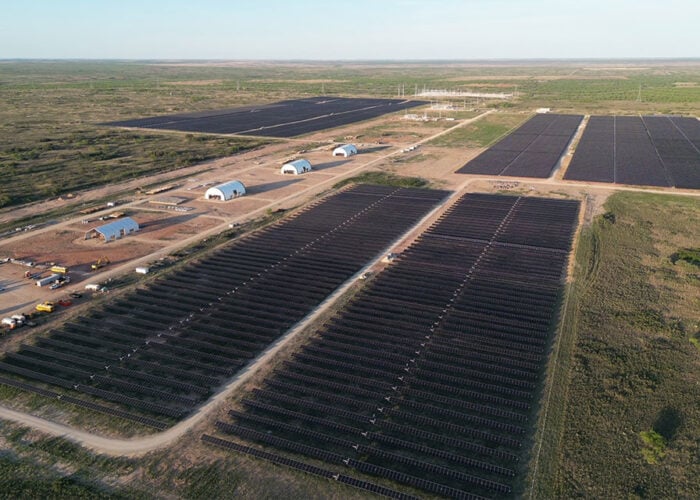
The US Department of Agriculture (USDA) has announced that new wind and solar projects on agricultural land will not be eligible for its Rural Development Business and Industry Guaranteed Loan Program, as US policy continues to shift against the PV sector.
In addition to the removal of eligibility for the business and industry programme, ground-mount PV systems larger than 50kW, or that “cannot document historical energy usage”, according to USDA, will no longer be eligible for a separate support scheme, the Rural Development Rural Energy for America Program Guaranteed Loan Program (REAP Guaranteed Loan Program).
Try Premium for just $1
- Full premium access for the first month at only $1
- Converts to an annual rate after 30 days unless cancelled
- Cancel anytime during the trial period
Premium Benefits
- Expert industry analysis and interviews
- Digital access to PV Tech Power journal
- Exclusive event discounts
Or get the full Premium subscription right away
Or continue reading this article for free
Under the former programme, renewable project developers could borrow up to US$10 million from the federal government to cover project installation costs. The latter programme allowed energy project developers working on agricultural land to apply for a federal loan covering up to 75% of the total project cost, with a grant available for renewable energy projects of as much as US$1 million.
“Our prime farmland should not be wasted and replaced with green new deal subsidised solar panels,” said secretary of agriculture Brooke L. Rollins, announcing the new policy in reference to the incorrect assumption that solar projects and agricultural land are mutually exclusive.
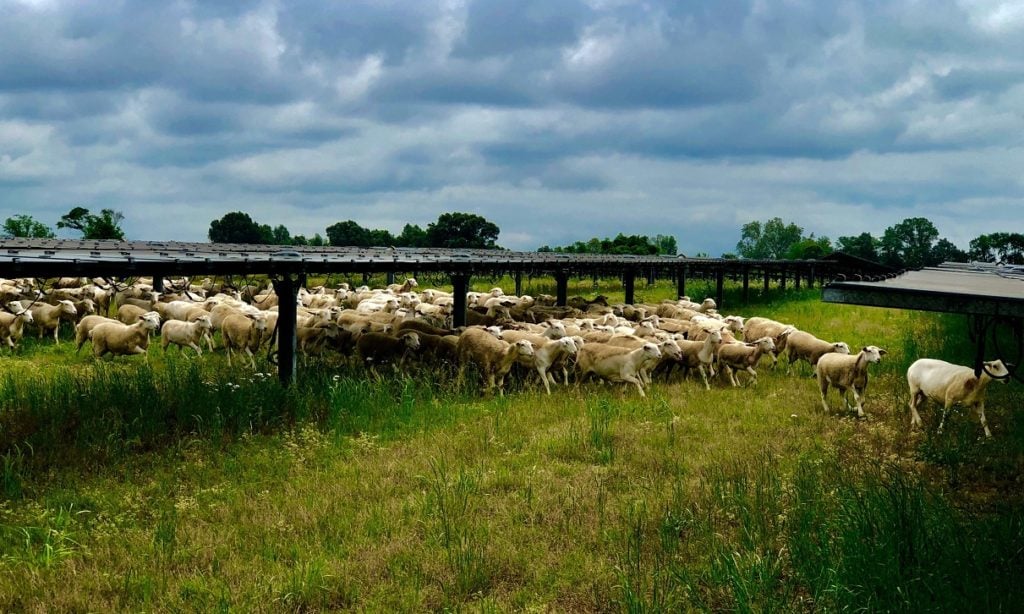
Figures from the National Renewable Energy Laboratory (NREL) found that the US has more than 400 sites currently combining solar generation and animal habitats, with a further 200 sites combining solar panels and animal grazing.
“The land that feeds America should never be sacrificed for unreliable green energy experiments subsidised by taxpayer dollars,” added Wisconsin representative Tom Tiffany, whose comments suggest solar installations could cover a significant proportion of agricultural land.
A 2023 guide published on the Department of Energy website states that just 0.3% of US farmland is expected to incorporate solar energy by 2035.
Moreover, a 2024 study published by the USDA forecast that solar would require less than 10% of “previously disturbed” land, comprising developed land, quarries and gravel pits, landfills and other brownfield sites, to meet 2035 and 2050 decarbonisation models.
Elsewhere, in 2023, the European Commission reported that installing solar panels on just 1% of Europe’s agricultural land could add enough new renewable energy capacity to meet the entirety of the continent’s 2030 solar deployment goals.
Stephanie Bosh, senior vice president of the Solar Energy Industries Association (SEIA) described the USDA’s activity as “senseless”.
“Washington has no business telling farmers what to do with their land,” Bosh told PV Tech exclusively. “This senseless policy will only make it harder for farmers and landowners to decide for themselves what is best to keep their farms alive and operating with diverse revenue sources.
“This is yet another political, impractical decision by this administration that will further drive up energy costs for all Americans – hitting rural communities hardest.”
Figures from NREL show that the US’ installed agrivoltaics (agriPV) capacity has grown considerably, from 4.5GW in 2020 to 10GW in 2024, and the removal of support schemes that lowered the capex hurdle for new agriPV projects is a blow to both the agriPV industry in particular, and US energy security in general.